The Pull of the Deep Blue: Nha Trang's Aquatic Frontier
If you stand on the golden sweep of Tran Phu Beach in Nha Trang, the South China Sea—known locally as the East Sea—stretches out in a shimmering expanse of turquoise and cobalt. High-rise hotels block the mountains behind you, but out there, scattered across the bay like a handful of emeralds thrown on blue silk, are the islands. And beneath the surface of the waters surrounding those islands lies a world that operates on an entirely different rhythm.
Nha Trang is the undisputed cradle of scuba diving in Vietnam. While the country's overland attractions—terraced rice paddies, ancient imperial cities, and chaotic, life-affirming motorcycle traffic—often steal the global headlines, the underwater topography of the South Central Coast tells a quieter, profound story. For travelers looking to slip beneath the waves, Hon Mun Marine Park is the crown jewel, offering warm waters, dramatic drop-offs, and an astonishing density of macro marine life.
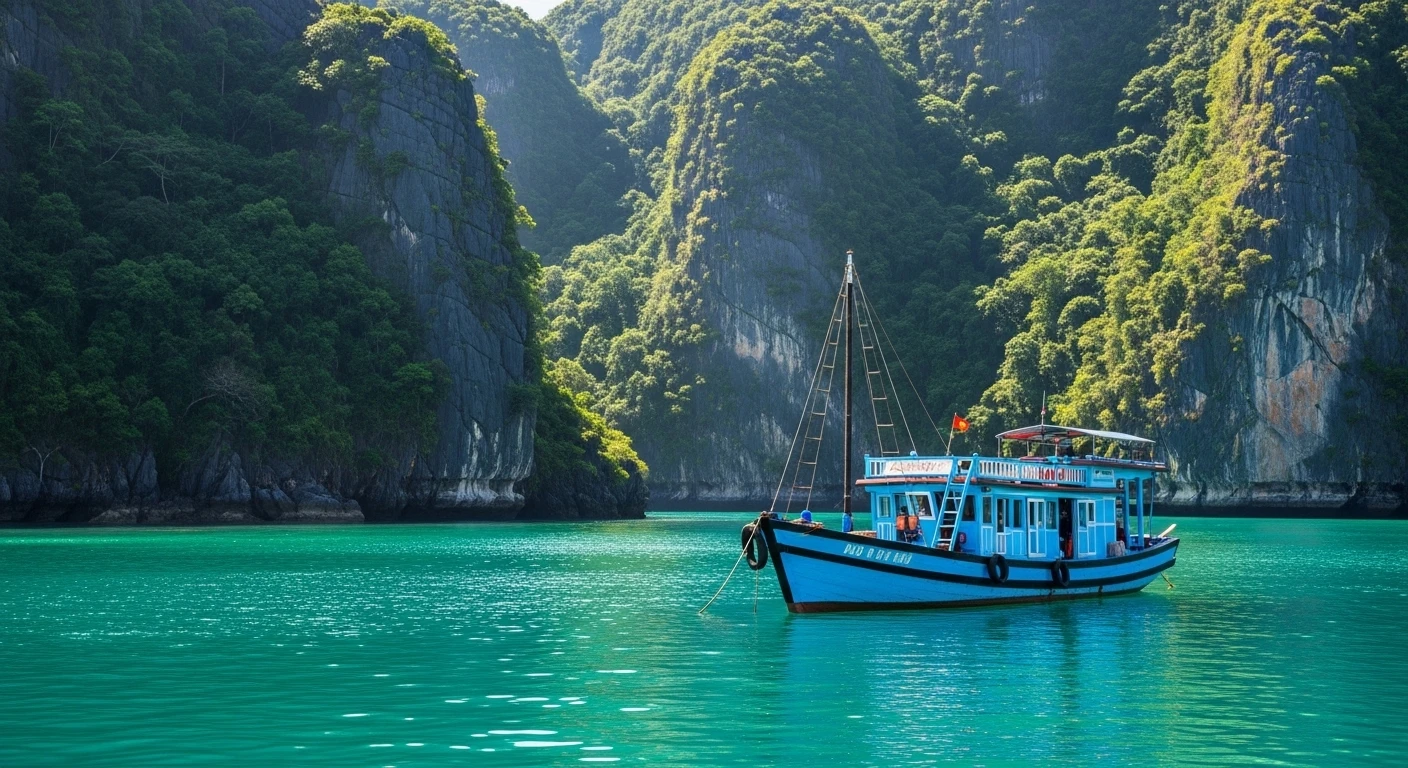
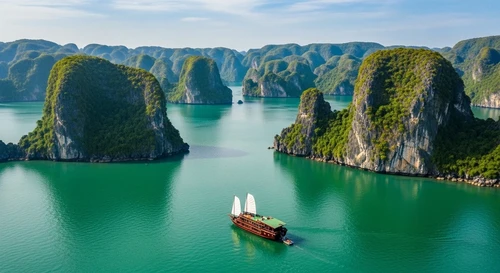
Traditional wooden dive boats anchored near the rocky, jungle-draped cliffs of Hon Mun Island.
Hon Mun Marine Park: A Sanctuary Born of Necessity
Established in 2001 with the backing of international conservation groups, Hon Mun is Vietnam's first marine protected area. The island gets its name—Mun translates roughly to ebony or black—from the dark, jagged cliffs that plunge precipitously into the sea on its eastern flank. These subterranean rock formations create an ideal architecture for coral reefs to latch onto and flourish.
The park encompasses the island itself and a surrounding buffer zone of over 160 square kilometers. Its creation was an act of necessary preservation. Decades of destructive fishing practices had taken a toll on Vietnam's coastal ecosystems. By drawing a line in the sand—or rather, the water—Hon Mun became a highly monitored sanctuary where anchors are forbidden, fishing is heavily restricted, and the reef is allowed the space and silence it needs to regenerate.

Cu Lao Cham: Snorkeling the Biosphere Reserve Off the Coast of Hoi An
A short speedboat ride from ancient Hoi An lies a pristine marine park. Discover vibrant coral reefs and the strictly plastic-free life of the Cham Islands.
Gearing Up: The Early Morning Harbor Ritual
A diving day in Nha Trang begins early. By 7:00 AM, the southern port of Cau Da is a symphony of controlled chaos. Motorbikes burdened with tanks and mesh bags of fins weave between vendors selling hot steamed buns and iced coffee. The air is thick with the smell of diesel exhaust, brine, and tropical humidity.
You board a sturdy wooden vessel, often painted a brilliant shade of maritime blue. As the boat pulls away from the mainland, the chaotic noise of the port fades, replaced by the rhythmic, deep-throated chug of the engine. The journey to Hon Mun takes roughly 45 minutes to an hour. It is a time for dive briefings, double-checking O-rings, spitting into masks, and watching the water transition from the murky green of the harbor to a stunning, crystalline indigo.
Descending into the Madonna Rock
Of all the dive sites circling Hon Mun, Madonna Rock is perhaps the most iconic. It is marked by two massive granite pinnacles that breach the surface, plunging down to a maximum depth of around 25 meters. What makes this site exceptional is its network of swim-throughs and underwater caverns.
Rolling backward off the boat, the initial shock of the water is brief—temperatures here hover comfortably between 26°C and 29°C for most of the year. You deflate your BCD and sink into the quiet. Gliding into the caverns of Madonna Rock, the ambient light drops, casting deep shadows over the stone. Here, you must rely on your torch. The beams cut through the water, revealing giant moray eels peering skeptically from crevices, and delicate ghost pipefish hovering perfectly still, mimicking fragments of drifting seagrass.
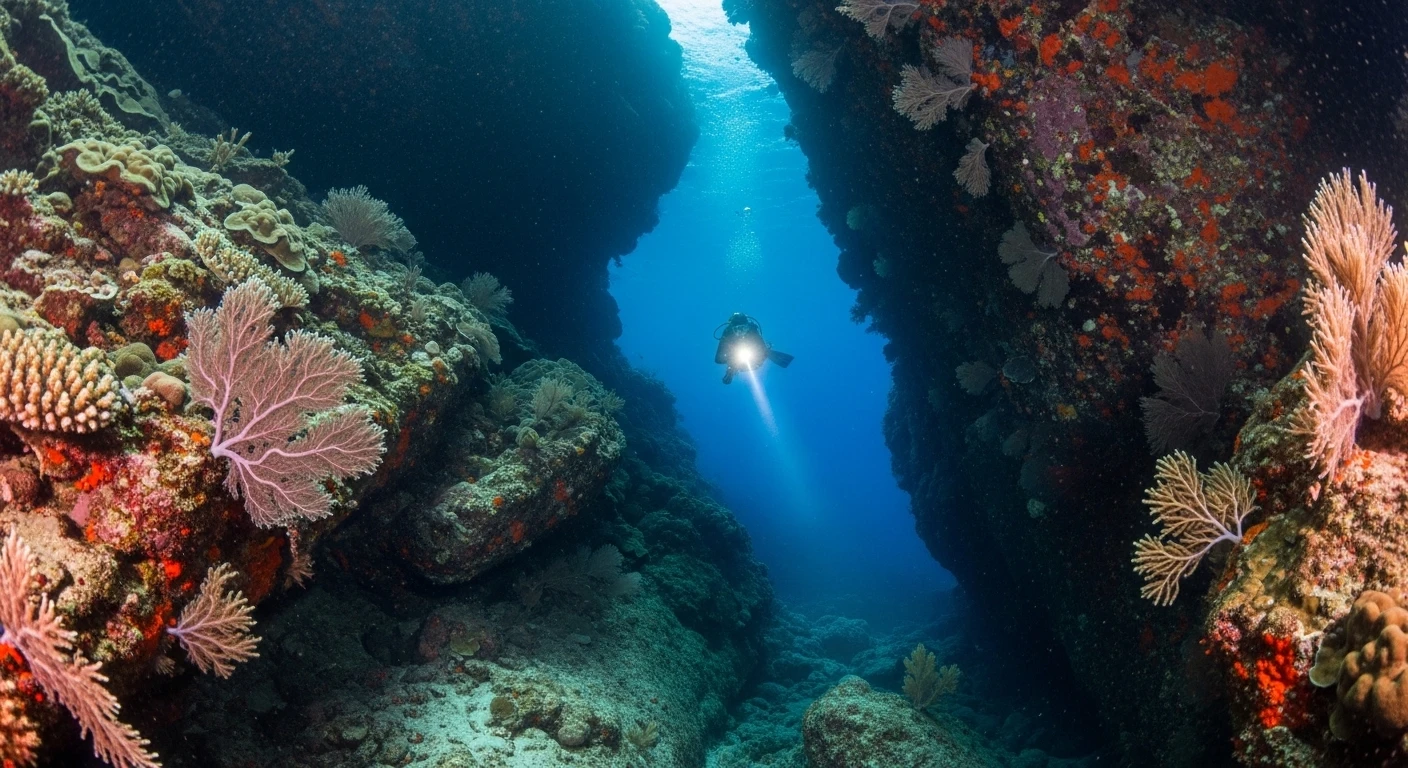
Descending into the coral-encrusted canyons where light filters through the pristine waters.
Coral Gardens: A Kaleidoscopic Metropolis
If Madonna Rock is about architecture, sites like Moray Beach and Coral Garden are about pure, overwhelming biodiversity. Vietnam's reefs are part of the broader Indo-Pacific ecosystem, meaning the variety of hard and soft corals is staggering.
Swimming over the shallow plateaus, you are greeted by sprawling colonies of staghorn coral, massive brain corals, and undulating fields of soft sea anemones. It is a visual riot. Schools of glassfish move in synchronized bait balls, parting fluidly as predatory jacks swoop in. Triggerfish patrol their invisible borders, while the ubiquitous clownfish defend their anemone homes with disproportionate aggression against divers ten times their size.
The Micro and the Macro: Vietnam's Muck Diving Appeal
Divers who come to Hon Mun expecting the pelagic giants of the Galapagos—whale sharks, massive manta rays, or schooling hammerheads—may need to adjust their lens. Hon Mun's true magic lies in the details. It is a photographer's paradise, highly regarded for macro diving.
If you slow your breathing, achieve perfect neutral buoyancy, and simply stare at a seemingly empty patch of rubble, the reef comes alive. Nudibranchs—vibrant sea slugs painted in impossible neon colors of purple, orange, and electric blue—crawl millimeter by millimeter over sponges. Tiny, hairy squat lobsters hide in the folds of barrel sponges. Frogfish, perfectly camouflaged to match their surroundings, wait in ambush. It is a treasure hunt requiring patience and a sharp eye.

Con Dao's Underwater Kingdom: Diving the Coral Reefs
Once an isolated island, its waters are now a protected national park boasting some of the highest marine biodiversity in Vietnam. Snorkel with green sea turtles.
The Changing Tide: Conservation and the Reality of Reefs
To write about diving anywhere in the world today without mentioning the fragility of the ecosystem would be dishonest. Hon Mun is beautiful, but it is not without its scars. Like many reefs globally, it has faced intense pressure. Global warming has triggered bleaching events, and devastating typhoons have occasionally smashed the shallow staghorn beds into rubble.
Furthermore, Nha Trang is wildly popular. During peak season, the number of boats dropping snorkelers and divers into the water can feel overwhelming. The local government has occasionally instituted total closures of certain dive sites around the island to allow the corals uninterrupted time to heal. As a visitor, this friction is simply part of the modern travel reality. Choosing a reputable, eco-conscious dive center that enforces strict "no-touch" policies and small group ratios is the best way to ensure your impact remains minimal. The reef is resilient, and the pockets of intense, flourishing life prove that protection works when enforced.
Beyond the Tank: Snorkeling and the Surface Experience
You do not need a PADI certification to appreciate Hon Mun. Because the coral shelves push up remarkably close to the surface, the snorkeling here is phenomenal. Floating face-down in the warm water just off the back of the boat provides a brilliant aerial view of the metropolis below.
Snorkelers can easily spot parrotfish scraping algae off rocks with their beak-like teeth, leaving visible white trails. Needlefish skate just below the water's surface, and the sheer clarity of the water on a good day means visibility can easily exceed 15 to 20 meters. Even for those who simply wish to bob in a lifejacket and stare at the sun-dappled sea floor, the excursion into the bay is a profound mental reset.
The Logistics of the Depths: How to Reach Hon Mun
Getting to the bottom of the East Sea requires a few geographical hops, but Central Vietnam is well-connected for international travelers.
- The Arrival Hub: Your likely entry points into Vietnam will be Ho Chi Minh City (SGN) or Hanoi (HAN). From either, book a quick domestic flight to Cam Ranh International Airport (CXR).
- To the Coast: Cam Ranh Airport sits about 45 minutes south of Nha Trang city. A standard airport taxi or pre-booked private transfer will run along a spectacular coastal highway into the city center.
- Booking the Boat: You cannot simply swim to Hon Mun. You must book a trip through a dive operator or tour agency in Nha Trang. They handle the logistics, equipment, and permits.
- The Final Leg: Transport usually picks you up from your hotel around 7:00 AM, taking you to Cau Da Port at the southern tip of the city. From there, it is a 45-minute boat ride eastward to the island.
Timing Your Trip: The diving season in Nha Trang typically runs from late January through September. The absolute best visibility and calmest waters are found between April and August. From October to December, the monsoon winds pick up, making the seas rougher and drastically reducing visibility.
Post-Dive Sustenance: Seafood Rations Back on Shore
There is a specific kind of hunger that only comes from breathing compressed air underwater for an hour. The nitrogen, the cold (relative as it may be), and the physical exertion leave you hollowed out in the best possible way. Fortunately, the dive boats in Nha Trang know exactly how to handle this.
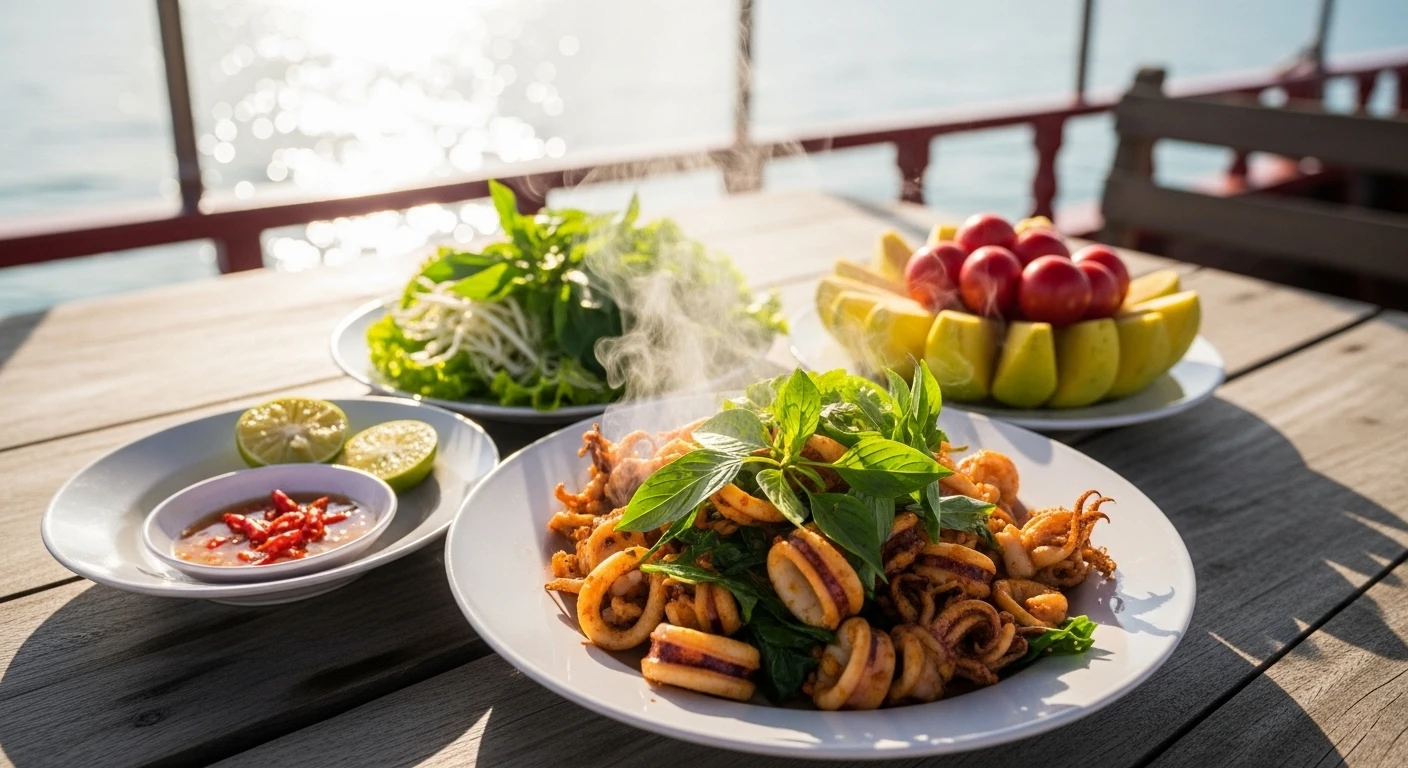
Lunch is almost always served on the roof of the boat during the surface interval. It is a communal affair: massive bowls of hot rice, stir-fried morning glory redolent with garlic, sweet and sour squid, and perhaps a whole steamed fish caught just outside the protected zone. The salt drying on your skin, the gentle rocking of the boat, and the intense savory hit of fish sauce and chili—it is one of the most satisfying meals you will ever eat. Back on the mainland, Nha Trang’s famed seafood street, Thap Ba, awaits for evening explorations of grilled sea urchins and tamarind crab.
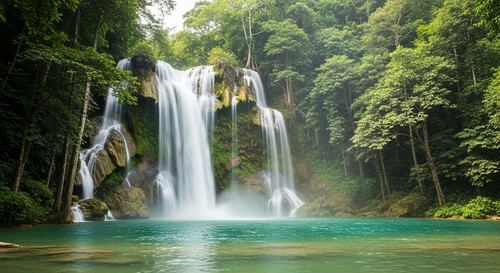
Yang Bay Waterfall: Hot Springs and Jungle Treks
Need to off-gas after a dive? Swap the beach for the mountains. Hike to a massive jungle waterfall and soak in natural mineral hot springs just outside the city.
The Final Ascent: Why Hon Mun Matters
Breaking the surface after a dive at Hon Mun, spitting out your regulator, and inflating your BCD to bob on the gentle swells, you look back toward the mainland. The skyline of Nha Trang stands tall, a testament to rapid development and booming tourism. But out here, clinging to the jagged underwater cliffs of a volcanic island, life proceeds at an ancient pace.
Hon Mun Marine Park is not just a playground for tourists; it is a vital ecological stronghold for Vietnam's central coast. It proves that with protection, a fragile ecosystem can endure the pressures of the modern world. Whether you are a veteran technical diver hunting for elusive nudibranchs, or a first-time snorkeler mesmerized by your very first clownfish, the deep blue of Nha Trang offers a profound reminder of the vibrant, silent world we share the planet with.
Ready to Take the Plunge?
Vietnam's coastline holds countless secrets waiting to be uncovered. Let curiosity be your compass.
🌊 Explore Coastal Vietnam