The Mekong's First Light: An Unconventional Awakening
Forget the gentle nudge of a hotel alarm, or the siren song of a continental breakfast buffet. In the Mekong Delta, especially around the vibrant hub of Can Tho, your true wake-up call comes with the first hint of predawn light. It’s not the sun, not yet. It’s the hum of activity, the growing chorus of boat engines, and the promise of something far more authentic than any resort can offer: a breakfast served on water.
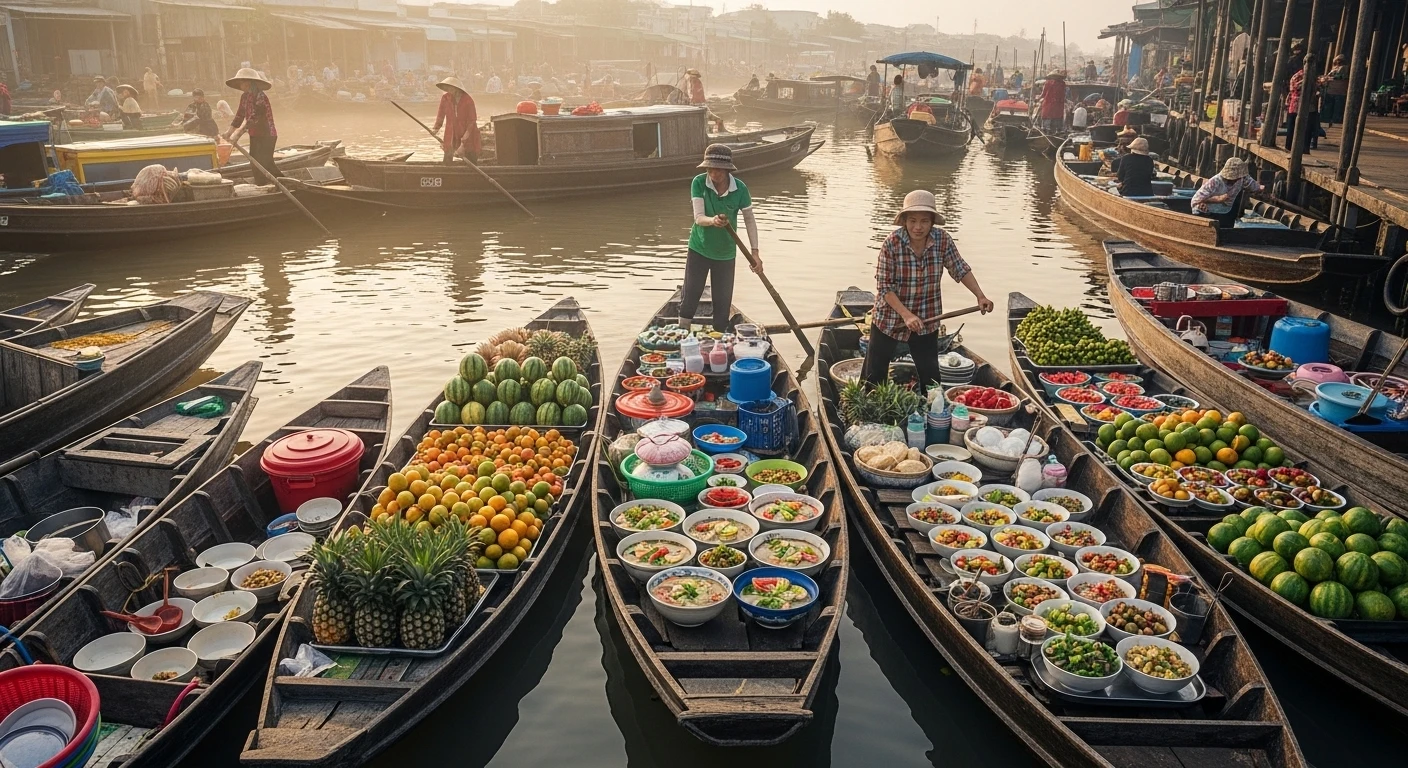
The Cai Rang Floating Market, alive with activity before the sun fully rises.
This isn't just a market; it's a living, breathing artery of commerce, a spectacle of local life that has been unfolding for generations. And at its heart, fueling the early risers, the traders, the families who live and work on the river, is the humble yet profound bowl of noodle soup.
Navigating the Waterways: The Pre-Dawn Voyage
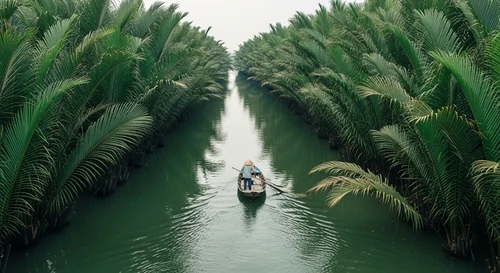
To experience Cai Rang in its full glory, you need to embrace the early hour. Most travelers arrange for a small motorboat taxi from one of the many riverside piers in Can Tho. As your boat cuts through the inky blackness of the Bassac River, the air is cool, thick with moisture, and alive with the promise of the day. The journey itself is part of the magic – watching the delta slowly awaken, the silhouettes of palm trees and stilted houses appearing against the lightening sky.
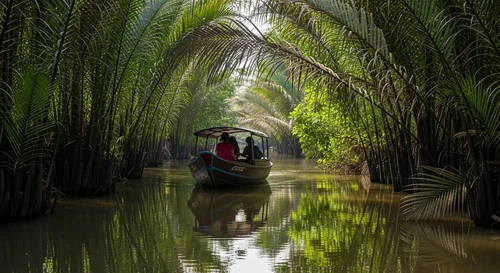
Don’t expect luxury. These are utilitarian vessels, designed for getting people and goods where they need to go. You might share your ride with locals heading to their farms or other vendors. This is your first taste of genuine Mekong life. The ride typically takes 30-60 minutes, depending on your starting point, and the further you get from the main city, the more the landscape shifts to lush agricultural plains and dense waterways.
A Thousand Boats, One Roaring Symphony
As you approach Cai Rang, the sheer scale of it becomes apparent. It's not a tidy, curated tourist experience; it's a riot of commerce. Hundreds, sometimes thousands, of boats jostle for position. Larger vessels, the "mother ships," are laden with produce – mountains of pineapple, mango, durian, and coconuts. Smaller sampans, often powered by a single person paddling or a tiny sputtering engine, weave through the maze, acting as delivery services, mobile kitchens, and personal taxis.
The air fills with the calls of vendors, the rumble of engines, and the splash of water. Each boat specializes: one sells fruit, another vegetables, a third offers steaming bowls of broth. The iconic "trunk boats" – larger barges displaying their wares on a long pole extending from their stern – are a unique feature, allowing buyers to see from a distance what’s on offer.

The Star of the Show: Hu Tieu, River-Style
But the real reason to brave the early hour, the culinary centerpiece of this watery spectacle, is Hu Tieu. Forget your hotel restaurant. The best Hu Tieu is served from a small, nimble rowboat, captained by a woman whose practiced hands have dished out countless bowls.
Hu Tieu is a pork noodle soup, but it’s a distinctly Southern Vietnamese iteration. The broth, often simmered for hours with pork bones and a medley of aromatics like star anise, ginger, and dried shrimp, is clear yet deeply flavorful. It’s typically served with a choice of noodles: fine rice vermicelli (bun), flat rice noodles (hu tieu dai), or delicate tapioca noodles (hu tieu mi).
The magic happens when you signal your hunger. A boat drifts alongside yours, the vendor deftly ladles hot broth into a ceramic bowl, adds your chosen noodles, and then tops it with tender slices of pork, minced pork, maybe some shrimp or quail eggs. A sprinkle of fresh scallions, cilantro, and a dash of white pepper finish it off.

Dining at Sea: The Art of the Riverine Meal
There are no tables, no chairs in the traditional sense. You simply lean over the side of your own boat, or sometimes, if you're lucky, your boat might gently tie up alongside the "restaurant" boat. The bowl is placed directly into your hands. This is an intimate, interactive dining experience. The vendor might pass you a basket of fresh herbs – mint, basil, bean sprouts – and lime wedges for you to customize your soup.
The sound of slurping noodles, the gentle lapping of the river against the hulls, the warm steam rising from your bowl – it’s sensory overload in the most delightful way. It feels primal, essential. This isn't food served *at* a destination; it's food that *is* the destination. It’s the fuel that powers this entire floating ecosystem.

Long Xuyen Floating Market: The Untouched, Gritty Heart of the Mekong
Forget the tourist boats of Cai Rang. Wake up at 5 AM to witness authentic, large-scale agricultural trading on the muddy waters of An Giang province.
Read More →Beyond the Bowl: The Soul of the Broth
The key to great Hu Tieu lies in that broth. While regional variations exist – from the more complex, often seafood-based Hu Tieu Nam Vang (originating from Phnom Penh) to simpler pork-focused versions – the essence remains the same: balance and depth.
In Cai Rang, you're likely to find a delicious compromise – rich pork flavor enhanced by dried shrimp and fish sauce, providing a complex umami base that’s both comforting and invigorating. The noodles are cooked to perfection, offering just enough bite. And the toppings? Fresh, tender pork slices, savory ground pork, and often plump shrimp, ensuring every spoonful is a layered experience.

Banh Tam Bi: The Savory 'Silkworm' Noodles Drowned in Coconut Milk
Thick tapioca noodles that look like silkworms, topped with shredded pork skin and smothered in sweet, rich coconut cream. A bizarre but brilliant Mekong specialty.
Read More →Life on a Tiny Plastic Stool
While we were served directly from our boat, many floating market vendors also serve from their own larger boats, and patrons might moor their smaller vessels alongside, or even gather at makeshift floating "restaurants." This often means perching on the ubiquitous, low-slung plastic stools – a quintessential element of Vietnamese street food culture.
These stools are more than just furniture; they’re an indicator of authenticity. The lower the stool, the more local, the more real the experience. It forces a certain intimacy with your food and the environment around you. Eating Hu Tieu from a tiny stool, with the river rocking gently beneath you, is an experience that grounds you in the delta’s vibrant rhythm.
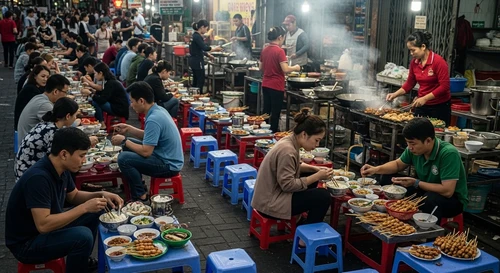
The Secret Rule of Vietnam's Plastic Chairs: Why the Lowest Seats Serve the Best Food
Uncover the unspoken rule of Vietnamese street food: if you want the most authentic, mouth-watering meal, you have to sit on a tiny plastic stool. Here is why.
Read More →More Than Just Soup
While the Hu Tieu is the star breakfast, the market offers a full spectrum of breakfast and snack options. You'll see boats selling steaming 'Banh Bo' (honeycomb cakes), sweet sticky rice, and various pastries. Coffee, of course, is essential – strong, dark Vietnamese coffee brewed with a phin filter is readily available, often served with sweetened condensed milk.
This isn't just a place to eat; it’s a community hub. Conversations flow, deals are struck, and the day’s rhythm is set, all against the backdrop of the mighty Mekong River.
Insider Tips for Your Floating Breakfast
When to Go: The market is most active between 5 AM and 7 AM. Aim to be on the water by 5:30 AM to catch the peak. It winds down by 8 AM, though some fruit vendors might linger longer.
Getting There: Arrange a boat tour or hire a private boat from a reputable tour operator or your hotel in Can Tho. Negotiate the price beforehand. Specify that you want to experience the market for breakfast, not just a quick look. Tours often include stops at a local noodle factory or fruit orchard, which are worthwhile extensions.
What to Bring: Light, quick-drying clothing, sun protection (hat, sunscreen), insect repellent, a waterproof bag for your phone/camera, and some cash for your soup and any souvenirs or extra fruit you might fancy.
Eating Etiquette: Be respectful. Smile, use simple gestures if language is a barrier. Pointing to what you want is perfectly acceptable. Enjoy the intimacy of eating from your boat – it's part of the unique charm. Don't be afraid to try new things; the food here is prepared with care and passion.
A Taste of True Delta Life
A sunrise breakfast at Cai Rang Floating Market is more than just a meal; it’s an immersion. It’s a visceral connection to a way of life that’s as old as the river itself. The warmth of the Hu Tieu, the vibrant chaos of the market, the gentle sway of your boat – these are the sensory memories that linger long after you've left the Mekong Delta. It’s a reminder that sometimes, the most profound travel experiences are found not in grand monuments, but in the simple, honest rituals of everyday life, served piping hot before the sun even kisses the horizon.
Explore More of the Delta
Discover the diverse culinary traditions and unique lifestyles of Vietnam's riverine heartland.
🛶 Journey Through Ben Tre