A Fluorescent Carpet on Water
Deep in the southwestern reaches of Vietnam, where the land dissolves into a mosaic of waterways and emerald green, lies a landscape so surreal it feels plucked from a dream. An Giang province, part of the mighty Mekong Delta, is home to the Tra Su Cajuput Forest, a vast wetland ecosystem that, for much of the year, is defined by an impossibly vibrant, almost electric, carpet of green. This isn't just any forest; it's a floating world, where the water's surface is entirely consumed by a thick, undulating blanket of duckweed.
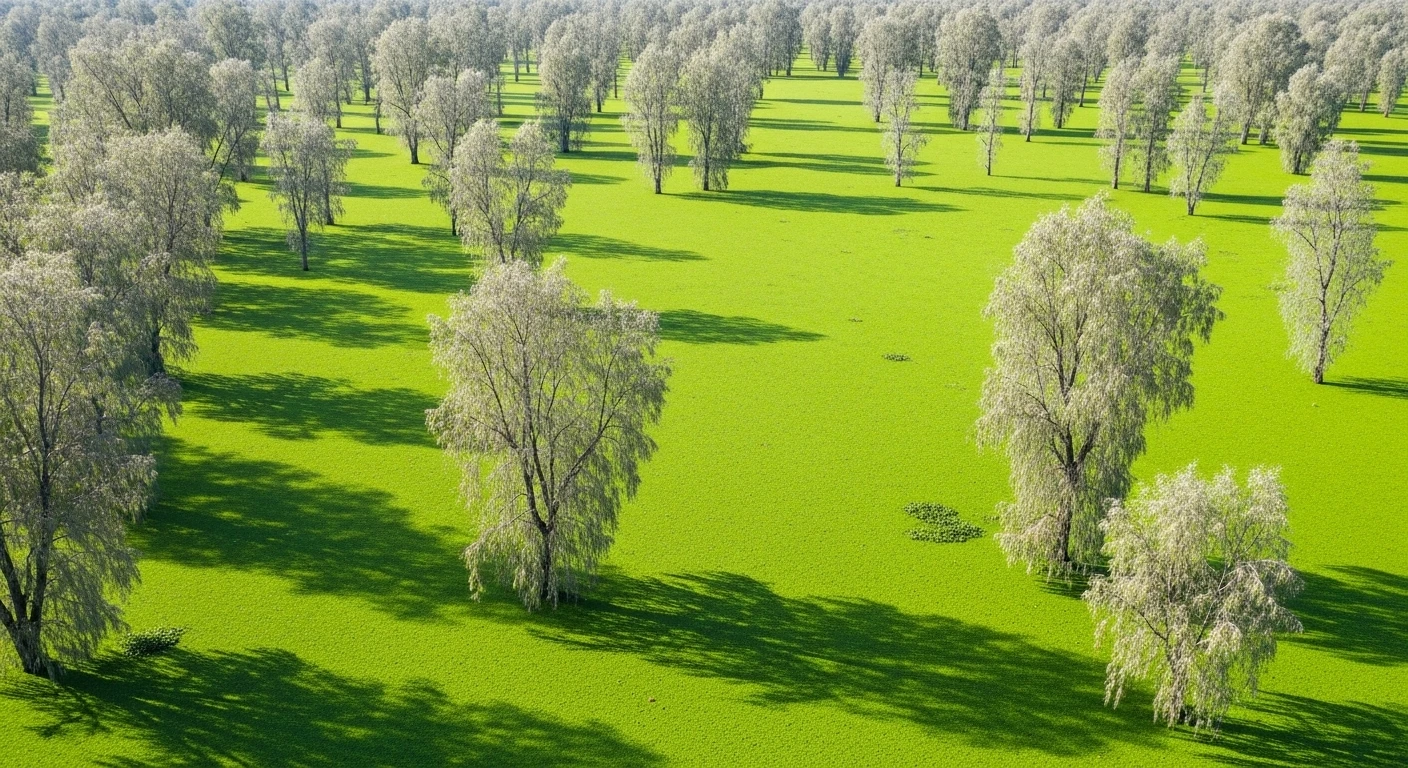
The breathtaking expanse of Tra Su, a sea of fluorescent green duckweed in the An Giang wetlands.
This isn't the dense, tangled mangrove of other delta regions. Tra Su is characterized by its shallow, flooded landscape, dominated by cajuput trees whose silvery-green leaves shimmer in the tropical sun. But the true magic happens at water level. The duckweed, or water lettuce as it's often called, grows with an almost aggressive vitality, creating a dense, spongy mat that muffles sound and transforms the very nature of the water below into a verdant, living canvas.
The Journey In: From Motorboat to Sampan
Reaching the heart of Tra Su is an experience in itself, a gentle shedding of the outside world. Typically, your adventure begins with a ride on a larger motorboat, chugging along wider channels that snake through the edges of the forest. This initial phase offers a broader perspective of the landscape, the distinctive cajuput trees rising on stilts from the water, their branches often adorned with the nests of local birdlife.
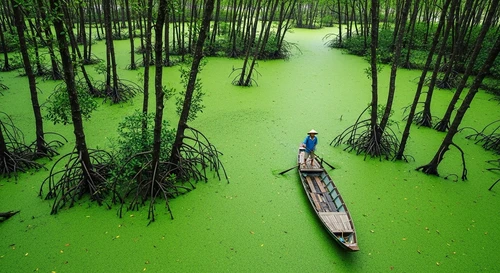
But the true immersion happens when you transfer. As the wider channels narrow, you'll be guided to a smaller, hand-rowed sampan. This is where the magic truly unfolds. The local boatwomen, their faces weathered by the sun and their hands calloused from years of practice, expertly navigate these narrow waterways. They use a long pole or oars with a gentle, rhythmic stroke, gliding the sampan silently over the impossibly thick duckweed.
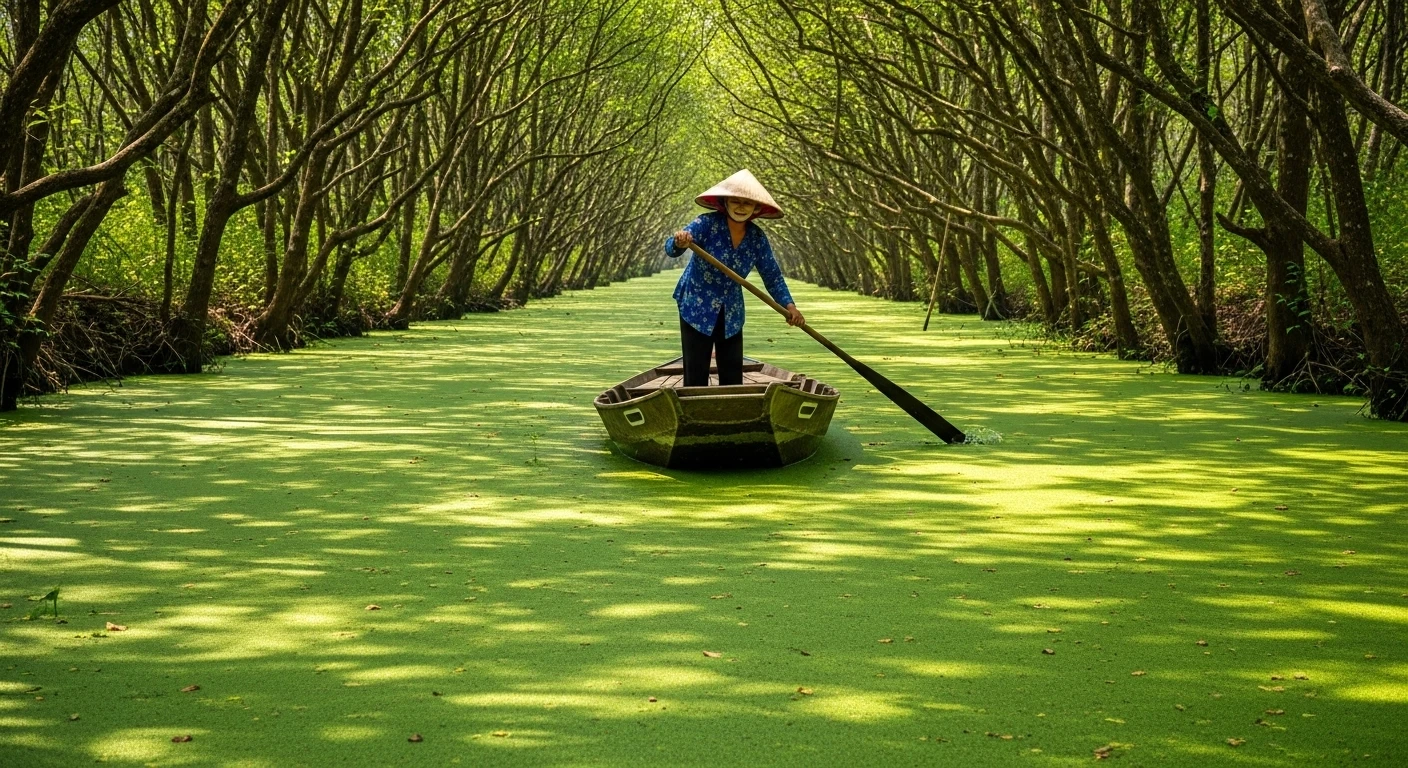
The quiet mastery of a local rower transforms the journey into a meditative experience.
The silence is profound, broken only by the soft dip of the oar, the distant call of a bird, or the gentle rustling of leaves. You become part of the ecosystem, moving at its pace, a silent observer in this vibrant, watery world.
The Fluorescent Hue: Nature's Masterpiece
The defining characteristic of Tra Su is its color. The duckweed, under the intense tropical sun, glows with an almost unnatural, fluorescent green. It's a shade so vivid it seems to hum with energy. This isn't the muted green of a forest floor; this is the vibrant, saturated hue of an alien landscape, a testament to the rich nutrients and the unique conditions of the Mekong Delta.
The thickness of the duckweed layer creates a sense of walking on water, though the actual water lies hidden beneath. As the sampan cuts a path, you see the delicate roots of the plants trailing beneath the surface. The light plays tricks, dappling through the cajuput leaves above and reflecting off the saturated green below, creating a mesmerizing, almost hallucinatory effect.
Wildlife Spectacle: A Haven for Birds
While the duckweed may steal the visual show, Tra Su is also a crucial habitat for a diverse array of birdlife. The cajuput trees provide nesting grounds, and the shallow waters teem with small fish and invertebrates that sustain a thriving avian population.
Look up, and you'll see egrets, herons, and various species of storks perched on branches or soaring overhead. The air often buzzes with the calls of countless birds, a natural symphony that underscores the ecosystem's vitality. Depending on the season, and particularly during the wet season (roughly May to November), the bird population is at its most abundant, turning the forest into a living aviary.
Many visitors opt for a climb up the observation tower within the forest reserve. From this vantage point, the true scale of the green carpet becomes apparent, and you gain a spectacular aerial view of the forest canopy and the surrounding wetlands, often spotting larger flocks of birds in motion.
The Cajuput Trees: Sentinels of the Swamp
The cajuput (or melaleuca) trees are the backbone of Tra Su. Their slender, white trunks and drooping, silvery-green leaves create a distinct visual signature against the vibrant green of the duckweed. These trees are hardy, thriving in flooded conditions and playing a vital role in the ecosystem's health.
During certain times of the year, especially the wetter months, the forest floor can be completely submerged, with the cajuput trees appearing to float or stand on stilted roots. The scent of cajuput oil, known for its medicinal properties, can sometimes be faintly detected in the air, adding another sensory layer to the experience. The trees also provide essential shade and structure, making the forest a vital stopping point for migratory birds and a sanctuary for local wildlife.
The Practicalities: Timing and Access
Tra Su is located in Tinh Bien district, An Giang province, in Vietnam's Mekong Delta. It's most commonly visited as a day trip or an overnight stay from nearby cities like Chau Doc, which is roughly a 45-minute to 1-hour drive away.
When to Visit: The best time to witness the full glory of the duckweed carpet is during the wet season, from approximately May to November. This is when the water levels are high, and the vegetation is at its most lush. During the dry season, the water levels recede, and the duckweed might be less dense, though the forest still offers a unique charm. Birdwatching is generally excellent year-round, but often peaks during the wet season.
Getting There:
- From Ho Chi Minh City: This is the most common international gateway. From HCMC, you can take a bus or hire a private car to Chau Doc (approx. 5-7 hours).
- From Can Tho: Another major city in the Mekong Delta. Buses and private cars are available to Chau Doc (approx. 3-4 hours).
- From Chau Doc: Once in Chau Doc, the easiest way to reach Tra Su is by taxi or motorbike taxi, which can take you directly to the entrance of the forest reserve. Many tours departing from Chau Doc will include transportation.
Practical Tips: Wear light, breathable clothing. A hat and sunglasses are essential for protection from the sun. Mosquito repellent is advisable, especially during dawn and dusk. Bring cash for entrance fees, boat rides, and any local snacks or souvenirs. Be prepared for the heat and humidity.
Eco-Tourism and Sustainability
Tra Su is a prime example of successful eco-tourism in the Mekong Delta. The management of the forest prioritizes the preservation of its unique ecosystem, allowing visitors to experience its natural beauty responsibly. The involvement of local communities, particularly the women who operate the sampans, provides them with economic opportunities while encouraging stewardship of the environment.
The very nature of the forest – a shallow wetland with floating vegetation – makes it a delicate environment. Responsible tourism practices, such as sticking to designated paths and waterways and respecting wildlife, are crucial. While it's a popular destination, the vastness of the forest and the quiet, personal experience of the sampan ride allow for moments of profound connection with nature, far from the hustle and bustle of city life.
The Surreal Beauty: A Photographer's Dream
For photographers, Tra Su is a dream canvas. The interplay of light, color, and form offers endless opportunities for capturing stunning images. The fluorescent green duckweed, contrasted with the silver bark of the cajuput trees and the blue sky, creates a palette that is both bold and harmonious.
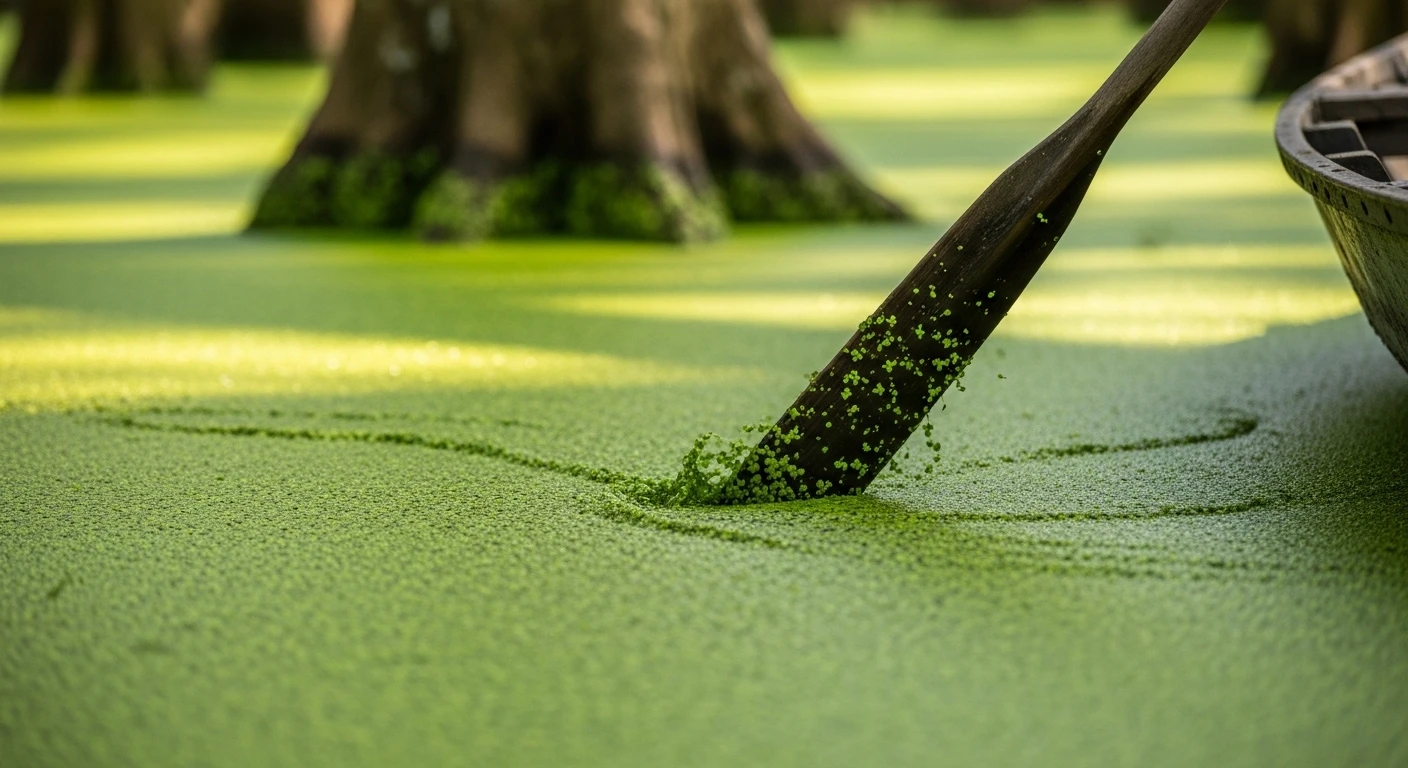
The intimate detail of the duckweed carpet, where every ripple tells a story.
The quiet of the sampan ride allows for patient observation and composition. Golden hour light, casting long shadows and bathing the forest in a warm glow, is particularly magical. From the macro details of the duckweed to the sweeping panoramas from the observation tower, Tra Su offers a visual feast that is both unique and unforgettable.
Comparing Tra Su to Other Mekong Wetlands
The Mekong Delta is a region defined by its water, and its wetlands are a defining feature. While Tra Su is unique in its intensely fluorescent duckweed cover and predominantly cajuput forest, it shares the spirit of many other vital ecosystems in the region.
Consider Tra Su Mangrove Forest (a related but distinct area often confused with this cajuput forest) or the Gao Giong Bird Sanctuary. Both offer incredible biodiversity and stunning water-based journeys. Tra Su's defining characteristic remains its visually arresting, uniform carpet of duckweed, creating an almost otherworldly atmosphere. Gao Giong is renowned for its sheer density of birdlife, a true ornithological paradise, while mangrove forests offer a different kind of tangled, aquatic beauty. Each offers a distinct window into the Delta's incredible ecological richness.
The Essence of Tra Su: A Meditative Escape
Tra Su Cajuput Forest is more than just a destination; it's an experience that stills the mind and reawakens the senses. It's a place where nature's artistry is on full display, from the almost impossibly vibrant green of the duckweed to the silent ballet of the birds in the cajuput trees. The gentle glide of the sampan over water that seems to defy gravity invites a sense of peace and wonder.
In a world that often rushes, Tra Su offers a moment to pause, to breathe in the humid air, and to be utterly present in a landscape that feels both ancient and vibrantly alive. It's a reminder of the quiet, powerful beauty that can be found in the most unexpected corners of our planet, a truly fluorescent gem in the heart of the Mekong Delta.