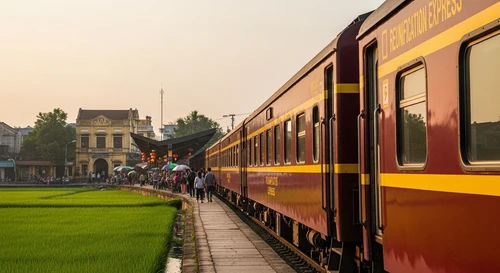
Vietnam's Crown Jewel of Rail Travel
Forget the white-knuckle anxiety of navigating Vietnamese roads on a motorbike, or the sometimes sterile efficiency of a private car. There exists a more civilized, and arguably more breathtaking, way to traverse the iconic Hai Van Pass: by train. This isn't just a mode of transport; it's an experience, a slow-burn immersion into one of Southeast Asia's most spectacular landscapes. The Reunification Express, affectionately known as the "North-South line," snakes its way along the coastline, and for a glorious stretch, it hugs the formidable cliffs of Hai Van Pass, offering views that will etch themselves into your memory.
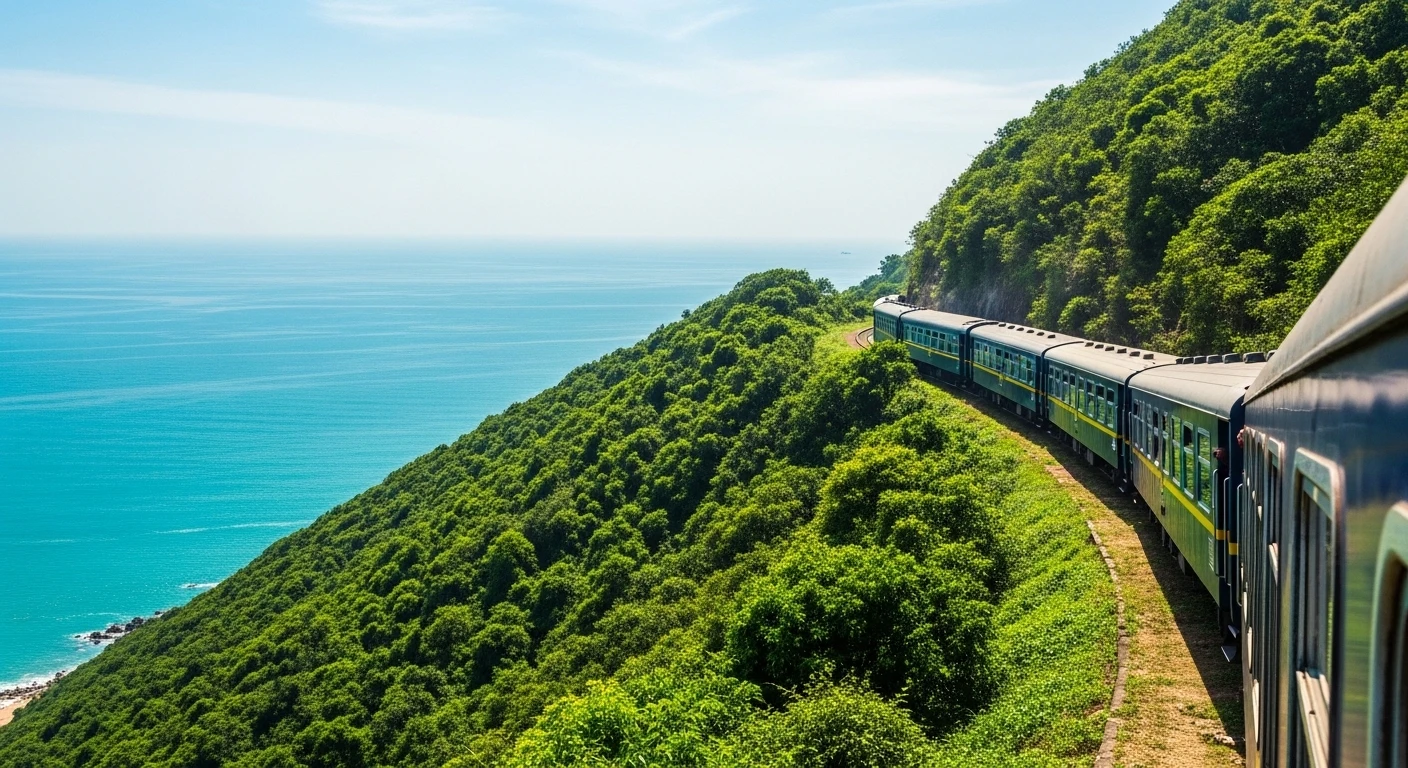
The train, a serpent of steel, winds its way along the dramatic coastline of the Hai Van Pass.
For those who appreciate the art of travel, the rhythm of the clacking wheels on the track, and the unfolding panorama outside the window, this journey is pure poetry. It's a deliberate contrast to the frenetic pace of modern life, a chance to simply sit back, breathe, and witness Vietnam's raw, untamed beauty reveal itself.
The Slow Reveal: Why Train Travel Wins Here
Motorbikes offer freedom, yes, but also exposure to dust, exhaust, and the sheer sensory overload of chaotic traffic. Cars provide comfort but can feel isolating, separated from the environment. The train, however, strikes a perfect balance. It offers a comfortable, climate-controlled carriage while keeping you intimately connected to the unfolding scenery.
As the train pulls away from Hue, a city steeped in imperial history, the landscape begins to shift. The flat plains give way to rolling hills, and soon, the majestic Hai Van Pass looms. The journey is relatively short – typically just over two hours between Hue and Da Nang – but it's packed with visual riches. You'll glide past vibrant green rice paddies, sleepy fishing villages, and dramatic coastal stretches where the mountains plunge directly into the sea.
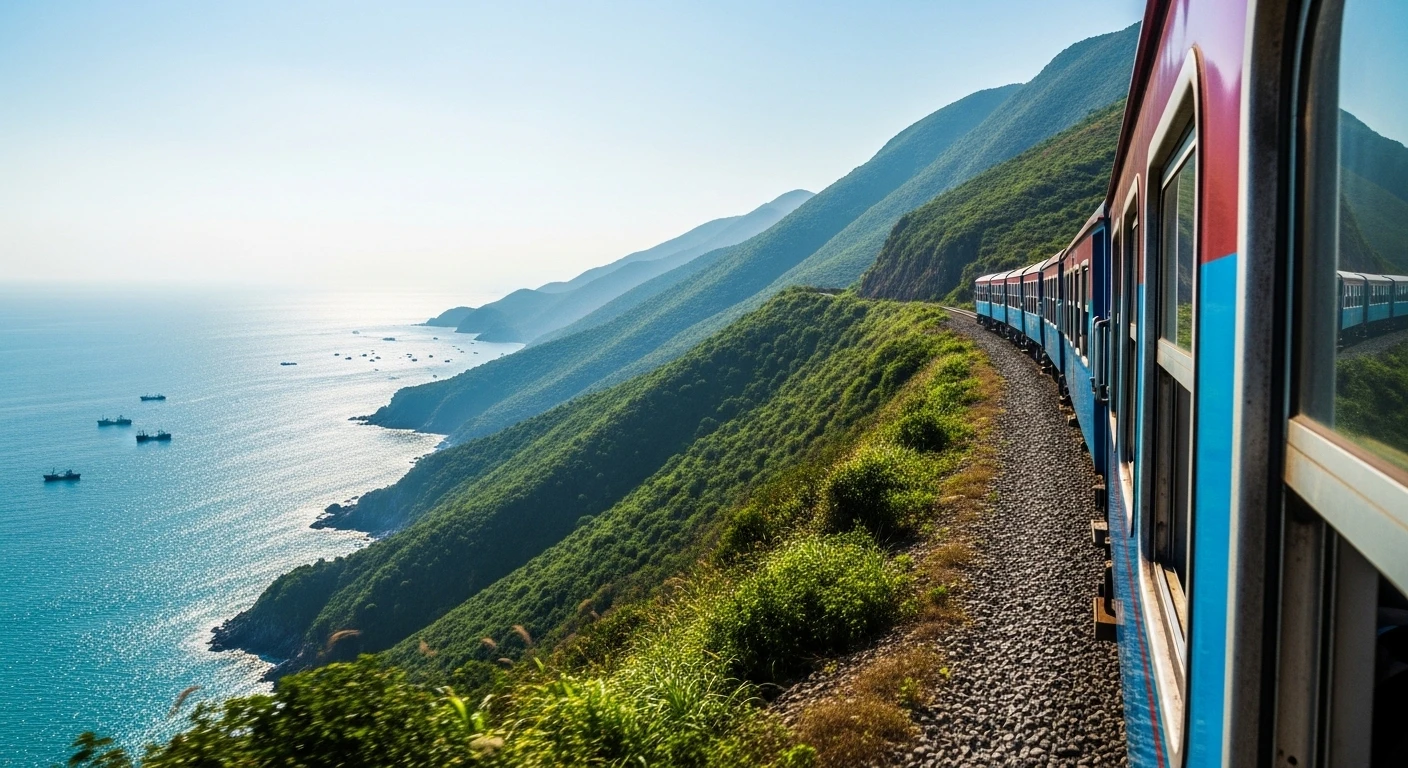
A breathtaking vista of the South China Sea unfurls from the train's window as it navigates the coastal mountains.
The "slow travel" ethos is embodied by this railway. It encourages you to absorb the details: the way the light hits the water, the distant silhouette of a fishing boat, the vibrant colors of local life unfolding in villages you'd otherwise zip past. It’s about appreciating the journey as much as the destination.
From Imperial City to Coastal Charm: The Route Unveiled
The most popular stretch of this scenic railway, and the one that captures the essence of the Hai Van Pass experience, is the journey between the former imperial capital of Hue and the bustling coastal city of Da Nang.
Starting Point: Hue Railway Station Hue, a city of ancient citadels and serene pagodas, offers a gentle start to the day. Arriving at the historic Hue Railway Station, you'll find a well-organized platform. It's advisable to book your tickets in advance, especially during peak season, though last-minute tickets are often available for the less-than-stellar hard seats. Opt for a soft seat or a sleeper berth for maximum comfort.
The Ascent and the Pass: As the train chugs northward from Hue, you'll eventually turn west, beginning the ascent towards the pass. The landscape quickly transforms. You'll see lush vegetation clinging to steep slopes, small hamlets nestled in valleys, and the first hints of the vast ocean appearing in the distance. The highest point of the pass is marked by the Hai Van Gate, a historical structure that once symbolized the boundary between the northern and southern kingdoms. The train will pass through tunnels carved into the mountain, offering moments of darkness before bursting back into blinding sunlight and spectacular vistas.
The Descent and Coastal Glory: The true magic begins as the train descends on the other side. Here, the South China Sea unfolds in all its glory, a shimmering expanse of blue that stretches to the horizon. The tracks hug the coastline precariously, offering unparalleled views of rocky outcrops, white-sand beaches, and waves crashing against the shore. You'll pass fishing boats bobbing on the water and may even catch glimpses of Lang Co Beach, a renowned crescent of sand framed by turquoise waters.
Destination: Da Nang Railway Station The train eventually rolls into Da Nang, a modern city rapidly transforming into a major tourist hub, known for its long sandy beaches and the iconic Dragon Bridge.
Framing the View: Tips for Train Window Photography
This journey is a feast for the eyes, and for photographers, it's a dream come true. However, shooting from a moving train presents unique challenges. Here’s how to make the most of it:
- Secure a Window Seat: This is non-negotiable. If possible, choose a seat on the left side of the train when traveling from Hue to Da Nang for the best ocean views.
- Clean Your Window: Train windows can be grimy. Give it a good wipe with a cloth or a bit of water before you depart.
- Embrace the Slow Speed: The train's moderate pace is your friend. It allows for sharper shots than high-speed rail.
- Use a Polarizing Filter: This essential accessory will cut down glare on the window and enhance the blues of the sky and sea, making your photos pop.
- Shoot in Burst Mode: The landscape changes rapidly. Burst mode increases your chances of capturing that perfect moment.
- Experiment with Angles: Don't just shoot straight out. Try shooting slightly up towards the cliffs or down towards the water for more dynamic compositions.
- Be Mindful of Reflections: If you're struggling with reflections, try pressing your lens or filter right up against the glass, or use a lens hood to block out ambient light.
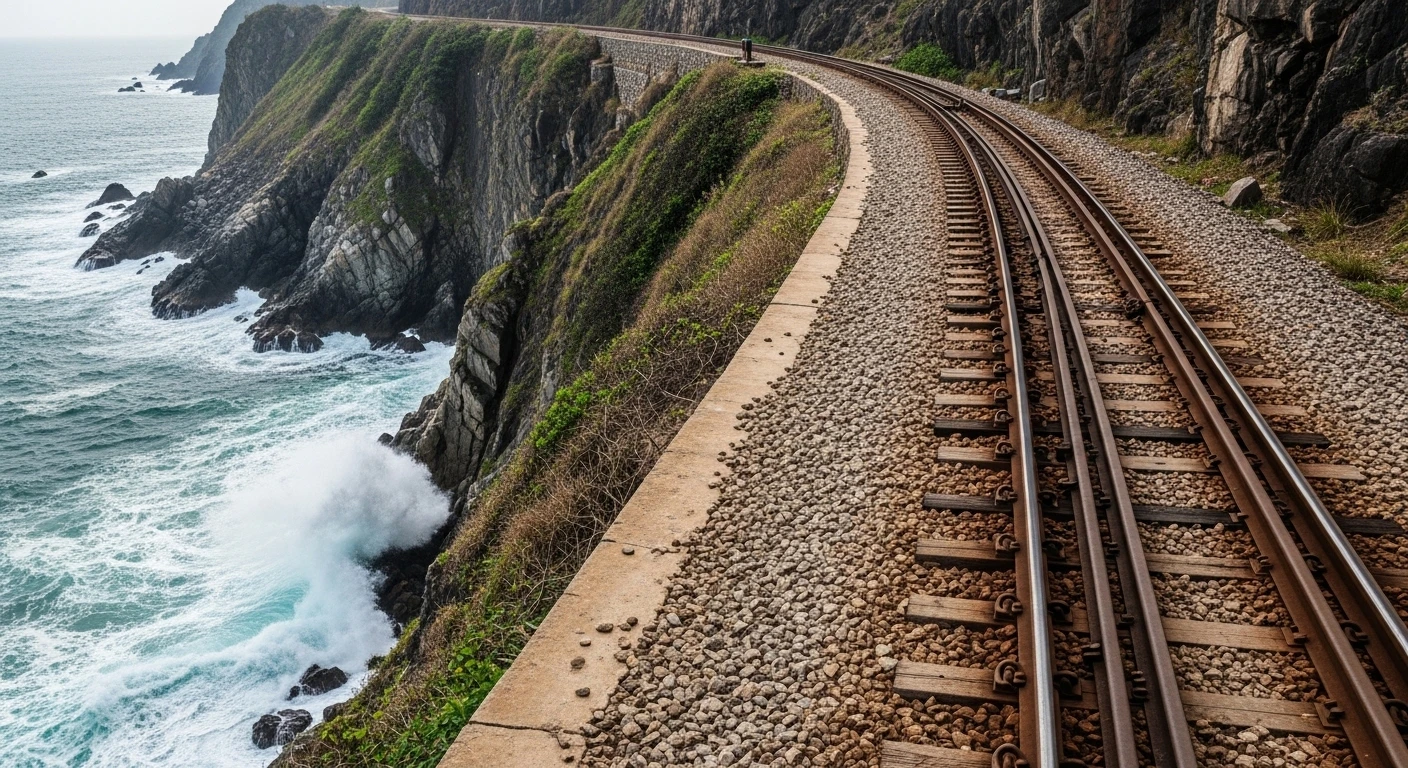
The tracks carve a perilous, yet beautiful, path along the coast, a testament to engineering and natural grandeur.
The interplay of the steel tracks, the rugged cliffs, and the boundless ocean creates a scene that’s both dramatic and serene. It's a landscape that begs to be captured, a visual symphony played out in real-time.
Navigating the Rails: Essential Travel Tips
Planning your train journey on the Hai Van Pass is straightforward, but a few pointers can ensure a smoother experience.
Booking Tickets: The most convenient way to book is online through reputable travel sites like 12Go.asia or Baolau.com. These platforms allow you to compare schedules, seat types, and book in advance, especially crucial during holidays or the high season. You can also purchase tickets directly at the train station, but be prepared for potential queues and limited availability for preferred seats.
Seat Types: * Hard Seat: The most economical, but least comfortable option for longer journeys. * Soft Seat: Recommended for this shorter, scenic stretch. Offers more padding and legroom. * Soft Sleeper (4-berth cabin): Ideal for overnight travel, but likely overkill for the Hue-Da Nang route unless you want to luxuriate. * Hard Sleeper (6-berth cabin): Basic but functional for overnight trips. For the Hai Van Pass journey, a soft seat is the sweet spot between cost and comfort, allowing you to freely move to the window.
Onboard Amenities: Basic snacks and drinks are usually available for purchase from vendors who walk through the carriages. However, packing your own water and some snacks is always a good idea. Restrooms are available, though don't expect five-star facilities.
Luggage: There are overhead racks for smaller bags and larger luggage can be stowed at the ends of the carriages. Keep valuables with you.
Getting to the Stations: Taxis or ride-sharing apps (like Grab) are readily available in both Hue and Da Nang to get you to and from the respective train stations.
Beyond the Rails: Complementary Experiences
While the train journey itself is a highlight, it can also be part of a larger adventure. Many travelers combine this scenic train ride with other ways to experience the Hai Van Pass.
The Hai Van Pass Jeep Tour: For those who want a more rugged, open-air experience, a jeep tour is a fantastic option. You can hire a driver and guide in a vintage US military jeep, allowing you to stop at viewpoints, explore off-road tracks, and truly feel the wind in your hair. Some tours can be arranged to meet you after your train journey or vice-versa. Explore the Hai Van Pass Jeep Tour.
Motorbike Tours: For the truly adventurous, hiring an Easy Rider (a local guide who drives you on their motorbike) or riding your own is a classic Vietnamese experience. This offers the ultimate freedom to stop wherever you please. However, this is not for the faint of heart due to the traffic conditions.

A friendly face from a local village offers a warm greeting as the train passes through.
The Don Ca De Arch Bridge: For the dedicated train enthusiast or photographer seeking unique perspectives, a hike to the Don Ca De Arch Bridge offers an incredible vantage point to photograph the Reunification Express as it chugs dramatically through the jungle-clad hills. It's a hidden gem for those willing to venture off the beaten path. Discover the Don Ca De Arch Bridge.
Consider how you want to experience the pass – the laid-back views from the train, the thrilling open-air ride in a jeep, or the immersive control of a motorbike – and plan your itinerary accordingly.
The Verdict: More Than Just a Train Ride
So, why is this stretch of railway often hailed as the most scenic in Southeast Asia? It’s the perfect confluence of elements: the sheer, dramatic drop from mountain to sea, the vibrant blue of the water, the lush green of the tropical foliage, and the gentle, rhythmic pulse of the train itself. It’s a landscape that feels both wild and accessible, grand and intimate.
Unlike some overly-hyped tourist trails, the Hai Van Pass by train delivers genuine awe. It’s a reminder that sometimes, the most profound travel experiences are found not in adrenaline-pumping adventures, but in quiet observation, in the slow unfolding of beauty. It’s a moment of peace in a country that is otherwise a riot of color, sound, and flavor.
Beyond the Views: The Human Element
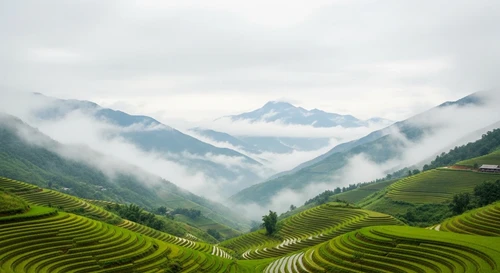
What elevates this journey beyond mere scenic beauty is the human element. As the train glides along the coast, you’ll see glimpses of local life: fishermen tending their nets on small boats, children waving from dusty villages, farmers working their terraced fields. These fleeting interactions add a layer of authenticity to the stunning landscapes.
The train itself is a microcosm of Vietnamese society, carrying a mix of locals, backpackers, and families. The shared experience of gazing out at the same spectacular view fosters a quiet camaraderie amongst passengers. It's a reminder that travel connects us, not just to places, but to people.
Your Coastal Escape Awaits
The Hai Van Pass by train is an essential experience for any traveler seeking the soul of Vietnam. It's an accessible, comfortable, and utterly unforgettable way to witness one of nature's most dramatic coastal canvases. Whether you’re heading north to Hue or south to Da Nang, make sure this segment of the Reunification Express is firmly on your itinerary.
So, if the thought of a motorbike terrifies you, or if you simply crave a moment of breathtaking, unadulterated beauty, book that train ticket. Let the rhythmic clatter of the wheels carry you along this legendary pass, and prepare to be captivated.