The Ascent to Gold: Mu Cang Chai's Autumn Revelation
There are vistas that simply demand your attention, places that etch themselves into your memory with a visceral intensity. Mu Cang Chai, nestled in the northern reaches of Vietnam, is one such destination. Forget manicured gardens or bustling metropolises; this is nature in its most raw, magnificent form. And during the brief, breathtaking autumn harvest season, it transforms into a spectacle of gold that draws adventurers and artists from across the globe.
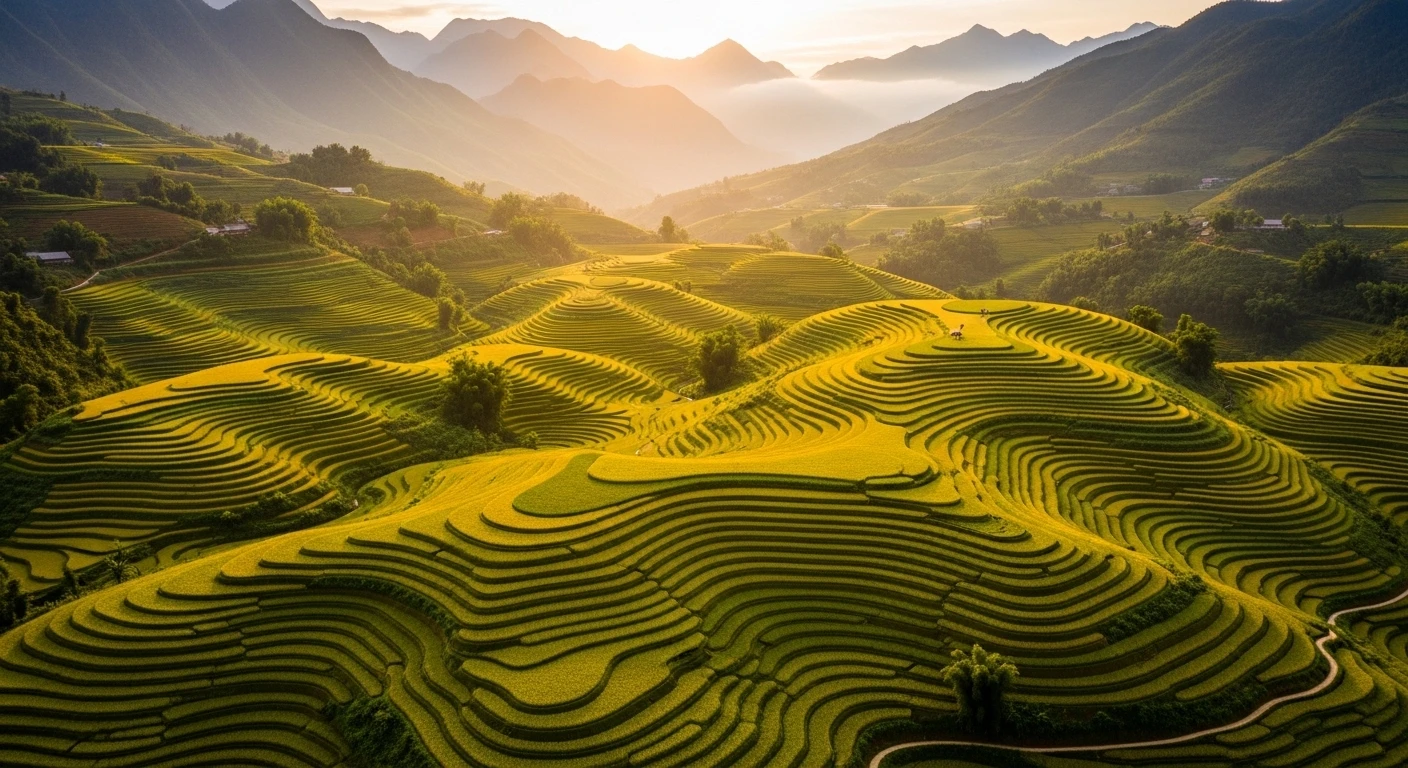
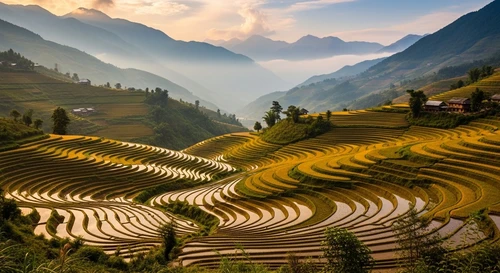
The legendary golden rice terraces of Mu Cang Chai during peak harvest.
This isn't just about pretty landscapes; it's about immersion. It's about witnessing a way of life dictated by the seasons, the land, and the traditions of ethnic minority communities like the Hmong and Thai people. It’s about feeling the wind rush past your ears as you soar over a sea of gold, and then grounding yourself with the hearty, authentic flavors of the mountains.
The Ascent to the Clouds: A Pilgrimage to the North
Getting to Mu Cang Chai is part of the adventure. It's a commitment, a journey that rewards the dedicated traveler. Most journeys begin in Hanoi, the vibrant capital, a necessary springboard for any exploration of Northern Vietnam. From there, you'll typically embark on a bus or private car towards the northwest. The initial leg might be on more established highways, but as you press deeper, the roads begin to twist and turn, climbing into the verdant highlands.
The landscape gradually shifts from the flat Red River Delta to rolling hills, then to the dramatic, jagged peaks that define this region. You'll pass through smaller towns and villages, each offering a glimpse into rural Vietnamese life. The air grows cooler, cleaner, and the views more expansive. Allow a full day, if not two, for this transfer to truly appreciate the transition and avoid exhaustion. The final approach to Mu Cang Chai district itself is often on narrow, winding mountain passes, building anticipation for the wonders ahead.

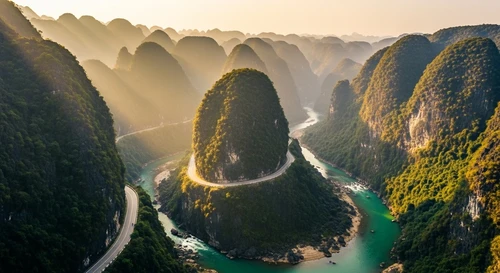
The Ha Giang Loop: Southeast Asia's Most Dangerous and Beautiful Road
For those who crave the ultimate mountain road adventure, the journey into the highlands of Northern Vietnam is unparalleled.
Read More About the Ha Giang Loop →The Khau Pha Pass: Where the Sky Meets the Golden Sea
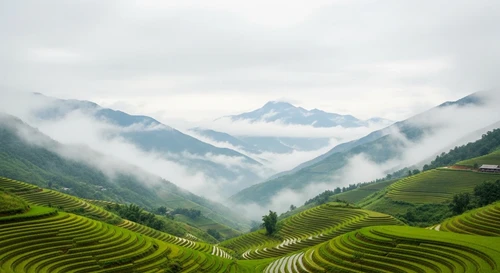
The Khau Pha Pass is not just a road; it’s an experience. Translated literally as "horn of heaven," this dramatic mountain pass is arguably the most scenic stretch on the route to Mu Cang Chai. As you ascend, the world unfolds beneath you, revealing layer upon layer of emerald-green, which, come autumn, erupts into a breathtaking panorama of golden rice paddies.
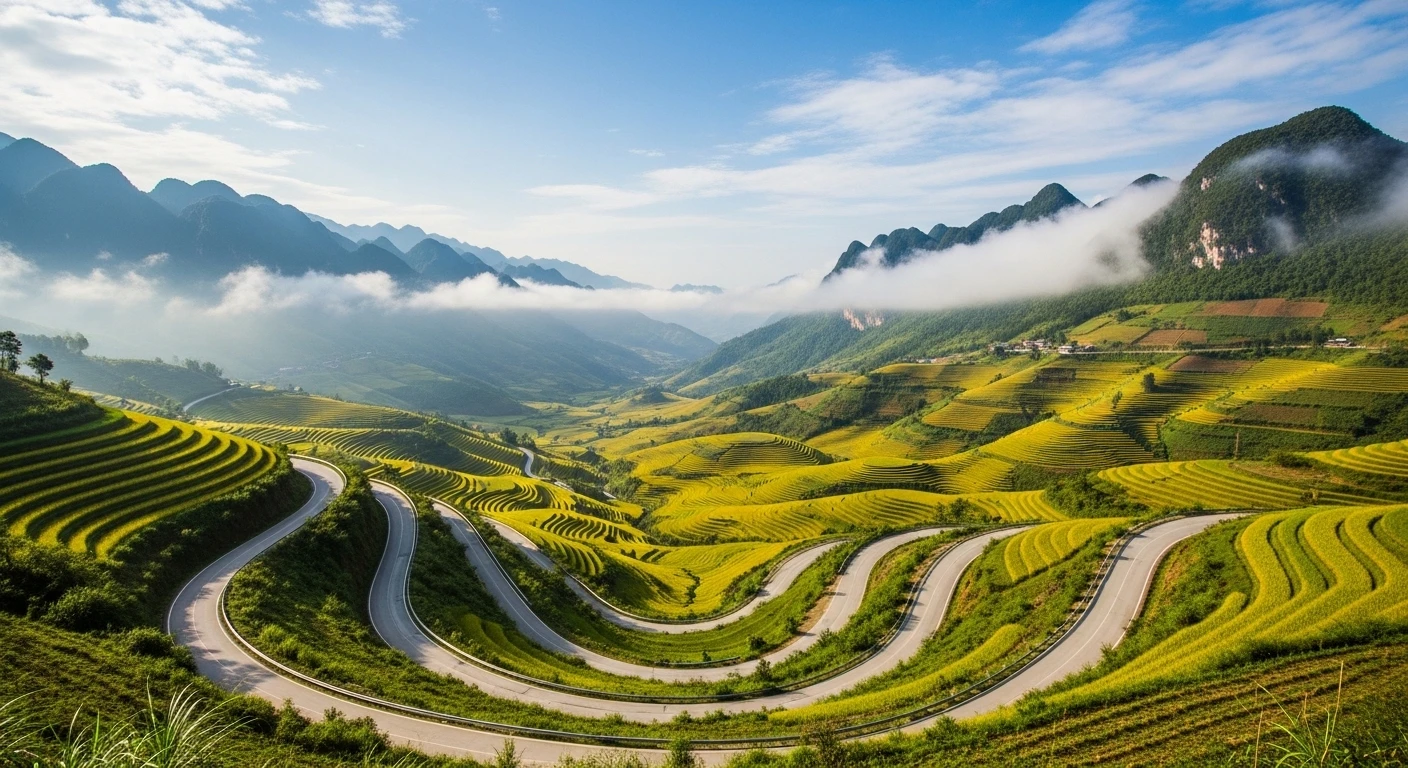
The breathtaking vistas from atop the Khau Pha Pass.
It's here, at the pass’s highest point, that the true magic of Mu Cang Chai reveals itself. The terraced fields, carved painstakingly into the steep slopes over generations, create an optical illusion of cascading waterfalls made of grain. Standing here, with the wind whispering through the valleys and the vast expanse of gold stretching to the horizon, you feel a profound sense of awe. This is the playground for paragliders, a place where the dream of flight meets one of the world's most spectacular landscapes.
On the Wings of Eagles: Paragliding Over Mu Cang Chai
For the adrenaline seekers, and indeed for anyone who has ever dreamed of flying, Mu Cang Chai offers an unparalleled paragliding experience. The Khau Pha Pass is renowned as one of the prime paragliding spots in Vietnam, particularly during the harvest season when the thermals are favorable and the views are at their absolute peak.
Local operators, often affiliated with the "Wings of Vietnam" group, provide tandem paragliding flights. Strapped securely to an experienced pilot, you’ll take a running leap from a designated launch point on the pass. The initial ascent is exhilarating, offering a dizzying perspective of the road and the people below. Then, you glide. You truly soar.
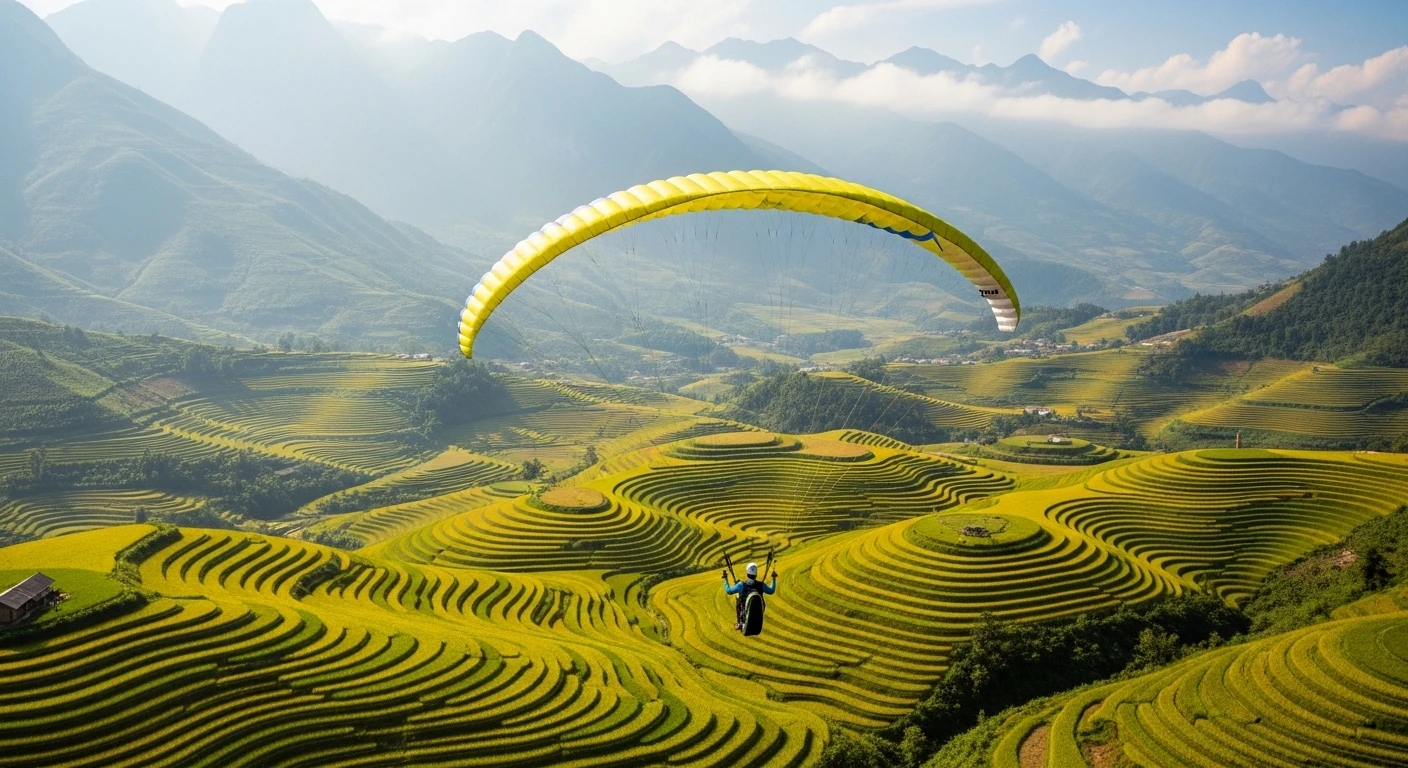
The ultimate perspective: paragliding above the golden carpet.
From this vantage point, the intricate patterns of the rice terraces become even more apparent. You’ll witness the golden hues from above, a surreal, almost painterly canvas stretching as far as the eye can see. The silence, broken only by the wind and the pilot's occasional instructions, is profound. It’s a moment of pure freedom, a unique connection with a landscape that feels both ancient and vibrantly alive.

Mu Cang Chai: Flying Over the World's Most Beautiful Terraced Fields
Discover why photographers and paragliders travel for days to witness these breathtaking, cascading fields of gold.
Explore More Terraced Fields →A Taste of the Mountains: Savoring Mu Cang Chai's Black Pork
After a thrilling flight or a day spent exploring the terraced landscapes, the soul craves sustenance. And in Mu Cang Chai, that sustenance is as hearty and authentic as the scenery. A must-try delicacy is the local 'black pork' (heo đen), a breed of indigenous pig raised free-range in the mountainous terrain.
These pigs forage for natural foods, including roots, leaves, and grains, which imbues their meat with a unique, rich flavor and a firmer texture compared to conventionally raised pork. The most popular way to enjoy it is grilled. Imagine succulent pieces of marinated pork, sizzling over hot coals, releasing an irresistible aroma that mingles with the crisp mountain air.
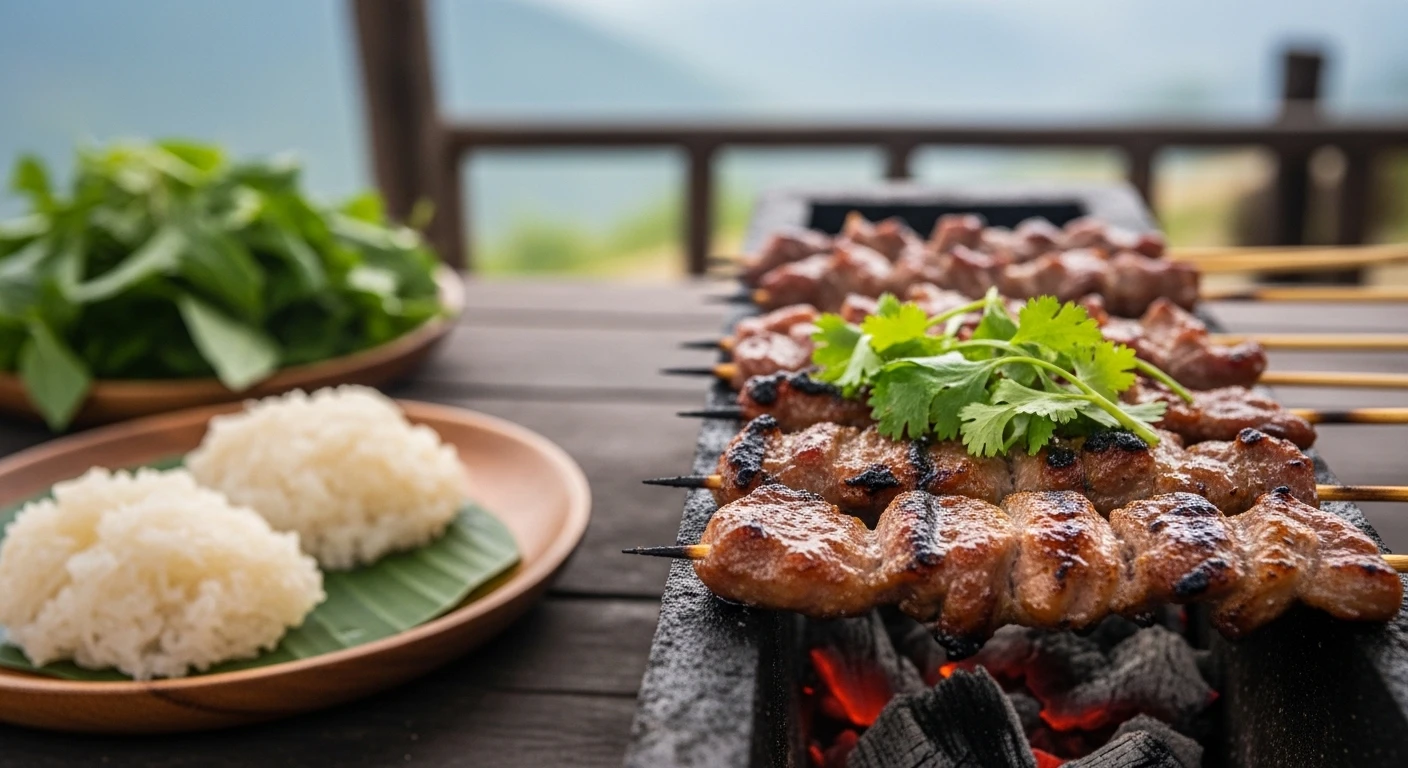
Perfectly grilled black pork skewers, a true highland delicacy.
Often seasoned with a blend of local spices, garlic, shallots, and a touch of chili, the grilled pork is tender, juicy, and deeply savory. It's typically served with fresh herbs, sliced cucumber, and, crucially, sticky rice. This simple, yet incredibly satisfying, combination is the quintessential Mu Cang Chai meal, providing the perfect fuel for further exploration or a peaceful evening.
Sticky Rice & Beyond: The Hearty Companions
No meal in this region is complete without sticky rice (xoi). Prepared with dedication, it’s a dense, slightly chewy staple that perfectly complements the rich flavors of the black pork. Often cooked with a hint of pandan leaf for fragrance or topped with fried shallots, it’s more than just a side dish; it’s a cultural anchor.
To wash it all down, local brews are highly recommended. This could range from a potent homemade rice wine (ruou ngo), often infused with local herbs, to a refreshing glass of iced tea. For those seeking something a bit more robust, especially during cooler evenings, the warmth of these local beverages is incredibly comforting. It’s in these simple, honest pairings that the true spirit of highland hospitality shines through.
Beyond the Gold: Life in the Terraced Valleys
While the golden harvest is undoubtedly the main draw for many visitors, Mu Cang Chai offers more than just its seasonal spectacle. The region is a window into the resilient lives of its ethnic minority communities. Taking time to walk through the villages, observe the daily routines, and perhaps interact with locals (respectfully, of course) provides invaluable insight.
You’ll see children playing, women tending to their homes and families, and men working the land with tools that seem timeless. The architecture, often traditional stilt houses, blends harmoniously with the natural surroundings.

Mau Son Mountain: Hunting Frost at the Edge of Vietnam
Discover another unique mountain landscape in Vietnam, where frost transforms the peaks and local traditions offer warmth.
Experience Mau Son Mountain →For photographers, the golden hour, when the sun casts a warm, ethereal glow over the terraces, is pure magic. Even outside the harvest season, the vibrant green of the growing rice, the misty mornings, and the dramatic mountain backdrops offer endless photographic opportunities. Consider visiting areas like Lim Mong village or La Pan Tan commune, known for their particularly stunning and unique terrace formations.
Navigating the Peaks: Essential Travel Advice
Planning a trip to Mu Cang Chai requires a bit of foresight to ensure you make the most of it.
- Best Time to Visit: The golden harvest season typically runs from mid-September to mid-October. This is when the terraces are at their most vibrant. Be aware that this peak season can be crowded.
- Getting There: As mentioned, travel is usually via Hanoi. Options include overnight sleeper buses (a popular budget choice) or hiring a private car for more comfort and flexibility. The roads are challenging, so motion sickness medication is advisable for some.
- Accommodation: Options range from basic homestays offering an authentic cultural experience to small guesthouses and hotels in the main town. Booking in advance, especially during harvest season, is highly recommended.
- Paragliding: Ensure you book with reputable operators. They typically launch from the Khau Pha Pass. Flights are weather-dependent.
- What to Pack: Bring layers of clothing as mountain weather can change rapidly. Comfortable walking shoes are essential. Don't forget sun protection (hat, sunscreen) and insect repellent. A good camera is a must!
- Respect Local Culture: Dress modestly when visiting villages, ask permission before taking photos of people, and be mindful of local customs.
A Lasting Impression
Mu Cang Chai is more than just a destination; it’s an immersion into a world where human ingenuity and natural beauty converge in spectacular fashion. The golden terraces are a testament to the deep connection between people and the land, a connection that has shaped lives and landscapes for centuries.
Whether you're an intrepid adventurer paragliding over a sea of gold, a cultural explorer seeking to understand the lives of the Hmong and Thai people, or a foodie eager to taste the unique flavors of the highlands, Mu Cang Chai offers an unforgettable experience. It’s a reminder that some of the most profound journeys lead us not to bustling cities, but to the quiet, awe-inspiring corners of the world, where nature paints its most breathtaking canvases.
So, when autumn calls, and the mountains of Vietnam turn to gold, consider answering. The heights of Khau Pha, the warmth of the local welcome, and the unforgettable taste of black pork await.