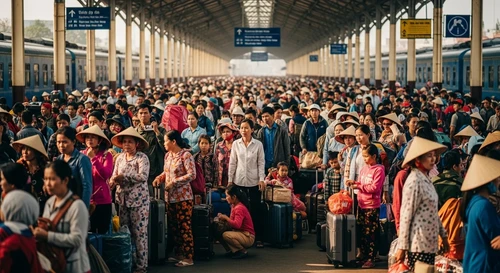
The Iron Serpent of Vietnam
In a country that moves at the speed of a thousand motorbikes and hums with the energy of its bustling cities, there's a slower, more elemental way to traverse its length. The Reunification Express, or 'Đường sắt Bắc-Nam' (North-South Railway), is more than just a mode of transport; it's a 1,726-kilometer artery pumping lifeblood between the nation's two metropolises: Hanoi in the north and Saigon (Ho Chi Minh City) in the south. This isn't a high-speed bullet train; this is an immersion. A 30-hour journey that unfolds Vietnam's diverse landscapes, its rhythms, and its soul, one rattling mile at a time.
Forget the sterile efficiency of air travel. The Reunification Express offers a panoramic, sensory experience. You'll witness emerald rice paddies morph into dramatic karst formations, coastal villages flicker past your window, and the ever-present green of the countryside give way to the urban sprawl. It's a journey for the patient traveler, the curious observer, the one who understands that sometimes, the destination is merely a byproduct of the incredible voyage.
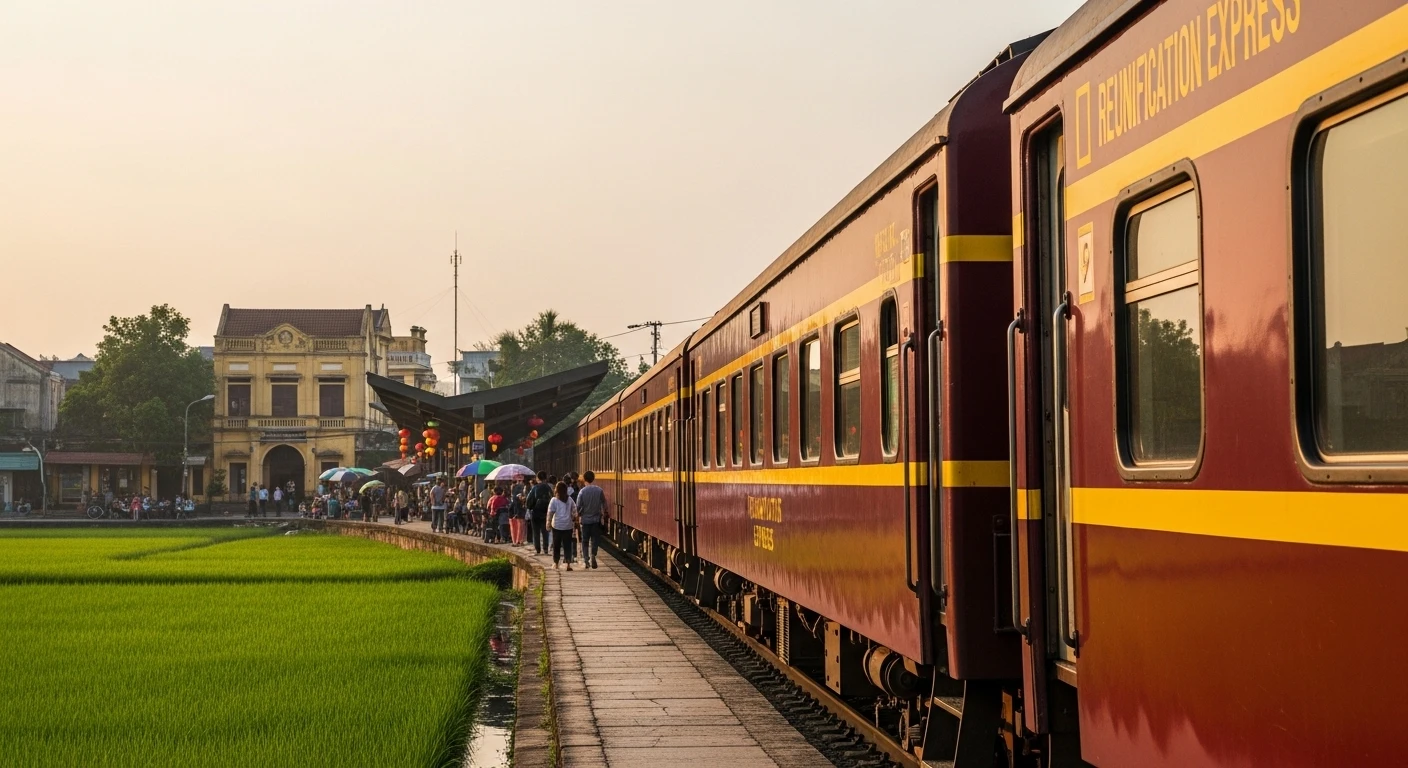
The iconic Reunification Express, a symbol of connection across Vietnam.
The Decision to Ride: Why Choose the Train?
In an era of instant gratification, the 30-hour train ride might seem an anachronism. But for many, it's precisely this extended duration, this commitment to the journey, that holds its allure. It's a deliberate step away from the frantic pace of modern life, offering a chance to disconnect and reconnect.
For backpackers, it's an essential rite of passage, a chance to meet locals, practice your Vietnamese greetings, and stretch out on a berth as the country unspools outside your window. For those seeking a deeper understanding of Vietnam's geography and culture, the train provides an unparalleled perspective. You witness the subtle shifts in landscape, the architecture, the pace of life, and the sheer scale of this long, slender nation. It’s slow travel at its finest, forcing you to be present and soak it all in. And let's be honest, the sheer novelty of spending nearly two days on an overnight train, armed with snacks and a good book, is an adventure in itself.
Navigating the Booking Maze
Booking your ticket for the Reunification Express can feel like deciphering ancient runes, but it's far from impossible. The primary railway operator is Vietnam Railways (DSVN).
Online Options: The official Vietnam Railways website (dsvn.vn) is your most direct route. It can be a bit clunky, and often only displays trains a few weeks in advance, but it's the most reliable for direct bookings. Many third-party booking sites like 12Go.asia or Baolau.vn act as excellent intermediaries, often with more user-friendly interfaces and clear English translations. They aggregate schedules and prices, making comparison easy. Be aware that these sites usually add a small booking fee.
At the Station: For the truly adventurous, you can always buy your ticket directly at the train station. This is best done a day or two in advance, especially during peak travel seasons, to ensure you get your preferred class and seat. Be prepared for potential language barriers if you don't speak Vietnamese.
Key Information to Have: You'll need your passport details, desired travel date, origin (Hanoi) and destination (Ho Chi Minh City, or a specific station like Saigon), and your preferred class. Booking in advance, especially for soft sleepers, is highly recommended.
The Classes Decoded
This is where things can get a little confusing, but understanding your options is crucial for a comfortable journey. The Reunification Express offers several classes, each with its own trade-offs in comfort and price.
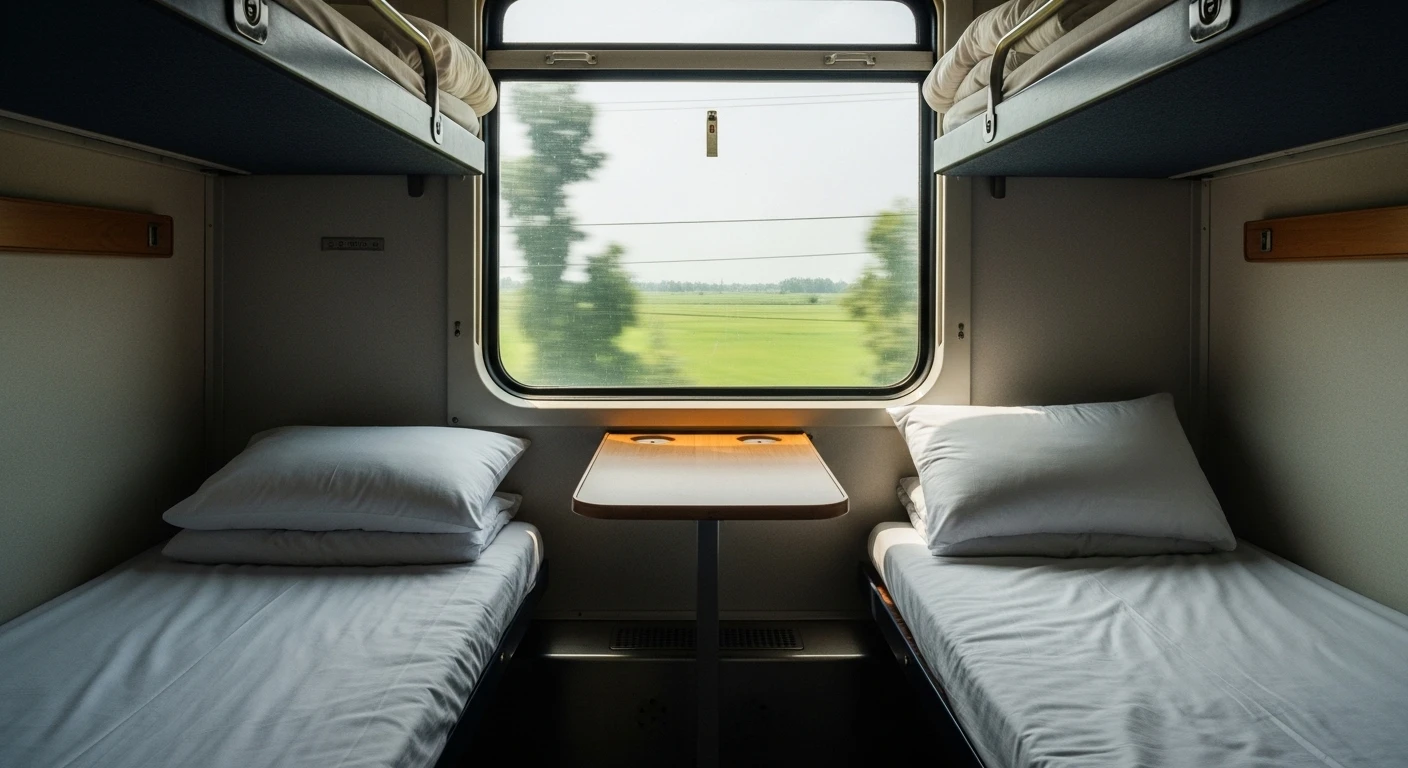
Soft Sleeper (Giường nằm mềm): Your best bet for a comfortable overnight journey. These cabins typically have four berths (beds) with clean linens, air-conditioning, and a small table. It’s the closest you'll get to hotel-like comfort on the train, offering a decent night’s sleep. Highly recommended for the full 30-hour haul.
Hard Sleeper (Giường nằm cứng): Similar cabin setup to soft sleepers, but the berths are made of harder wood or faux leather. While cheaper, these are significantly less comfortable for sleeping, especially on a long journey. Air-conditioning might also be less effective.
Soft Seat (Ghế ngồi mềm): These are reclining, padded seats, usually in a carriage with air-conditioning. Fine for shorter daytime journeys, but not recommended for an overnight trip of this length. You'll be lucky to get any meaningful sleep.
Hard Seat (Ghế ngồi cứng): The cheapest option, offering basic wooden benches. Avoid this unless you are on an extreme budget and have an iron constitution. It's a long, uncomfortable ordeal.
Pro Tip: For the Hanoi-Saigon route, always aim for a soft sleeper. It’s worth the extra cost for the comfort and quality of rest.
The Journey Unfolds: What to Expect on the Tracks
The rhythm of the Reunification Express is unique. You'll feel the gentle sway, hear the rhythmic clatter of the wheels, and witness the world glide by.
The Scenery: Prepare for a visual feast. From the mist-shrouded karst mountains of Ninh Binh in the north, to the vast, flat emerald rice fields of the Mekong Delta, the train traverses incredibly diverse landscapes. You’ll see glimpses of rural life – farmers tending their fields, children waving from village paths, fishermen casting nets. The coastal stretch between Da Nang and Hue is particularly stunning, offering glimpses of turquoise waters and rugged cliffs.
Onboard Life: Cabins can be a mix of locals and fellow travelers. Embrace the opportunity for interaction. Vendors walk the aisles selling snacks, drinks, and steaming bowls of instant noodles (a staple for many travelers). The onboard dining car, if operational and stocked, offers basic meals. However, for a truly authentic culinary experience, stocking up at stations is your best bet.

Pro Tip: The quality of the onboard food varies wildly. For a more authentic taste of Vietnam, and to save money, consider buying food at station stops. You'll find everything from fresh fruit to local snacks.
Sleeping Arrangements: For a true overnight train experience, your soft sleeper cabin is your sanctuary. Keep your belongings secure, especially at night. The gentle rocking of the train can be surprisingly conducive to sleep, but earplugs and an eye mask are highly recommended, especially if you're a light sleeper or sharing with chatty cabin mates.
Surviving the Journey: Essential Packing & Tips
A 30-hour train ride requires a bit of preparation. Here’s what you should pack and keep in mind:
- Snacks and Drinks: Crucial. Bring plenty of water, along with snacks like fruit, nuts, jerky, and biscuits. Instant noodles are a rite of passage, but bringing your own high-quality ones from a convenience store can elevate the experience.
- Entertainment: Books, downloaded movies, podcasts, a journal. The journey is long, and you’ll need ways to pass the time.
- Comfort Items: A travel pillow, a light blanket (even in air-conditioned cabins), earplugs, and an eye mask are non-negotiable for a decent sleep.
- Power Bank: Charging points can be scarce and unreliable. A fully charged power bank is your lifeline.
- Wet Wipes & Hand Sanitizer: For hygiene, especially if you plan to sample station food or use the onboard facilities.
- Small Cash: For vendors on the train and at stations.
- A Sense of Adventure: Things might not go perfectly. Embrace the unexpected – it's part of the charm of traveling in Vietnam.
Pro Tip: Familiarize yourself with Vietnam's ubiquitous convenience stores, like Circle K and FamilyMart. They are your best friends for stocking up on quality instant noodles, drinks, and snacks before boarding.
Arrival in Saigon: The Grand Finale
After approximately 30 hours, the Reunification Express pulls into Saigon's Bến Thành Station (or the more common Ga Sài Gòn/Saigon Railway Station depending on your ticket). Stepping off the train, you'll feel a distinct shift in atmosphere. The air is thicker, the energy more frenetic, and the iconic Saigon buzz is palpable.
Navigating your exit from the station is straightforward. You'll find plenty of taxis and Grab drivers waiting. Using a ride-hailing app like Grab is highly recommended for transparent pricing and to avoid any potential scams.
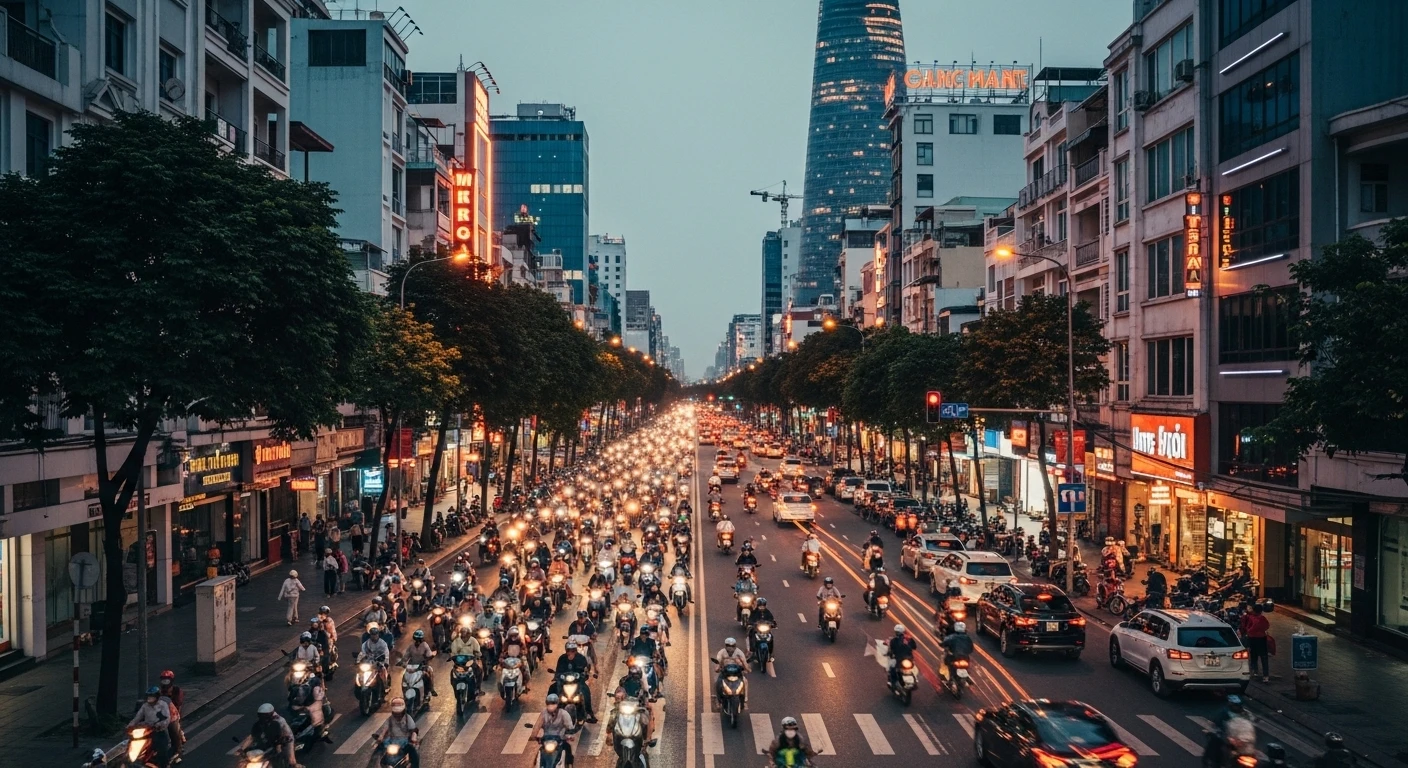
You've officially conquered the Reunification Express. You've seen Vietnam unfold before your eyes, tasted its onboard flavors, and perhaps shared a cabin with strangers who became temporary travel companions. It’s an experience that grounds you, connects you to the country in a way few other journeys can.
Pro Tip: For navigating Saigon's transport, familiarize yourself with using Grab. It will save you time, money, and hassle as you dive into the vibrant chaos of Vietnam’s southern metropolis.
Beyond the Express: Embracing Vietnam's Rail Network
The Reunification Express is the star, but Vietnam's railway network offers more than just the north-south line. Shorter routes connect major cities and scenic spots, providing excellent opportunities for regional exploration.
Consider the popular stretch between Da Nang and Hue. This journey, often undertaken with a soft seat, offers spectacular coastal views as the train winds through the Hai Van Pass. It’s a popular day trip or a segment to break up the longer journey. Other routes serve cities like Nha Trang and Phan Thiet, offering different coastal vistas.
While buses and flights are often quicker, the train provides a unique lens through which to view Vietnam. It’s a chance to slow down, observe, and truly connect with the country's rhythm. So next time you plan a trip through Vietnam, don't just fly over it – ride through it. The Reunification Express awaits.
The Final Whistle: A Journey of Discovery
The Reunification Express is not just a train; it's a mobile canvas of Vietnam. It’s a journey that demands patience but rewards it tenfold with unforgettable sights, sounds, and experiences. It’s a tangible connection to the nation’s history and its ongoing development. From the moment you step aboard in Hanoi's bustling station to your arrival in the vibrant energy of Saigon, you are participating in a quintessential Vietnamese travel experience.
So, when you plan your Vietnamese adventure, carve out time for this epic traverse. Pack your snacks, charge your power bank, embrace the rattling tracks, and let the iron serpent carry you through the heart of Vietnam. The memories you make onboard will be as enduring as the landscapes you witness.
Ready for the Tracks?
Dive deeper into the essentials of Vietnamese travel and make your journey smooth.
🌏 Explore More Vietnam Guides