The Daily Dance of Two Wheels and Impossible Loads
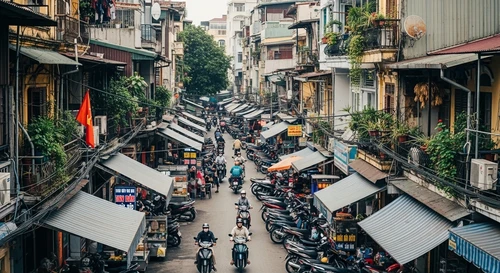
Step onto any street in Vietnam, especially outside the hyper-modern high-rises of Hanoi or Ho Chi Minh City, and you’ll witness a ballet of controlled chaos. The ubiquitous motorbike, more than just a mode of transport, is the workhorse of everyday life. But it's not just about commuting; it’s about what you can haul. Forget your preconceived notions of what a two-wheeled vehicle can carry. Here, the laws of physics seem to bend, warp, and often take a well-deserved holiday.
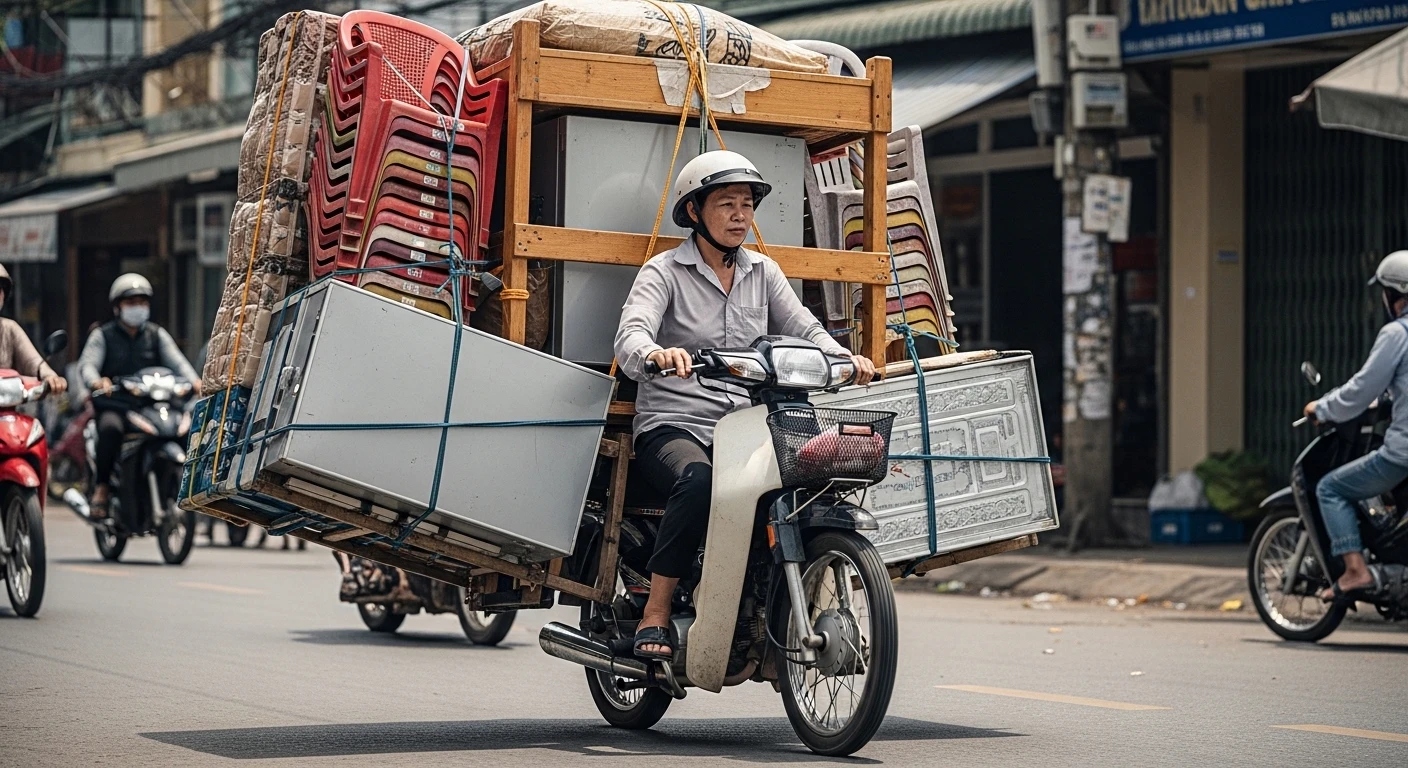
A typical scene: a Vietnamese motorbike rider navigating traffic with an extraordinary load.
This isn't just a quirky travel observation; it's a fundamental aspect of Vietnamese daily life, deeply rooted in resourcefulness, necessity, and an almost innate sense of balance. From bustling markets in the Mekong Delta to narrow alleyways in ancient towns, these riders are the unsung heroes of local logistics.
The Human Element: Masters of Balance and Ingenuity
At the heart of this phenomenon are the riders themselves. These aren't just people operating machinery; they are artisans of motion. Years, often decades, spent navigating crowded streets and balancing precariously loaded bikes have honed their skills to an astonishing degree. It’s a blend of spatial awareness, instinct, and a deep understanding of load distribution that would make any professional trucker weep with envy.
Watch closely: the subtle shift of weight, the gentle correction of handlebars, the unwavering gaze fixed on the road ahead—and the invisible lines of their load. They anticipate the movement of other vehicles, the undulations of the road, and the subtle sway of their cargo with a grace that’s both mesmerizing and terrifying. It's a testament to human adaptability and the power of practical, on-the-ground problem-solving.
Appliances and Furniture: The Ultimate Tetris Challenge
Beyond livestock, the sheer size and awkwardness of common household items transported on motorbikes is mind-boggling. A massive refrigerator? Easily. A king-sized mattress? No problem. Stacks of plywood, coils of rebar, or an entire household's worth of belongings during a move? All par for the course.
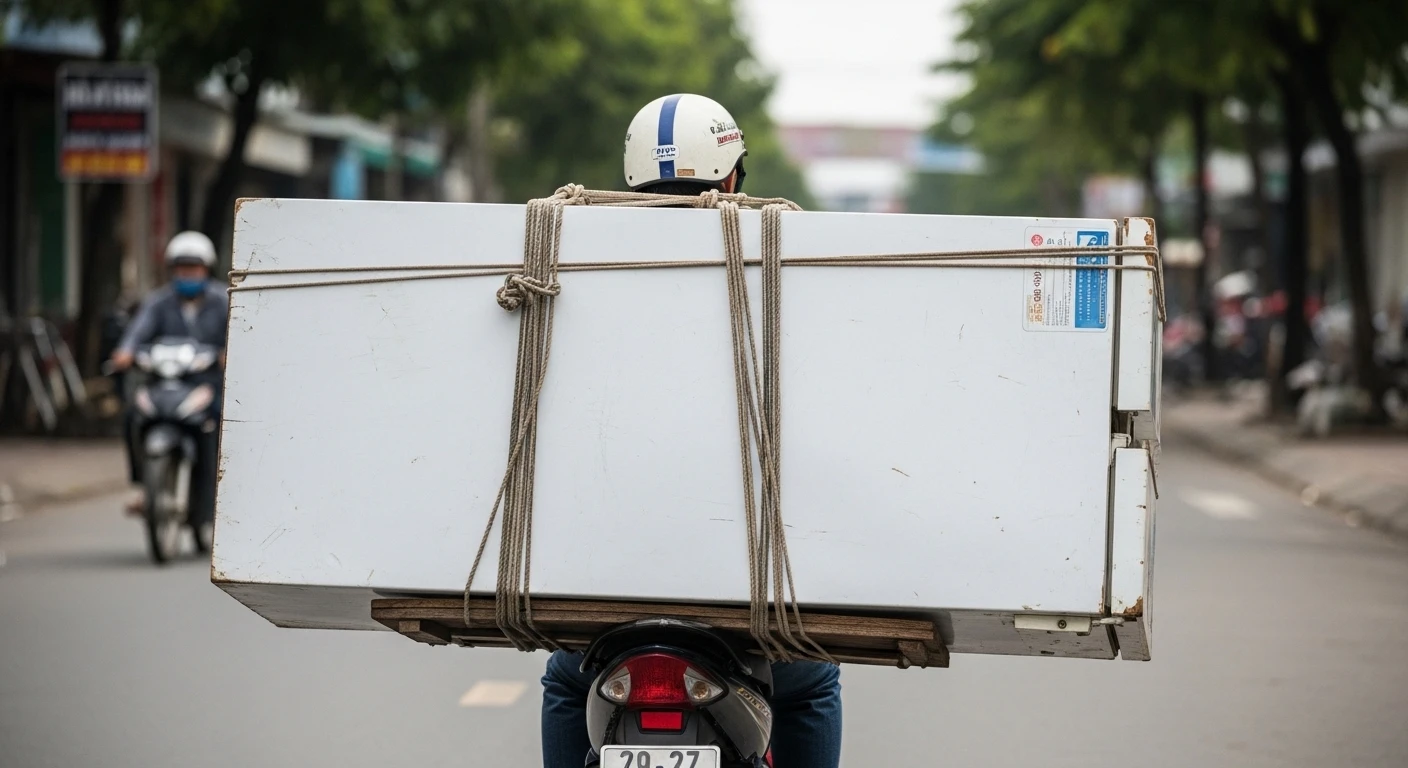
The iconic refrigerator delivery.
These loads often involve elaborate rigging of ropes, bungee cords, and sometimes even custom-made frames. The skill isn't just in strapping things down; it’s in ensuring the bike remains stable, maneuverable, and safe, even with the center of gravity shifted dramatically. It’s a visual metaphor for how Vietnam, particularly its rural and peri-urban areas, makes do, innovates, and keeps its economy moving, one overloaded motorbike at a time.
The Family That Rides Together, Survives Together
Perhaps the most human and endearing sight is the Vietnamese family unit navigating the roads. While not always carrying "loads" in the commercial sense, the capacity for a motorbike to transport a family is remarkable. A mother driving, a father perched precariously on the back, and two, sometimes three, children somehow accommodated in between is not an uncommon spectacle.
Often, the younger children are nestled between the parents, while older ones find space behind the father. It’s a picture of close-knit family life, pragmatic necessity, and a deep trust in the rider's skill. While safety regulations in Western countries would deem this unthinkable, in Vietnam, it's a daily reality born of economic circumstances and a culture that values communal movement. It speaks volumes about resilience and the powerful bond of family.
The Science and the Art of the Load
How do they do it? It’s a fascinating intersection of physics and practical artistry.
- Center of Gravity: Riders intuitively understand how to keep the load's center of gravity as low and as close to the bike's as possible, crucial for stability.
- Weight Distribution: Evenly distributing weight between the front and rear, and across the width of the bike, prevents fishtailing and maintains control.
- Securing Techniques: The sheer variety of knots and ways to tension ropes and cords are a lesson in themselves. A well-secured load is paramount.
- Anticipation: The most critical element is the rider's ability to anticipate. They 'read' the road and traffic, adjusting their balance and speed preemptively.
- The 'Sacred' Bungee Cord: In Vietnam, the bungee cord is not just a tool; it's a vital piece of essential infrastructure, used for everything from securing helmets to strapping down entire wardrobes.
The Mekong Delta Connection: From Rivers to Roads
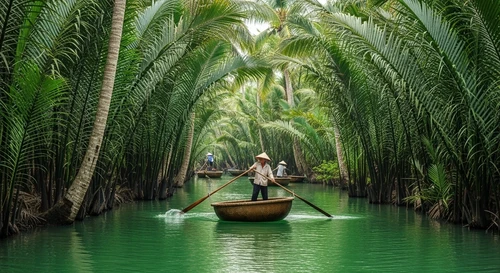
In the Mekong Delta, the ingenuity of motorbike logistics is particularly vital. Where waterways are the primary arteries, roads and motorbikes serve as the crucial connectors for goods and people reaching more remote areas. The same resourcefulness seen on the rivers – navigating narrow canals with sampans laden with fruit or fish – translates directly to the roads.
Imagine a farmer in Soc Trang, having harvested his rice or vegetables, needing to transport them to the nearest market. While boats may have brought them to a riverside landing, the motorbike becomes the workhorse for the final leg of the journey, or for products that aren't waterborne. The need to carry large volumes, often of agricultural produce, or even small livestock like chickens or ducks, means that the overloaded motorbike is an indispensable part of the Delta's economic ecosystem.
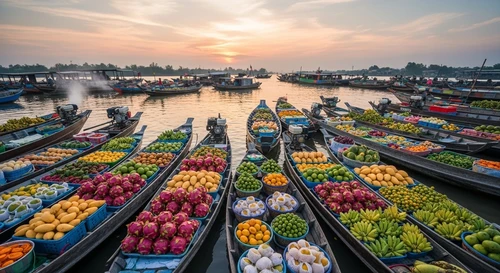
Discover the Delta's Soul
The vibrant chaos of the Mekong's floating markets is intrinsically linked to the transport methods that feed them. Learn more about these disappearing traditions.
Read: Chaos on the WaterBeyond Necessity: Cultural Significance and the Future
This tradition isn't just about economic necessity; it's woven into the fabric of Vietnamese culture. It speaks to ingenuity, resilience, and a pragmatic approach to life. For many, the motorbike is not just a vehicle, but a symbol of independence and a tool for building a livelihood.
As Vietnam modernizes, larger trucks and vans are becoming more common, especially in urban centers. However, the sheer efficiency, affordability, and adaptability of the motorbike, particularly for navigating smaller streets and reaching more remote locations, ensures its continued dominance. It's a practice that has survived, evolved, and continues to define the visual landscape and the flow of goods across the nation, a constant, fascinating spectacle for any visitor.
The Humor in the Herculean Feats
While the underlying reasons are practical, the sheer absurdity of some of these loads can’t help but elicit a chuckle. There’s a certain dark humor in seeing a motorcycle dwarfed by a mountain of plastic furniture, or a rider looking impossibly small behind a colossal stack of mattresses. It’s a reminder that life, and the drive to get things done, often finds the most improbable solutions.
This visual humor is a recurring motif for travelers, a constant source of wonder and amusement. It’s these unscripted, often bizarre, moments that truly capture the spirit of Vietnam’s everyday hustle.
A Note on Navigating the Flow
For those new to Vietnam, this level of motorbike traffic can be intimidating. Understanding how to cross the street is often a rite of passage. Remember, the key is not to stop, but to move with a steady, predictable pace. The riders, accustomed to this fluid dance, will flow around you. It's a concept best understood through experience, but a little knowledge can go a long way in easing your initial anxieties.

Mastering the Streets
To truly appreciate the motorbike loads, you first need to understand how to navigate the traffic itself. Learn the 'slow walk' technique.
Read: The Art of the 'Slow Walk'