The DMZ: A Scarred Landscape, A Resilient Spirit
Vietnam is a land etched with history, and few regions bear its marks as profoundly as the Demilitarized Zone (DMZ) in Quang Tri province. For over two decades, this strip of land, bisected by the Ben Hai River and the 17th parallel, served as a brutal demarcation line between North and South Vietnam. The echoes of conflict still resonate here, in the quiet fields, the somber memorials, and the stories of survival that whisper from the very earth.
Visiting the DMZ is not for the faint of heart. It is a journey into a raw, often harrowing, chapter of the Vietnam War. Yet, it is an essential experience for understanding the country's trajectory and the indomitable spirit of its people. Here, amidst the palpable weight of the past, you find pockets of extraordinary resilience, most notably in the subterranean world of Vinh Moc village.
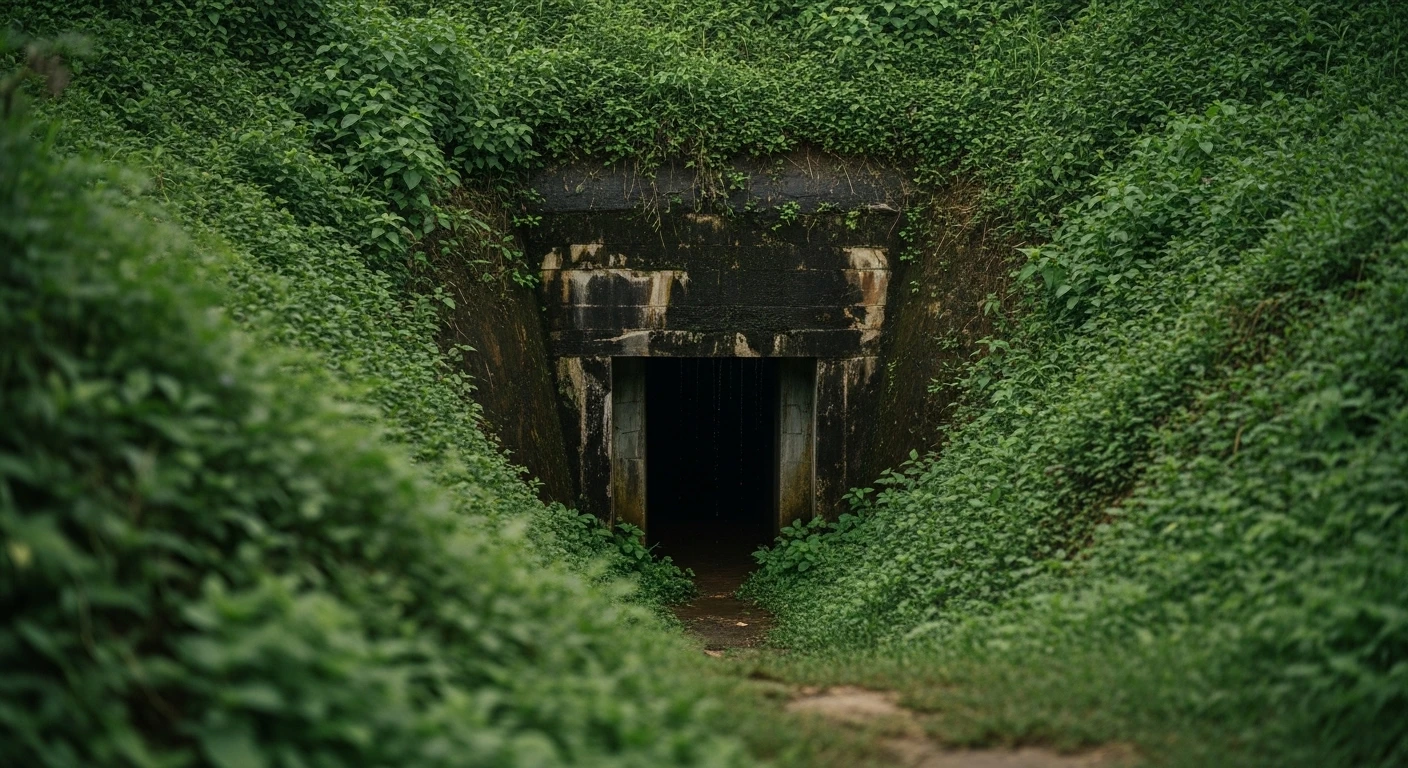
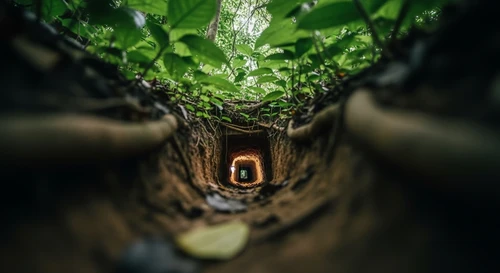
The discreet entrance to a life lived underground: the Vinh Moc tunnels.
Vinh Moc Tunnels: Life Underground, Defiance Above
Imagine being a civilian, a farmer, a mother, or a child, living in a coastal village that became a strategic target. Between 1966 and 1972, Vinh Moc, a small fishing community in Quang Tri, endured ceaseless bombing. Instead of fleeing, the villagers chose an astonishing act of collective self-preservation: they built and lived in a network of underground tunnels.
These weren't mere shelters; they were a subterranean village. Spanning over 2 kilometers and descending up to 23 meters, the tunnels were ingeniously designed. They featured multiple entrances and exits (some connected to the sea for escape or supply), ventilation shafts cleverly disguised, and interior spaces that housed living quarters, a meeting hall, a maternity ward, a hospital, a well, and even latrines. Over 60 families, comprising around 300 people, lived in this confined space for years. Miraculously, no one died in the tunnels during the bombings, though the village above was flattened. They even welcomed 17 babies into the world in this underground sanctuary.
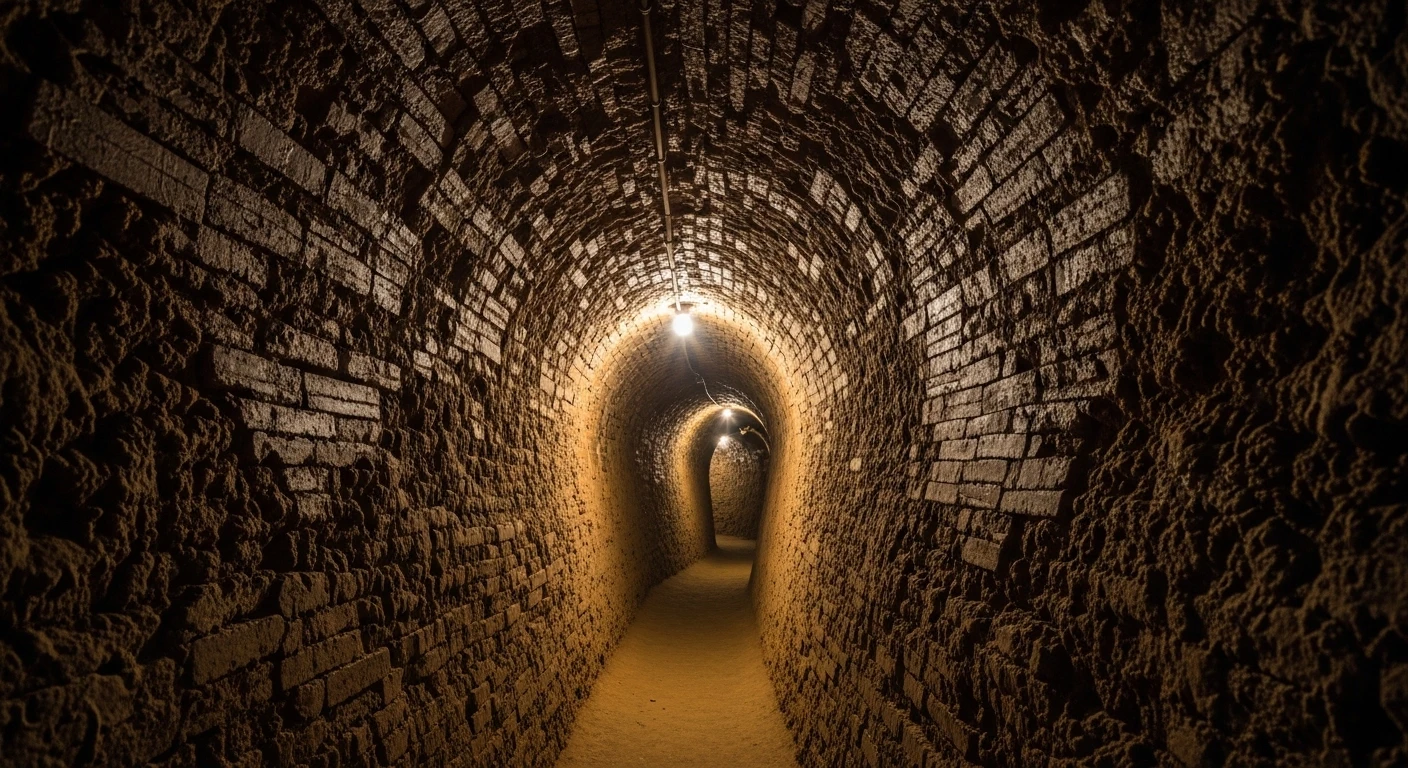
The claustrophobic reality of life in the Vinh Moc tunnels.
Descending into History: Your Tunnel Tour
Today, parts of the Vinh Moc tunnels are open to visitors. Stepping into the cool, damp earth is a visceral experience. The air is heavy with the scent of soil and history. As you duck and crawl through the narrow passages, you can't help but imagine the lives lived here: the fear, the resilience, the quiet determination.
Local guides, often with direct ties to the region's history, bring the stories to life. They point out the former living areas, the maternity ward where children were born, and the communal spaces. The sheer ingenuity and the human will to survive are awe-inspiring. It’s a stark reminder of the devastating impact of war on civilian populations and a testament to the strength found in community. This is dark tourism at its most profound and educational.
For those who find the tight spaces challenging, there are wider sections and raised walkways in some parts. However, the true immersion comes from understanding the original construction and purpose. The scale of the undertaking, completed with basic tools, is mind-boggling.
From Mud to Market: The Flavors of Quang Tri's Coast
Emerging from the hushed, subterranean world of Vinh Moc, one’s senses are often drawn to the simpler, more vibrant realities of the present day. Quang Tri's coastal communities, like those that once thrived in Vinh Moc, have rebuilt and continue to draw sustenance from the sea. And in Vietnamese cuisine, the sea's bounty often finds its way into delectable dishes that offer comfort and cultural insight.
While the memory of the tunnels is somber, the present is filled with the aroma of fresh ingredients and the sizzle of local cooking. The coastal regions of Central Vietnam, including Quang Tri, are known for their fresh seafood, and among the most cherished local specialties is a dish that perfectly embodies the region's culinary spirit: Banh Bot Loc.
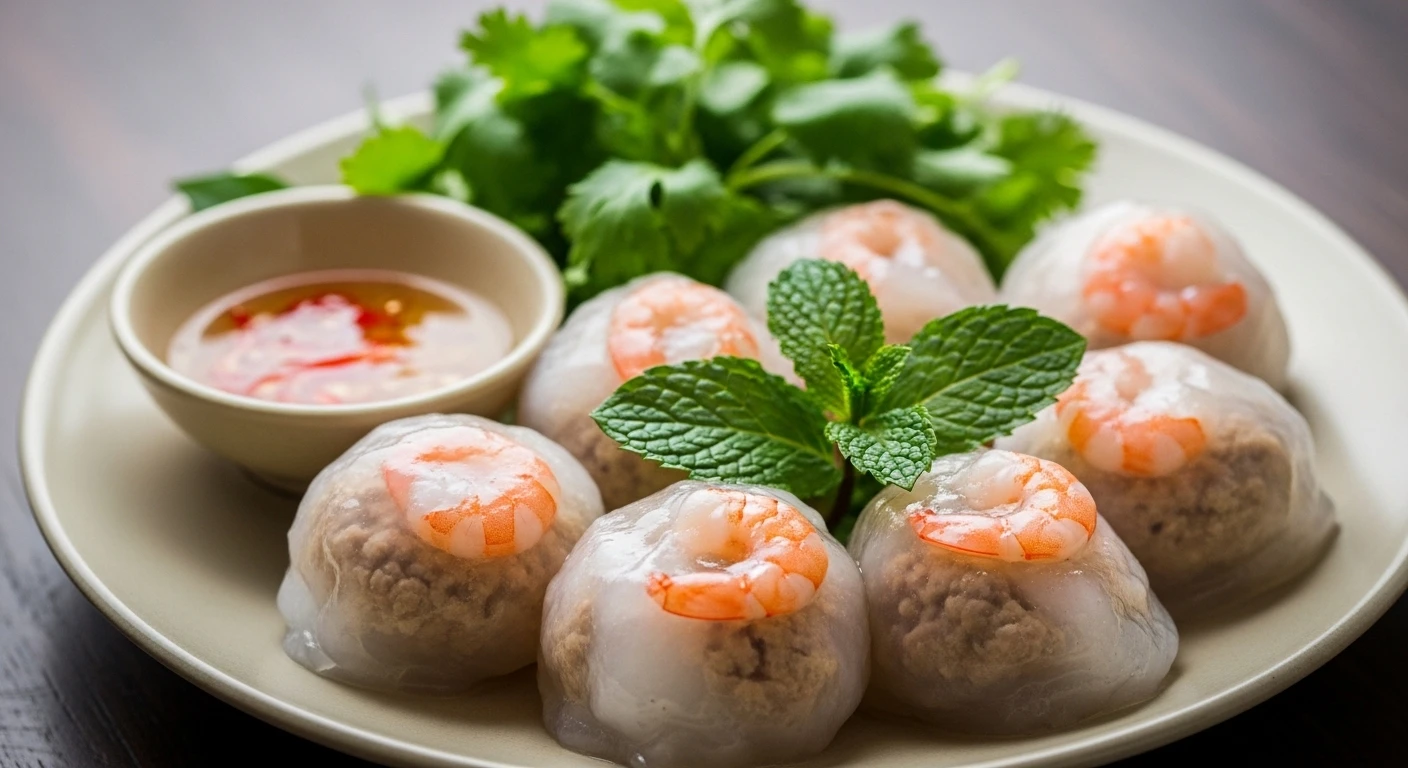
The irresistible chew and savory filling of Banh Bot Loc.
Banh Bot Loc: A Taste of Central Vietnamese Resilience
Banh Bot Loc (Vietnamese filter cake or tapioca dumplings) is a deceptively simple yet incredibly satisfying dish. Its magic lies in its texture and the perfectly balanced filling. The outer wrapper is made from tapioca starch, giving it a wonderfully chewy, almost gelatinous quality – a satisfying "bite" that’s characteristic of many Central Vietnamese snacks.
Inside each translucent dumpling, you'll find a delightful combination: typically small, fresh shrimp and a piece of tender pork belly. These ingredients are seasoned with fish sauce, pepper, and sometimes a hint of shallots, creating a savory explosion that contrasts beautifully with the mild, chewy dough. The dumplings are often steamed until perfectly tender, then served with a side of Nuoc Cham (a Vietnamese dipping sauce) and a scattering of fresh herbs like cilantro or mint.
The preparation requires a delicate touch. The tapioca dough must be cooked just right to achieve that signature chewiness without becoming tough. The filling is kept simple to highlight the natural sweetness of the shrimp and the richness of the pork. It’s a dish born from resourcefulness, using readily available ingredients from the land and sea, transformed into something truly special.
Beyond the Tunnel: Savoring the Flavors
After the profound historical immersion at Vinh Moc, the simple pleasure of enjoying Banh Bot Loc is deeply grounding. It’s a moment to reflect on the journey from survival to sustenance, from hardship to the everyday joys of a well-prepared meal. You'll find Banh Bot Loc sold by street vendors, in local markets, and small eateries throughout Quang Tri and the broader Central Vietnam region.
The best way to enjoy it is fresh, hot, and accompanied by the tangy-sweet Nuoc Cham, which cuts through the richness of the filling and complements the chewiness of the dough. For an authentic experience, seek out local spots where families gather for snacks and meals. It’s in these unassuming establishments that you’ll taste the true heart of Vietnamese home cooking.
"The resilience of the Vinh Moc villagers, who carved a life from the earth to escape the ravages of war, is mirrored in the simple yet profound satisfaction of their local cuisine. Banh Bot Loc, with its humble ingredients and remarkable texture, is a perfect culinary footnote to a history of defiance and survival."
- Your Travel Journalist
Planning Your Visit: Journey to the DMZ
Reaching the DMZ, including the Vinh Moc tunnels, requires a journey through Central Vietnam. The most common entry point is Dong Hoi in Quang Binh province, or Hue in Thua Thien Hue province.
International Arrival: Most international travelers arrive in Vietnam at Noi Bai International Airport (HAN) in Hanoi or Tan Son Nhat International Airport (SGN) in Ho Chi Minh City. From there, you’ll need to take a domestic flight to Dong Hoi (VDH) or Hue (HUI).
Domestic Travel to Quang Tri:
- From Hanoi to Dong Hoi/Hue: Domestic flights are available daily. Alternatively, you can take an overnight train (highly recommended for the experience) which takes about 10-12 hours.
- From Ho Chi Minh City to Dong Hoi/Hue: Domestic flights are the quickest option (approx. 1.5-2 hours). Trains are also available but take significantly longer (18-22 hours).
Getting to Vinh Moc Tunnels:
- From Dong Hoi: Dong Hoi is approximately 60-70 km north of the Vinh Moc tunnels. You can hire a private car, taxi, or join an organized tour. The drive takes about 1.5 hours.
- From Hue: Hue is approximately 100-120 km south of the Vinh Moc tunnels. Hiring a private car or joining a DMZ tour from Hue is the most convenient option, taking about 2-3 hours each way. Many tours combine Vinh Moc with other DMZ sites like the Hien Luong Bridge and the demarcation line.
While it's possible to rent a motorbike, the distances and conditions can be challenging for inexperienced riders. Organized tours offer a hassle-free way to see multiple DMZ sites efficiently.
Echoes of Conflict: Other DMZ Sites
Vinh Moc is just one facet of the DMZ experience. A comprehensive visit often includes other significant historical sites:
- Hien Luong Bridge & Ben Hai River: The symbolic dividing line, now a poignant memorial.
- Doc Mieu Base: An old military installation that offers insight into the strategic importance of the area.
- Con Thien Firebase: Site of intense battles, now a quiet memorial.
- Ho Chi Minh Trail: Sections of the legendary supply route can still be visited, offering a glimpse into wartime logistics.
Understanding these sites in conjunction with Vinh Moc provides a fuller picture of the human cost and the sheer scale of the conflict in this narrow strip of Vietnam.
Further Reading:
For those fascinated by Vietnam's wartime history and the ingenuity of its people, exploring the secret caverns of the Ho Chi Minh Trail offers another perspective on subterranean survival tactics. Or, delve into the urban underground at Saigon's Secret Weapons Bunker.
More Than History: The Enduring Spirit of Quang Tri
Quang Tri is a province that has demonstrably risen from the ashes. While the scars of war are undeniable, the modern landscape is one of vibrant agriculture, coastal communities rebuilding their livelihoods, and a populace defined by their resilience and warmth.
Visiting the DMZ is an emotional experience, but it’s also a powerful encounter with the enduring human spirit. It’s about learning from the past to appreciate the present, and to see how life, in its most determined form, finds a way to flourish, even after enduring the unimaginable. The taste of a simple, delicious Banh Bot Loc after a day of confronting history is a potent symbol of this journey.
A Journey of Resilience and Taste
The Vinh Moc Tunnels offer a unique window into the extreme measures civilians took to survive the Vietnam War. It’s a place that demands reflection and offers profound lessons. Paired with the simple, yet deeply satisfying, culinary traditions of the region, like the chewy, shrimp-filled Banh Bot Loc, it creates a travel experience that is both historically significant and personally enriching. When you leave Quang Tri, you carry with you not just the weight of its history, but the warmth of its present and the taste of its enduring spirit.
Ready for More?
Discover more incredible stories of resilience and hidden history across Vietnam.
Explore More DMZ Stories