Whispers of the Perfume River: A Journey to Thien Mu
Hue, the former imperial capital of Vietnam, is a city steeped in history, poetry, and an almost palpable sense of spiritual calm. At its heart flows the Perfume River (Sông Hương), a languid waterway that has witnessed centuries of royal intrigue, artistic flourishing, and quiet contemplation. The most iconic destination on its banks, and indeed one of Vietnam's most revered landmarks, is the Thien Mu Pagoda. Our journey today begins not with a hurried taxi, but with the gentle rhythm of a traditional dragon boat, a vessel as emblematic of Hue as the pagoda itself.
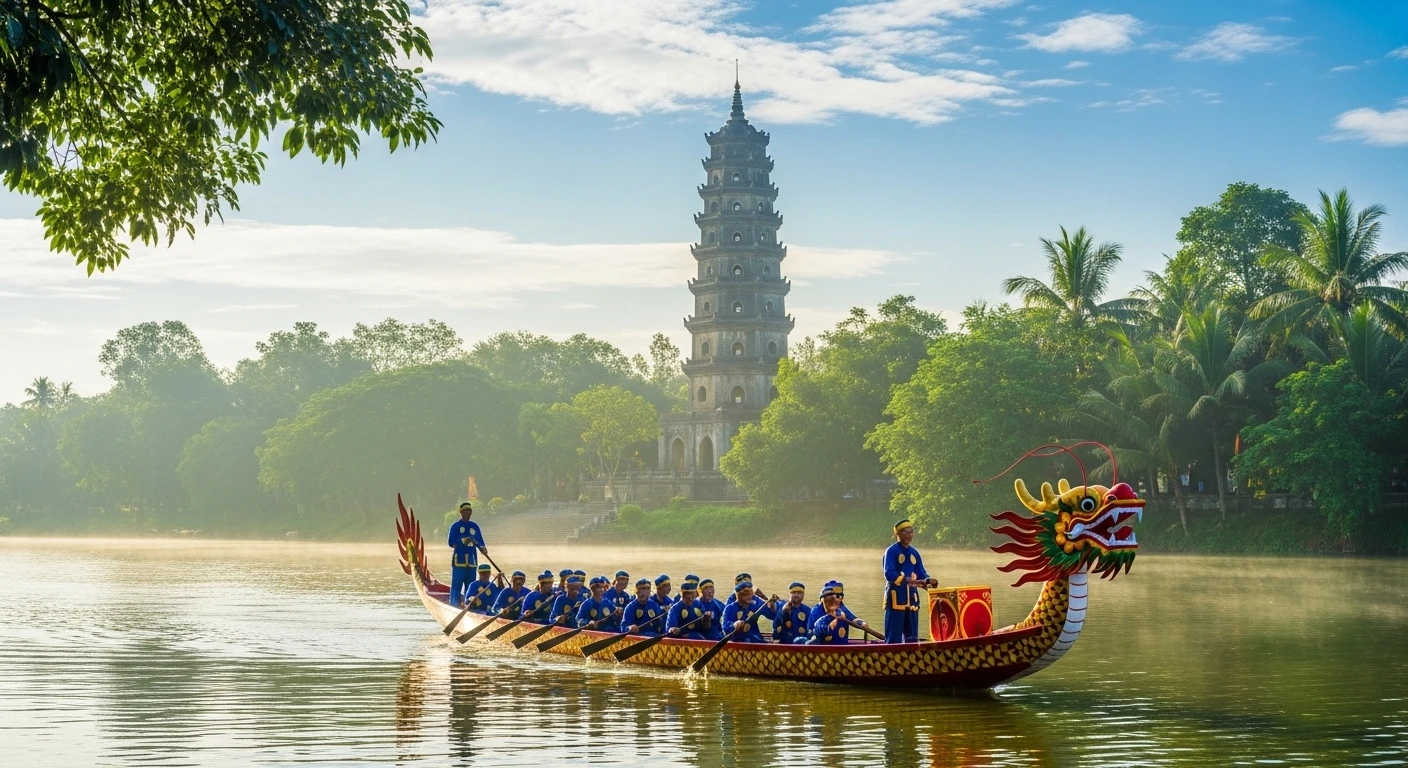
This isn't just a boat ride; it's an immersion. As you glide from the bustling city center towards the serene west, the modern world recedes, replaced by lush riverbanks, the soft murmur of the water, and the anticipation of arriving at a place of profound historical and spiritual significance. The dragon boats, with their brightly painted scales and imposing prows, are more than just transport; they are floating arteries connecting Hue's vibrant present to its storied past.
Setting Sail: The Rhythmic Dance of the Dragon Boats
The departure point for your pilgrimage is typically near the city center, often from the bustling quays opposite the Hue Citadel. Here, a fleet of dragon boats awaits, their colorful facades promising adventure. These aren't the sleek speedboats of Western waterways; they are vessels with a soul, often powered by a steady hum of engines but designed to evoke the grandeur of imperial ceremonies.
As you board, you're greeted by the boat's crew, often a friendly family who navigate these waters daily. The scent of the river – a mix of damp earth, blossoms, and distant cooking – fills the air. The captain revs the engine, and with a gentle surge, you begin your journey upstream. The rhythmic lapping of water against the hull, the calls of seabirds, and the panoramic views of Hue unfolding on either side create a mesmerizing prelude to the pagoda's grandeur.
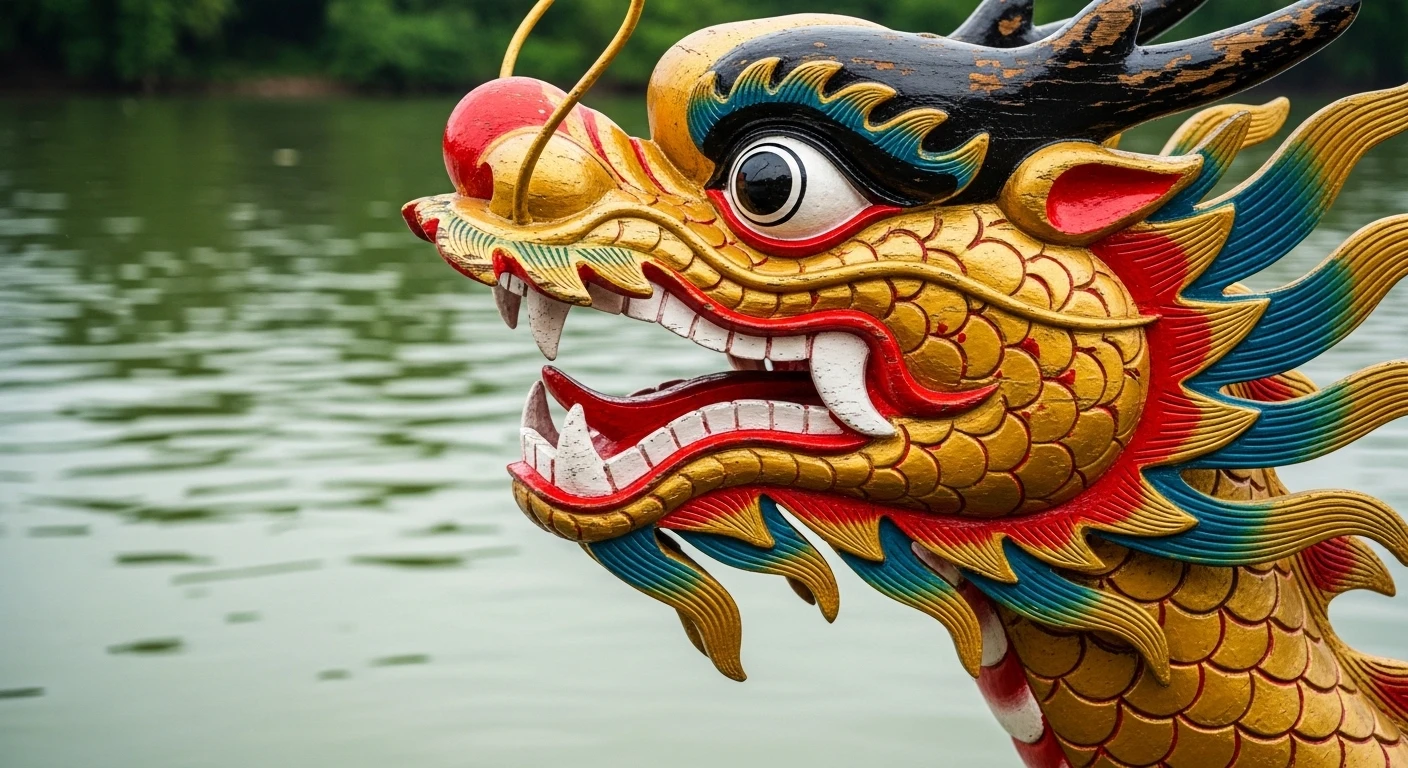
The watchful eye of the dragon, a symbol of power and prosperity, leads the way.
The Perfume River: Hue's Poetic Artery
The Perfume River, or Sông Hương, is more than just a body of water; it's the soul of Hue. Its name, often translated as "fragrant river," comes from the orchids and other aromatic plants that fall into its waters from the surrounding forests, perfuming its currents. As you travel, you'll see life unfolding along its banks: farmers tending their fields, children playing, and other boats plying their trade.
The river's journey is picturesque, winding through verdant landscapes and occasionally offering glimpses of rural Vietnamese life. Keep an eye out for the traditional fishing nets, the water buffalo grazing lazily, and the distant silhouette of pagodas peeking through the trees. This serene passage is a vital part of understanding Hue's unique charm – a blend of natural beauty, cultural heritage, and a pace of life dictated by the gentle flow of the water.
Thien Mu Pagoda: A Seven-Tiered Sentinel
After a journey of about 30-45 minutes, depending on the river's mood and the boat's speed, the Thien Mu Pagoda (Chùa Thiên Mụ) emerges majestically from the riverbank. Perched on a hill overlooking the Perfume River, it's an unforgettable sight. The pagoda's most striking feature is its seven-story tower, known as the Phuoc Duyen Tower, which stands as an unofficial symbol of Hue and a testament to the city's rich Buddhist heritage.
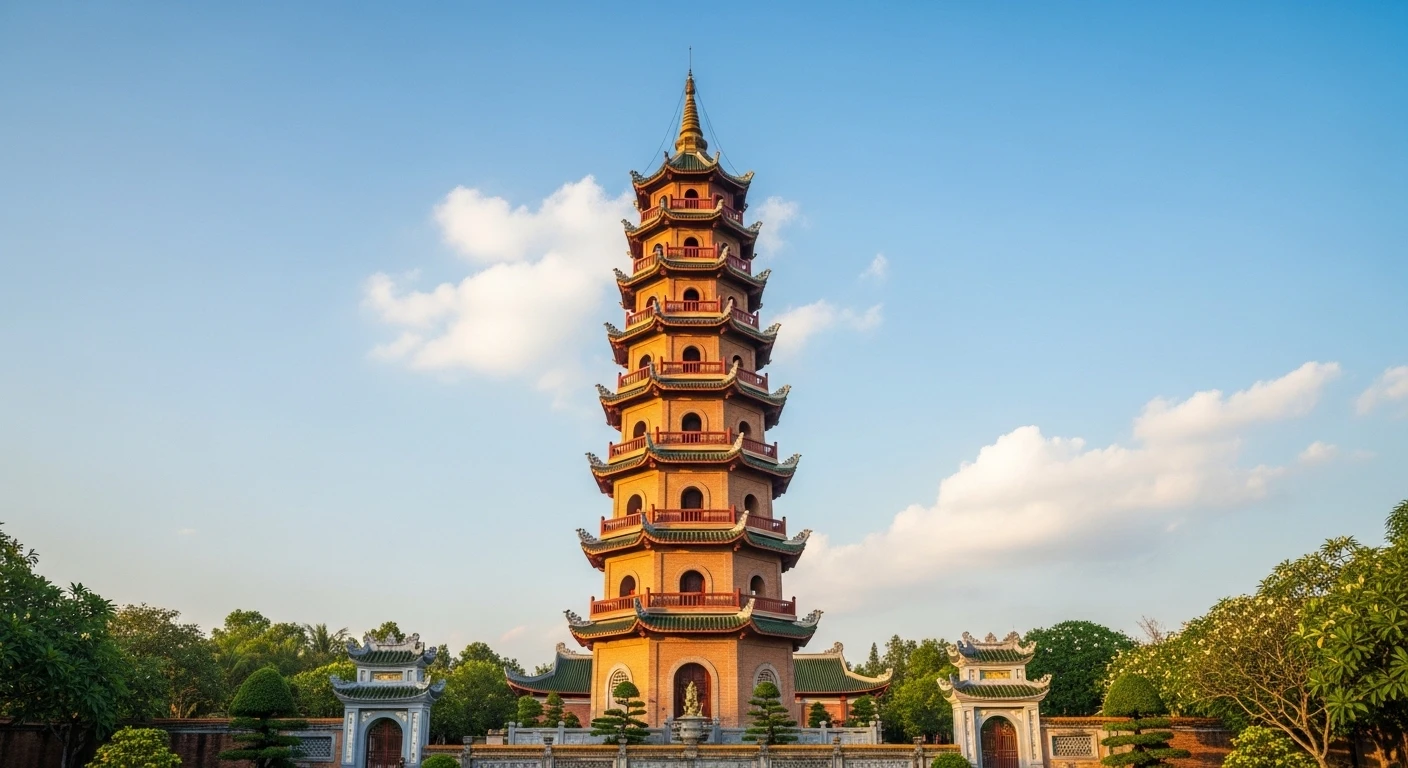
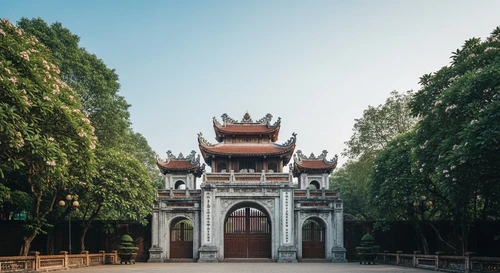
Built in the 17th century, the pagoda complex is more than just an architectural marvel; it's a living testament to Vietnam's spiritual and political history. As you disembark and approach the main gate, the sense of peace and reverence is palpable. The intricate carvings, the serene courtyards, and the scent of incense transport you to another era.
A Fiery Legacy: The Austin Car and Monk Thich Quang Duc
Within the pagoda grounds, one of the most poignant and historically significant exhibits is the bronze Austin car. This humble vehicle is forever linked to the courageous act of Buddhist monk Thich Quang Duc in 1963. In a desperate protest against the persecution of Buddhists by the South Vietnamese government, he self-immolated in a Saigon intersection.
The car that transported him to that fateful demonstration is preserved here, serving as a stark reminder of the monk's sacrifice and the deep spiritual conviction that fueled it. Nearby, you can also find a statue of Monk Thich Quang Duc and a stele commemorating his actions. It’s a solemn and moving part of the Thien Mu Pagoda's narrative, adding layers of political and social history to its religious significance.
Beyond the Tower: Courtyards, Temples, and Tranquility
Thien Mu Pagoda is a sprawling complex, offering much to explore beyond the iconic tower. Wander through the tranquil courtyards, dotted with ancient trees and smaller shrines. The Dai Hung (Great Buddha) Temple, dating back to the 18th century, houses impressive statues and offers a glimpse into Buddhist practices.
Take your time to absorb the atmosphere. You might see monks in saffron robes going about their duties, or devotees offering prayers. The bell tower, another prominent structure, houses a massive bronze bell, said to be the largest in Vietnam, whose resonant chime can be heard for miles. The views from the pagoda's elevated position, looking out over the Perfume River and the surrounding landscape, are simply breathtaking.
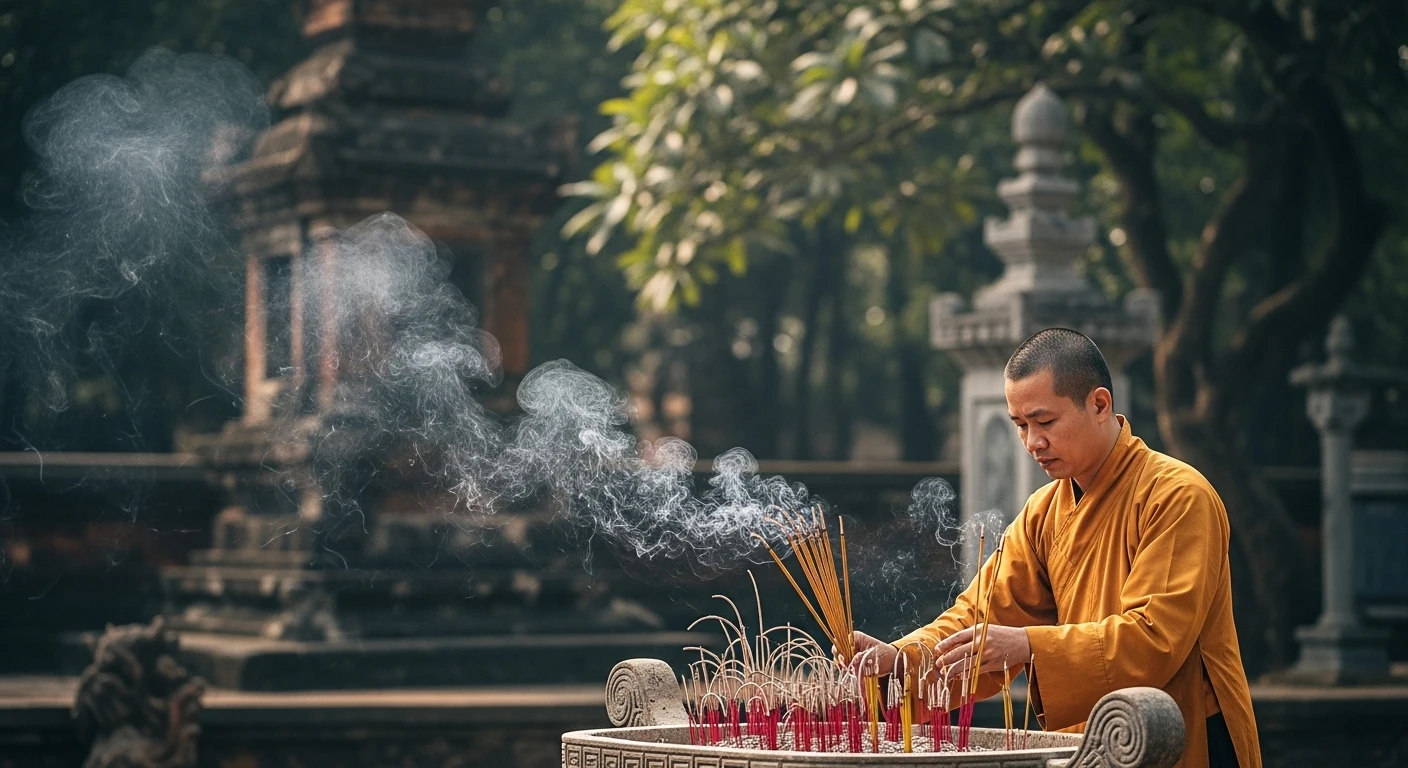
Moments of quiet devotion amidst the ancient stones of Thien Mu.
A Taste of Hue: Lemongrass Skewers and Local Flavors
No exploration of Hue is complete without indulging in its distinct culinary heritage, and the area around Thien Mu Pagoda offers opportunities to sample authentic local dishes. The star of the show here, as mentioned in our journey's description, is Nem Lui – spicy lemongrass skewers.
These succulent skewers are made from finely ground pork, mixed with potent lemongrass, garlic, and other fragrant spices, then grilled over charcoal until beautifully charred and aromatic. The magic truly happens when you assemble your own bite: take a rice paper wrapper, dip it in water, add a piece of the Nem Lui, a crisp rice noodle, a fresh herb (like mint or basil), and perhaps a sliver of cucumber or green banana. Roll it all up and dip it into the accompanying sweet and savory peanut-based dipping sauce. The explosion of flavors and textures – spicy, savory, sweet, fresh, and creamy – is quintessentially Hue.
While Nem Lui is a highlight, you can also find other local specialties nearby. Hue cuisine is known for its refined flavors and often subtle spice. Don't hesitate to ask about other recommendations from the local vendors or eateries, which might include Banh Khoai (Hue-style savory pancakes) or various types of Bun (noodle dishes).
Echoes of Empire: The Nguyen Dynasty's Imprint
While Thien Mu Pagoda predates the Nguyen Dynasty's rule (which began in 1802), it became deeply intertwined with the emperors' reverence for Buddhism. Emperor Gia Long, the dynasty's founder, ordered the expansion of the pagoda, further cementing its importance. His son, Emperor Minh Mang, later added more structures, including the tomb of his father.
The pagoda served not only as a spiritual center but also as a symbol of royal patronage and a place for contemplation for the imperial family. Its strategic location on the riverbank also meant it played a role in the city's defense and served as a point of ceremonial importance. Understanding this connection to the Nguyen Dynasty adds another rich layer to the pagoda's historical tapestry, linking it directly to the grandeur of Vietnam's last royal era.
Planning Your Pilgrimage: Tips for a Memorable Visit
Visiting Thien Mu Pagoda is a must-do for any traveler to Hue. Here are some tips to make your experience seamless:
- Getting There: As detailed, the most scenic and recommended way is via dragon boat on the Perfume River. Boats can be hired from the city center quays; agree on the price and duration (typically including waiting time at the pagoda) beforehand. Taxis or cyclos are also options for reaching the pagoda directly, but you'll miss the river journey.
- Best Time to Visit: Mornings offer softer light and fewer crowds. The late afternoon can also be beautiful, with golden hues cast over the river and pagoda. Avoid peak midday sun if possible.
- Dress Code: Thien Mu is an active Buddhist pagoda. Dress modestly: cover your shoulders and knees. This shows respect to the monks and fellow worshippers.
- Duration: Allocate at least 1.5 to 2 hours for your visit, including the boat trip and time to explore the pagoda grounds and enjoy a snack.
- Respect: Be mindful of ongoing prayers or ceremonies. Keep your voice down and avoid disturbing devotees.
- Nearby Attractions: Consider combining your visit with other Hue attractions like the Imperial City, tombs of the Nguyen Emperors, or a visit to a local market.
The Enduring Charm of Hue's Sacred River
A journey on the Perfume River to Thien Mu Pagoda is more than just sightseeing; it's a cultural pilgrimage. It’s a chance to connect with Vietnam’s rich history, its profound spirituality, and the tranquil beauty of its landscapes. The gentle sway of the dragon boat, the imposing presence of the seven-story tower, the poignant stories held within its walls, and the simple yet exquisite flavors of Hue's cuisine all combine to create an experience that lingers long after you've disembarked.
Thien Mu Pagoda stands not just as a monument of stone and mortar, but as a beacon of Hue's enduring soul. It's a place where history whispers from the ancient stones, where the river carries timeless tales, and where a single boat ride can unlock a deeper understanding of this captivating corner of Vietnam.

Discover Another River Gem: Hon Chen Temple
Continue your exploration of the Perfume River's spiritual sites with a visit to Hon Chen Temple, a mystical shrine blending royal architecture and ancient worship.
Read More
Experience the River at its Most Magical: Twilight Cruises
As day turns to night, the Perfume River transforms. Discover the enchantment of twilight dragon boat tours and lantern releases.
Uncover the Magic