The Electrifying Pulse of Hanoi's Old Quarter
Hanoi. The name itself conjures images of emerald lakes, bustling streets, and the intoxicating aroma of pho. But venture beyond the usual tourist trails, into the labyrinthine embrace of the Old Quarter, and you'll discover a unique thrill: Hanoi Train Street. Here, life unfolds in a rhythm dictated not just by the sun, but by the thunderous passage of the Reunification Express.
This is not your typical cafe experience. This is an immersion. Imagine sipping a fragrant, iced coffee, the humid air thick with anticipation, as the behemoth locomotive, a steel serpent carrying stories from North to South, prepares to snake its way through an impossibly narrow residential alley. The buildings press in, mere centimeters from its roaring metal flanks. It's a spectacle that’s both terrifying and utterly captivating, a raw, visceral encounter with Vietnam's enduring infrastructure and the resilience of its people.
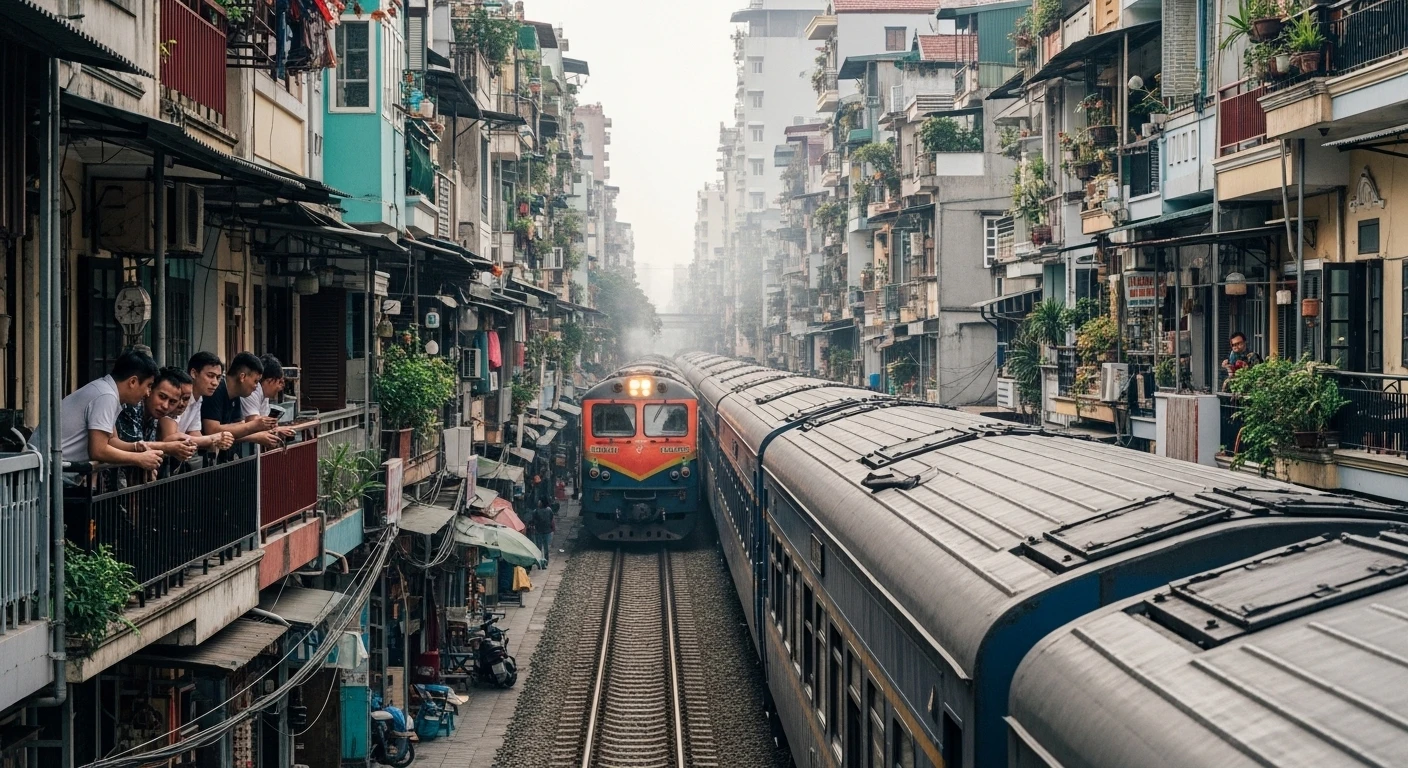
The heart-stopping moment: the Reunification Express inches past homes and cafes on Hanoi's Train Street.
Safety First, Thrill Second: Finding Your Vantage Point
For years, Train Street was an unofficial, somewhat chaotic phenomenon. Tourists would flock to the tracks, posing for daredevil photos, often at great personal risk. But authorities, understandably concerned about safety, have periodically clamped down on access. The good news? Responsible tourism has found a way. Today, the safest and most legal way to experience the magic is by patronizing one of the many cafes that have set up shop along the route.
These establishments offer balconies and seating areas perched precariously close to the tracks. They provide a secure, elevated perspective, allowing you to soak in the atmosphere, enjoy a beverage, and witness the train's passage without putting yourself in harm's way. It's a win-win: you get the adrenaline rush, and the local community benefits from a managed, safe tourist attraction.
The Symphony of the Tracks: Life on the Line
What truly makes Train Street special isn't just the train itself, but the lives lived in its shadow. This is a working neighborhood. Residents have adapted their routines around the twice-daily (or more, depending on schedules) thunderous intrusion. You'll see laundry hanging precariously close to the rails, children playing, and families sharing meals, all in stark contrast to the imminent arrival of the monstrous locomotive.
Before the train arrives, there's a palpable buzz. Cafe owners will gently alert you, locals might signal with a smile. The air thickens, the distant rumble grows. Then, the chaos. Metal screams against metal, the ground vibrates, and the sheer force of the engine dominates your senses. It’s a primal experience. And just as suddenly as it arrives, it passes, leaving behind a stunned silence broken only by the retreating clatter and the immediate return to life as usual. The train's passage is a brief, violent interruption, a testament to the neighborhood's resilience and adaptability.
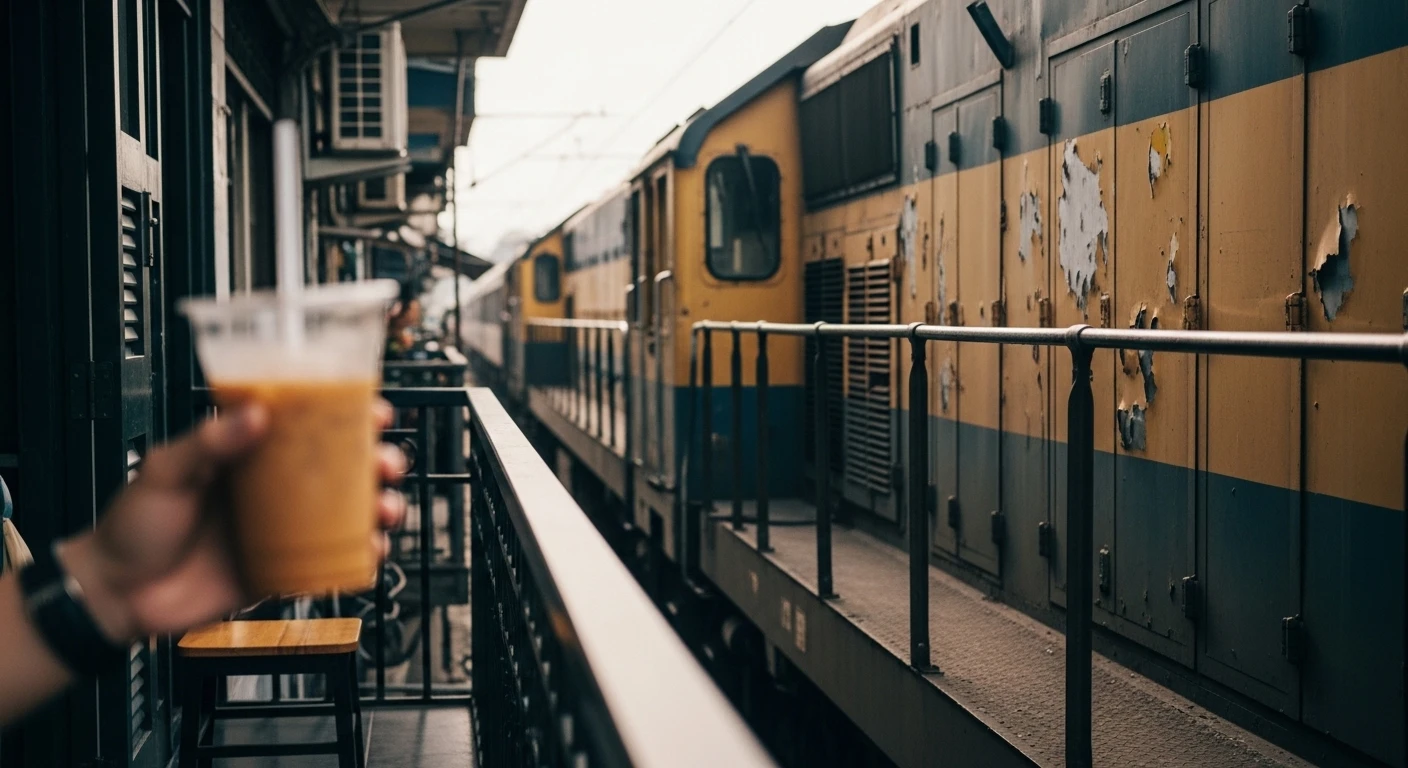
From the safety of a cafe balcony, the intimate proximity to the train is what makes it so thrilling.
The Mighty Reunification Express: More Than Just a Train
The train that thunders through Hanoi's Train Street is the legendary Reunification Express (Đường sắt Bắc-Nam). This iconic railway line stretches over 1,700 kilometers from Hanoi in the north to Ho Chi Minh City in the south, a vital artery connecting the nation. Its passage through this densely populated urban corridor is a powerful symbol of Vietnam's history and its ongoing development.
Watching this train navigate the narrow streets is a unique opportunity to appreciate the engineering marvels of a bygone era, adapted for modern use. The sheer size and weight of the locomotive, coupled with the impossibly tight confines, make each passing a breathtaking event. It's a stark reminder of how infrastructure can weave itself into the very fabric of daily life in cities like Hanoi, creating unexpected and thrilling human experiences.
Cafe Culture: Fueling the Thrill
Vietnamese cafe culture is legendary, and Train Street offers its own unique twist. Beyond the coffee, you'll find an array of refreshing drinks – iced teas, fruit smoothies, and the ubiquitous Vietnamese iced coffee (cà phê sữa đá). Many cafes also offer light snacks, perfect for while you wait or to recover from the sensory overload.
The ambiance in these cafes is often surprisingly relaxed, despite the impending adrenaline. They are community hubs where locals chat, and travelers gather, sharing hushed excitement. Ordering a drink is your ticket to the best seat in the house, a chance to observe and participate in this extraordinary urban theater. Don't be afraid to try a local specialty; it's all part of the immersive experience.

A strong cà phê sữa đá is the perfect companion to the anticipation and exhilaration of watching the train.
A Photographer's Dream, A Local's Reality
For photographers, Train Street is a dreamscape. The stark contrast between the sleek, powerful locomotive and the intimate, colorful daily life of the residents creates endless compositional possibilities. The narrow alleyways, the vibrant murals often found adorning building facades, and the sheer proximity to the moving train offer unparalleled opportunities for dramatic shots.
Remember to be respectful. While locals are often accustomed to tourists, they are still living their lives. Always ask permission before taking close-up photos of individuals. The best shots capture the essence of the place – the tension, the community, and the sheer audacity of living cheek-by-jowl with a railway line. The visual narrative here is one of adaptation, bravery, and finding beauty in the most unexpected of places.

Hanoi's Railway Arches: The Phung Hung Mural Street
Stroll beneath the ancient railway arches of Hanoi's Old Quarter. Discover incredibly detailed, life...
Read MorePractical Tips: Making the Most of Your Visit
Planning your visit to Hanoi Train Street is key to maximizing the experience. Here’s what you need to know:
- Check the Train Schedule: This is crucial. The train typically runs twice a day (once in the morning, once in the afternoon/evening), but schedules can change. Ask your hotel or a local cafe for the most up-to-date times. The most popular slots are usually mid-morning and late afternoon.
- Arrive Early: To secure a good spot on a cafe balcony and enjoy the pre-train atmosphere, aim to arrive at least 30-60 minutes before the scheduled departure.
- Choose Your Cafe Wisely: There are several cafes along the street. Some offer better views, others better coffee. Wander a bit, see which one appeals to you. You’ll usually find a friendly welcome.
- Be Prepared for the Noise: The train's passage is incredibly loud. If you have sensitive hearing, consider earplugs.
- Respect the Residents: Remember this is a residential area. Be mindful of noise levels, don't block pathways, and always ask permission before taking close-up photos of people.
- Beware of Scams: Unfortunately, some touts may try to charge exorbitant fees for "guided" access. Stick to the official cafes.
- Location: Train Street is located in the Đống Đa district, accessible from Dien Bien Phu Street. It's a short taxi or Grab ride from most tourist areas in the Old Quarter.
Beyond the Thrill: A Glimpse into Hanoi Life
While the train itself is the main event, Train Street offers a unique window into the heart of Hanoi. It’s a place where modern tourism intersects with deeply ingrained traditions and daily existence. It’s a reminder that in a city as dynamic as Hanoi, life often finds a way to thrive, adapt, and even flourish, in the most improbable of circumstances.
This isn't just about a fleeting adrenaline rush; it's about experiencing the unfiltered pulse of a city that’s constantly in motion, a city where ancient railway lines can become the backdrop for vibrant cafe culture and the simple act of enjoying a cup of coffee. It’s a snapshot of life that’s both ordinary and extraordinary, a testament to the human spirit’s ability to find routine amidst the extraordinary.

Long Bien Bridge: The Rusty, Defiant Symbol of Hanoi
Designed by the architects of the Eiffel Tower, this heavily bombed, rusty cantilever bridge is rest...
Explore the BridgeA Southern Echo: The Reunification's Journey
The Reunification Express’s journey doesn't end in Hanoi. Its full length connects the entire country, a symbol of unity and progress that resonates from the northern mountains to the southern deltas. While Train Street offers a unique, localized urban thrill, the very train passing through is part of a much grander narrative of Vietnam's connection.
For travelers venturing south, seeing the Reunification Express continue its journey, perhaps over iconic structures like the Long Bien Bridge (a vital part of its northern route) or through the more rural landscapes towards Hue or Da Nang, adds another layer to understanding this vital piece of Vietnamese infrastructure. It’s a reminder that the adventure often extends far beyond the initial thrill.

Don Ca De Arch Bridge: The Hidden Railway Viewpoint of Hai Van Pass
A secret spot for train lovers and photographers. Hike down a steep, overgrown trail to find an old ...
Discover the PassConclusion: A Moment Frozen in Time
Hanoi Train Street is more than just a tourist attraction; it's an unforgettable experience. It's a place where the raw power of a nation's transport artery collides with the gentle rhythm of everyday life, creating a spectacle that is both exhilarating and deeply human. From your perch in a safe, welcoming cafe, you'll witness a moment that defines the adventurous spirit of Hanoi.
It’s an experience that stays with you long after the rumble of the train fades. The sights, the sounds, the sheer proximity of it all—it’s the ultimate Hanoi adrenaline rush, served with a side of rich Vietnamese coffee. So, when you're in the capital, don't miss the chance to step onto this incredible stage and witness history, engineering, and human resilience unfold, just centimeters away.