The Symphony of Sizzle: Meet Banh Xeo
Forget delicate crepes. In the humid embrace of Vietnam's Mekong Delta, there’s a dish that arrives with a fanfare of crackles and pops, a culinary spectacle that demands to be seen, heard, and most importantly, devoured with your hands. It’s called Banh Xeo, a name that literally translates to "sizzling cake," and trust me, it lives up to its name.
Imagine this: a colossal, golden-yellow disc, larger than a dinner plate, cooked right before your eyes on a wok the size of a small satellite dish. The air is thick with the intoxicating aroma of turmeric, coconut milk, and the promise of fresh ingredients. This isn't just food; it's theater. And if you've been eating Banh Xeo folded neatly like a delicate French crêpe, well, my friend, you've been missing the point. The Mekong Delta way is a glorious, messy, exhilarating affair.
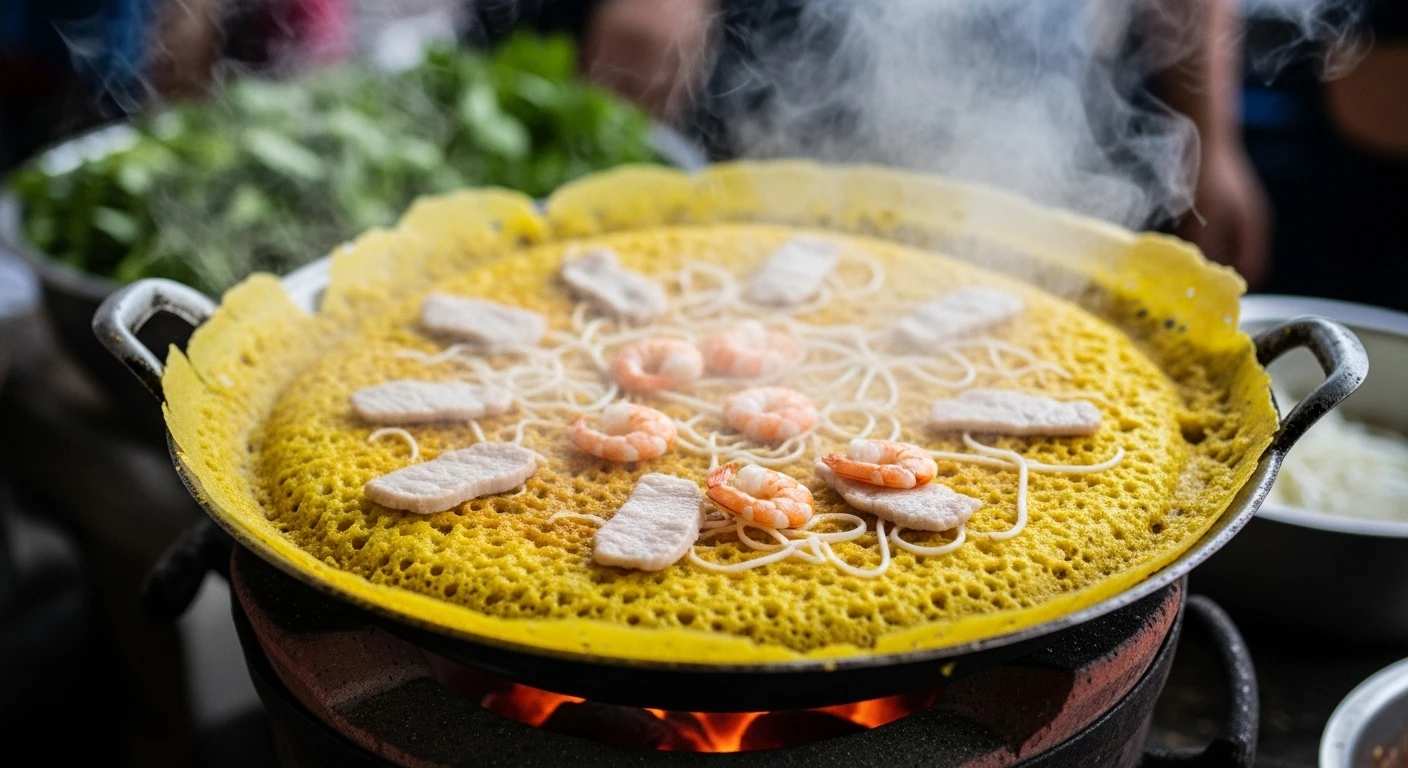
The star of the show: a massive Banh Xeo sizzles to perfection in a Mekong Delta eatery.
The Soul of the Crispy Giant: What's Inside?
At its heart, Banh Xeo is a savory pancake, but the similarities to Western versions end there. The batter is a brilliant concoction of rice flour, often with a touch of cornstarch for crispiness, enriched with coconut milk for a subtle sweetness and creamy texture, and—crucially—infused with turmeric. This humble spice is what gives Banh Xeo its signature vibrant yellow hue, a visual promise of the deliciousness to come.
The fillings are where the magic truly unfolds, and in the Mekong Delta, freshness and abundance are key. Expect a generous scattering of plump, succulent shrimp, often harvested from the region's abundant waterways. Slices of tender pork belly, sometimes marinated in fish sauce and pepper, add a savory depth. And for texture and crunch? Bean sprouts are a non-negotiable, providing a delightful contrast to the crispy crepe and tender fillings. Sometimes, you’ll find thinly sliced onions or even mushrooms adding further layers of flavor.
Rooted in the Delta: A River's Generosity
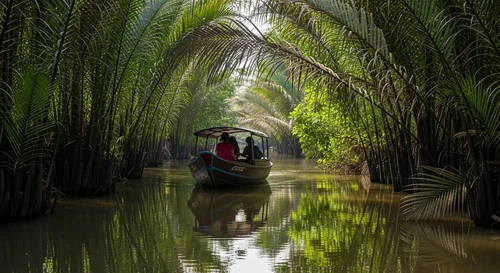
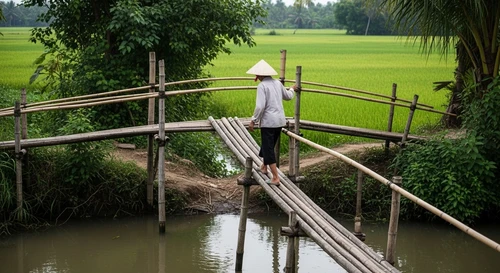
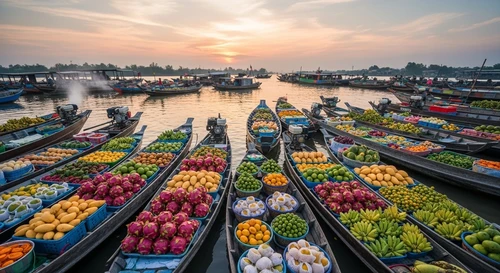
The Mekong Delta, a vast labyrinth of rivers, canals, and fertile plains in Southern Vietnam, is Banh Xeo’s spiritual home. This region is blessed with an incredible abundance of fresh ingredients, from the abundant shrimp and fish pulled from its waters to the fragrant herbs and crisp vegetables grown in its rich soil. The very essence of Banh Xeo—its vibrancy, its freshness, its sheer scale—is a reflection of the Delta itself.
The preparation of Banh Xeo is often a communal affair, especially in rural areas and during festivals. You'll see it cooked on a small charcoal stove by the roadside, a quick, satisfying meal for locals and adventurous travelers alike. Or, in more established eateries, it becomes the main event, a grand, crispy spectacle. The large size is typical of the Delta, a region that favors generosity and hearty portions.

Discover the Heart of the Delta
To truly appreciate the spirit behind dishes like Banh Xeo, you need to understand the people who make them. A stay with a local family offers an unparalleled glimpse into Mekong Delta life.
Homestay Roulette: Why Staying with a Mekong Family Changes EverythingThis connection to the land and water is what gives Mekong Delta Banh Xeo its soul. It's not just a meal; it's a taste of the region's bounty and a testament to its vibrant culinary heritage.
Your Culinary Pilgrimage: Getting to the Delta's Best Banh Xeo
If the thought of a giant, sizzling crepe is calling your name, you’ll want to head straight for the source: Southern Vietnam, particularly the Mekong Delta region. Here's a practical guide for travelers from North America, Europe, or Australia.
Step 1: International Arrival
Your journey will most likely begin with an international flight to Vietnam’s primary gateway, Tan Son Nhat International Airport (SGN) in Ho Chi Minh City (HCMC). Major airlines from North America, Europe, and Australia typically offer one-stop or direct routes into SGN.
Step 2: Domestic Connection to the Delta Hub
From Ho Chi Minh City, the most common and convenient hub for exploring the Mekong Delta is Can Tho City. By Air: Can Tho International Airport (VCA) has domestic flights from Ho Chi Minh City, though frequency can vary. This is the fastest option, taking about 1 hour. By Bus: This is the most popular and economical method. Numerous reputable bus companies operate frequent services from Ho Chi Minh City’s Mien Tay Bus Station to Can Tho. The journey takes approximately 3.5 to 4.5 hours, depending on traffic. Look for reputable companies like FUTA Buslines (Phuong Trang) or Mai Linh. By Private Car/Taxi: For more comfort and flexibility, you can hire a private car. This is the most expensive option but allows for stops along the way. The drive is similar in duration to the bus.
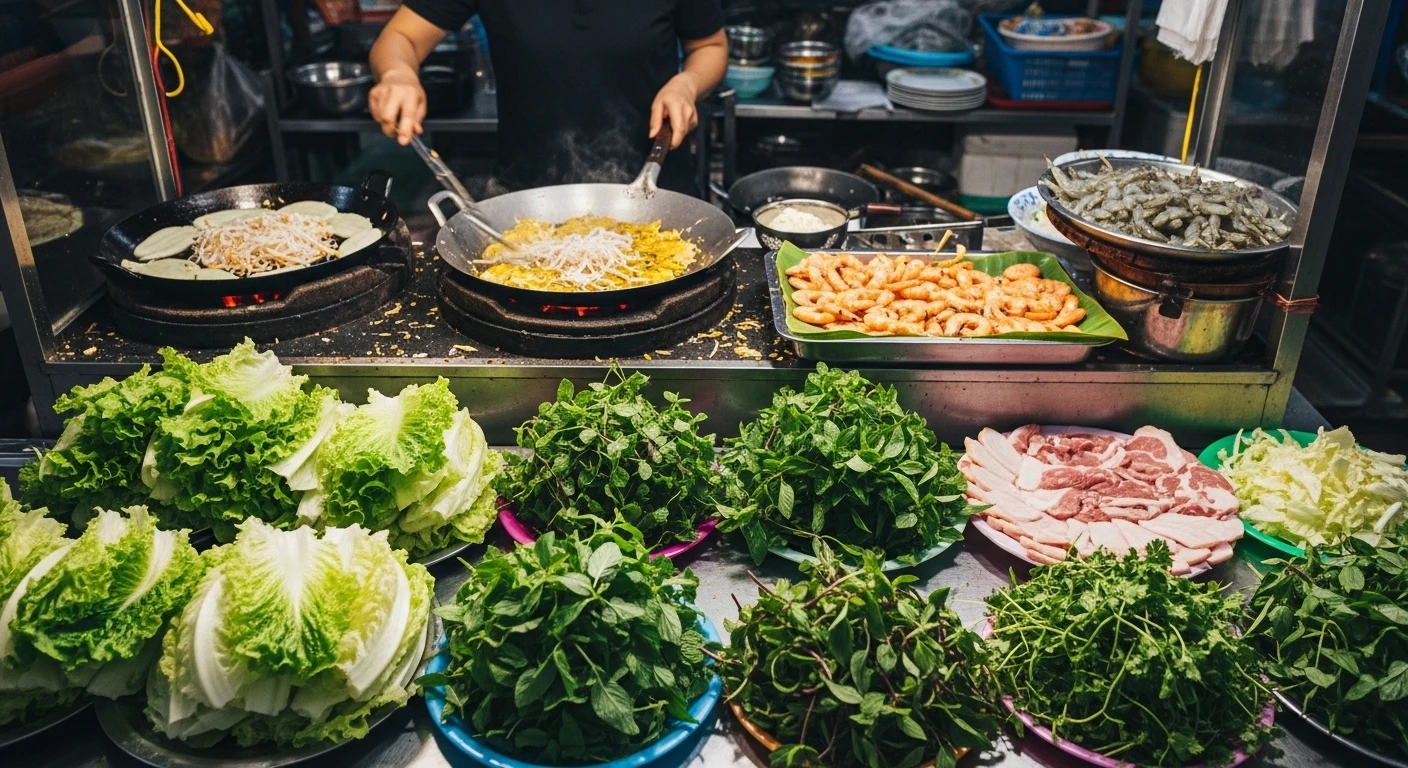
From Can Tho, you are perfectly positioned to explore the region's famous floating markets and sample some of the best Banh Xeo. Many smaller towns and provinces within the Delta, like Soc Trang or Ca Mau, are also renowned for their versions and can be reached via local bus services from Can Tho.

Explore the Delta's Gateway
For a deeper dive into the unique culture where Vietnam meets Cambodia, consider a visit to Chau Doc, another vibrant town in the heart of the Delta.
Chau Doc: The Colorful Border Town Where Vietnam Meets CambodiaThe Sacred Ritual: How to Eat Banh Xeo Like a Local
This is where the magic—and the mess—happens. Forget your knife and fork. The proper way to enjoy Banh Xeo is a hands-on, interactive experience. It’s less about delicate bites and more about joyful construction.
Step 1: The Leafy Foundation
You’ll be presented with a platter of fresh, crisp lettuce leaves and an assortment of aromatic herbs. Think mint, Thai basil, cilantro, perilla leaves, and sometimes even fish mint (rau răm). This is your edible wrapping paper. Select a large lettuce leaf as your base.
Step 2: Tearing Down the Giant
Take your chopsticks or hands and carefully break off a manageable piece of the crispy Banh Xeo. Don't try to lift the whole thing! Aim for a section that looks like it will fit comfortably within your chosen leaf.
Step 3: The Herbaceous Embrace
Layer your chosen herbs onto the lettuce leaf. Don't be shy; the more herbs, the fresher and more fragrant your wrap will be.
Step 4: The Banh Xeo Parcel
Place the torn piece of Banh Xeo on top of the herbs. The goal is to create a delightful little parcel.
Step 5: The Dipping Finale
Now, for the dipping sauce. Typically, this is a sweet and savory fish sauce-based concoction (nuoc cham), often thinned with a bit of water and lime juice, and perhaps garnished with chili and garlic. Dip your entire assembled parcel into the sauce, coating it generously.
Take a big bite. The explosion of flavors and textures—the crispy crepe, the savory fillings, the fresh herbs, the pungent sauce—is pure bliss. Repeat until the entire Banh Xeo is devoured. It's messy, it's fun, and it’s the only way to truly experience this Mekong masterpiece.
The Underrated Hero: Mastering the Dipping Sauce
While the Banh Xeo itself is the star, the dipping sauce (nuoc cham) is its indispensable co-star. A perfectly balanced nuoc cham can elevate the entire dish from delicious to divine. The Mekong Delta version often leans towards a slightly sweeter profile, reflecting the region's abundance of fresh ingredients.
The foundation is always fish sauce, the soul of Vietnamese savory cooking. To this, you add water to dilute the intensity, sugar for sweetness, and lime juice or rice vinegar for acidity. Freshly minced garlic and finely chopped chili peppers provide the essential kick. Some variations might include shredded carrot for color and a hint of sweetness, or a touch of minced lemongrass for an extra aromatic dimension. The trick is in the ratio – it should be a harmonious blend of salty, sweet, sour, and spicy, designed to cut through the richness of the crepe and complement the fresh herbs. Don't be afraid to ask for a refill if yours runs low – it's that important!
Beyond the Delta: A Nation's Favorite
While the Mekong Delta is its undisputed homeland, Banh Xeo has spread its crispy wings across Vietnam, evolving with regional tastes. In Central Vietnam, particularly in Hue and Da Nang, you'll find smaller, more delicate versions often called Banh Khoai. These are typically thicker and crispier, and the fillings might vary, but the essence of a savory crepe remains.
In the North, Banh Xeo can be lighter, with a less pronounced coconut milk flavor, and the emphasis might shift towards different types of mushrooms or seafood. However, the giant, turmeric-infused, shrimp-and-pork-filled version is what most international visitors associate with the dish, and it's the style you'll find in its most magnificent form in the South. Regardless of the variation, Banh Xeo consistently ranks among Vietnam's most beloved street food dishes.

The Ultimate Vietnamese Food Debate
While Banh Xeo is king in its own right, explore the national obsession with two other Vietnamese icons: Banh Mi and Pho.
Banh Mi vs. Pho: The Ultimate Battle for Vietnam's National DishMore Than Just a Meal: A Taste of Community
In the Mekong Delta, food is inextricably linked to social life. Banh Xeo is often enjoyed communally, shared among family and friends. The act of preparing the wraps, the lively conversation, the shared enjoyment of a spectacular dish – it all contributes to a sense of togetherness.
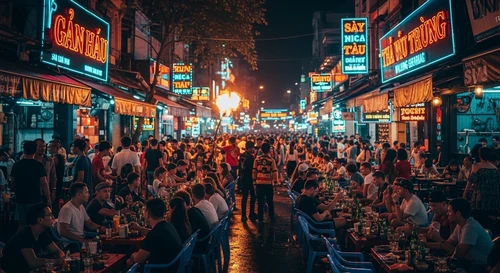
Street food stalls serving Banh Xeo are not just places to eat; they are social hubs. Locals gather there to catch up, share stories, and enjoy a satisfying, affordable meal. This communal aspect is a vital part of why Banh Xeo has endured as such a beloved dish. It's a food that brings people together, fostering connection over crisp, savory goodness.
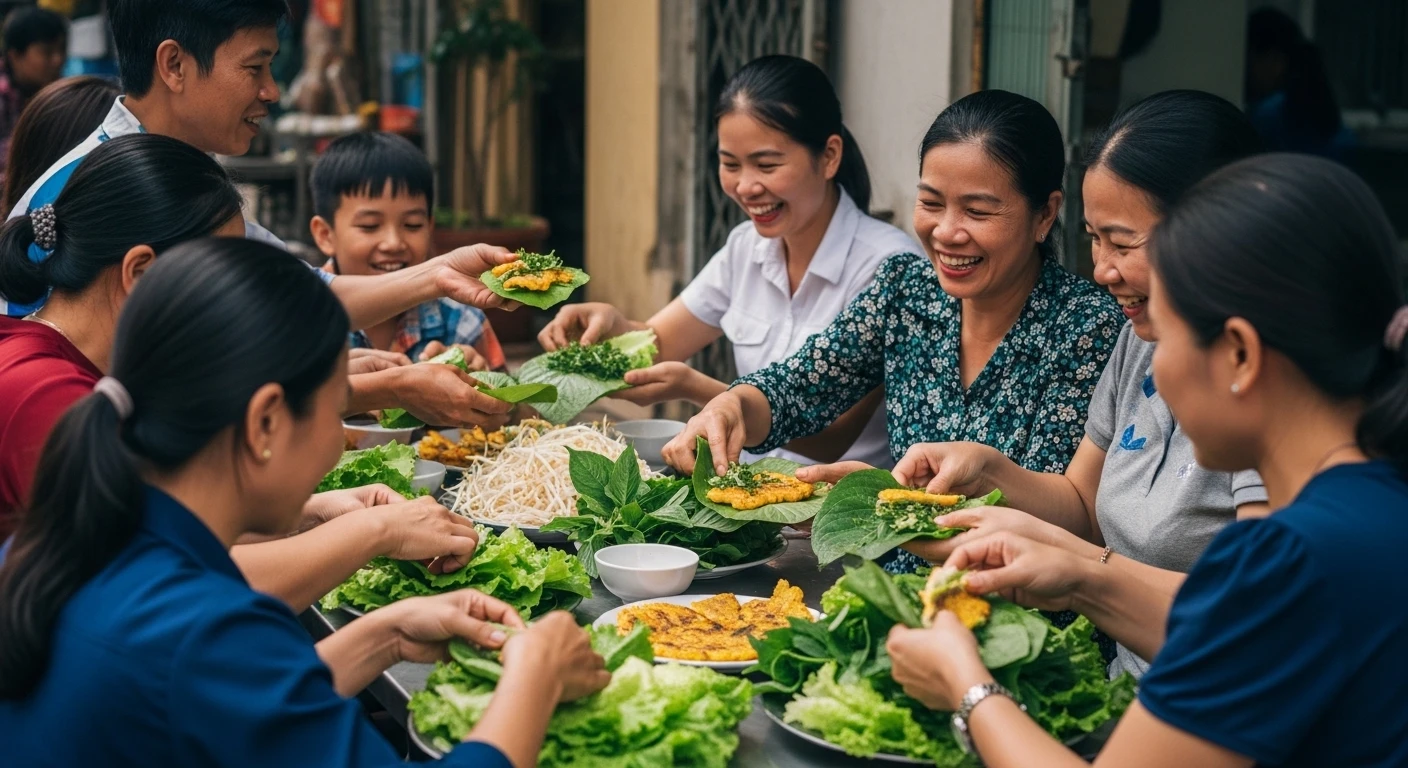
Sharing Banh Xeo is a quintessential Mekong Delta experience, fostering community and good cheer.
Your Banh Xeo Masterclass: Insider Tips
To truly master the art of Banh Xeo, a few insider tips can make all the difference:
- Embrace the Crispness: The hallmark of a great Banh Xeo is its crispiness. Don't be afraid of a slightly darker golden-brown color; that's where the best crunch lies.
- Fresh Herbs are Non-Negotiable: The variety and freshness of herbs are crucial for balancing the richness of the crepe. Experiment with different combinations.
- Don't Overfill Your Wrap: It's tempting to load up, but a well-balanced wrap is easier to eat and allows you to appreciate all the flavors.
- Mind the Sauce: Taste your dipping sauce before you dive in. Adjust the sweet-sour-salty-spicy balance to your preference. A good nuoc cham is key!
- Order More Than One: Seriously, one giant crepe might seem like a lot, but once you get the hang of wrapping and dipping, you'll be craving another.
- Watch the Cook: If you can, watch the Banh Xeo being made. The technique, the speed, the sizzle – it’s a performance worth observing.
The Last Bite: Why Banh Xeo Stays With You
Banh Xeo is more than just a dish; it’s an experience. It’s the thrill of the sizzle, the vibrant colors of turmeric and fresh herbs, the satisfying crunch of the crepe, and the complex symphony of flavors in every hand-rolled parcel. It’s the embodiment of Mekong Delta generosity and culinary ingenuity.
So, the next time you find yourself in Vietnam, or even attempting to recreate this marvel at home, remember the Mekong way. Embrace the mess, dive into the herbs, and savor that glorious, crispy, savory bite. You won't just be eating; you'll be participating in a culinary tradition that's as rich and vibrant as the Delta itself.