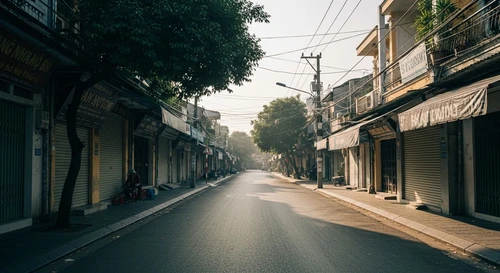
The Awakening: Beyond Your Morning Latte
Let’s get one thing straight: if your idea of a morning jolt involves the delicate floral notes of a Kenyan AA or the smooth, chocolatey embrace of a Colombian Supremo, prepare for a rude, albeit exhilarating, awakening. Vietnam's coffee culture is built on a different beast entirely. It’s not about nuance; it’s about power. It’s about a potent, no-nonsense jolt that can wrestle even the most stubborn dawn into submission.
The star player in this caffeine drama? Robusta. Forget its milder, more forgiving Arabica cousin. Robusta beans, primarily cultivated in the fertile highlands and volcanic soils of the Central Highlands, though increasingly finding roots in the rich loamy earth of the Mekong Delta's fringes, are built for intensity. They are hardier plants, easier to grow, and crucially, pack roughly twice the caffeine punch of Arabica. This is the fuel that powers a nation, from early morning market vendors to late-night students.
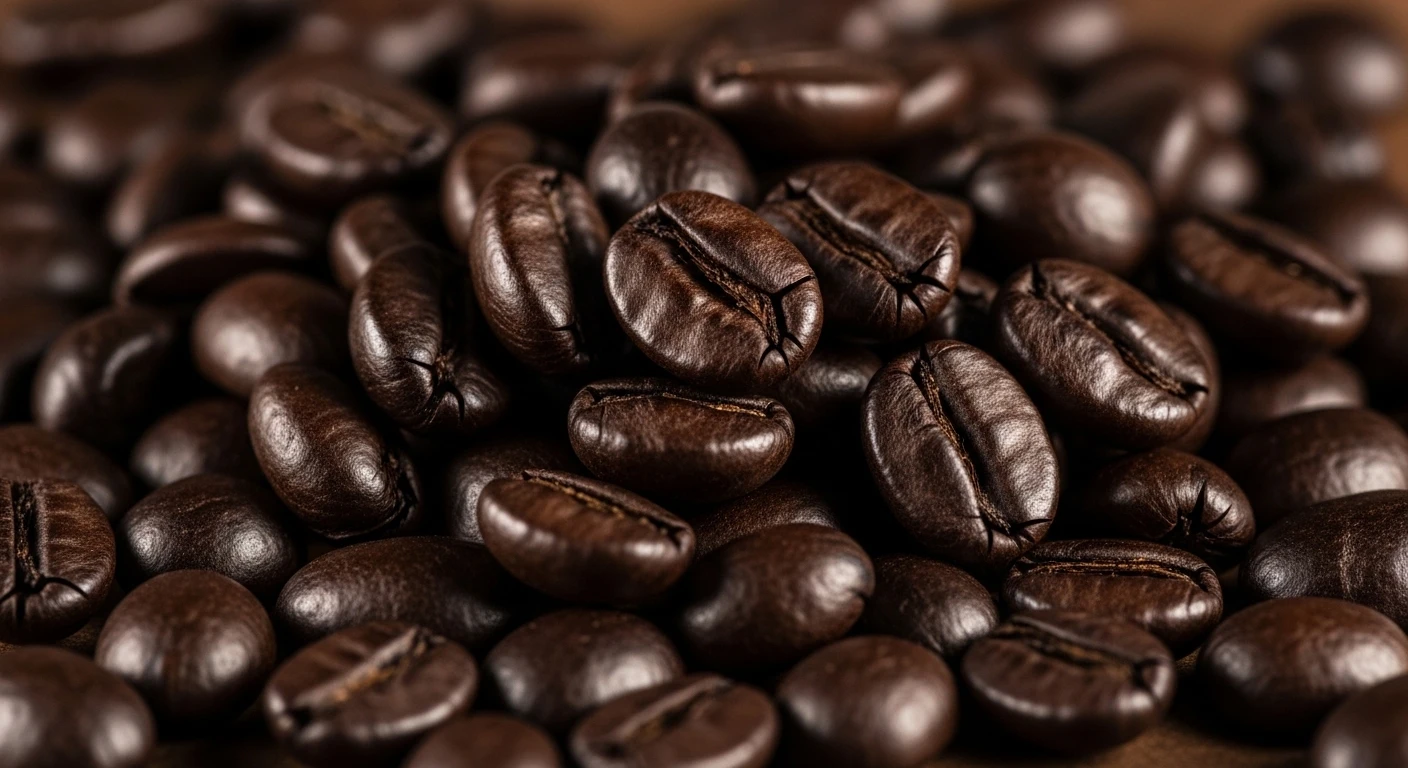
The potent heart of Vietnamese coffee: dark, oily Robusta beans, promising an intense brew.
The Mekong's Bitter Kiss: The Rise of Ca Phe Sua Da
While Robusta's stronghold is the Central Highlands, its journey and preparation are deeply intertwined with the wider Vietnamese spirit, and that spirit is embodied by the lifeblood of the south: the Mekong Delta. Here, the coffee ritual takes on a specific, iconic form: Ca Phe Sua Da – iced coffee with condensed milk. It’s more than a drink; it’s a cultural institution, a daily pilgrimage.
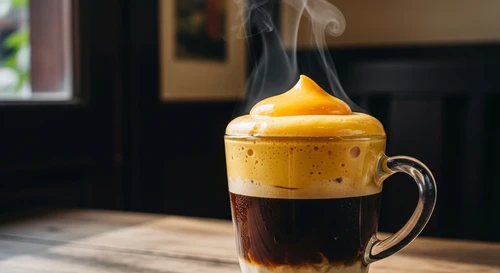
The magic happens with a traditional Vietnamese phin filter. This small, single-serving metal filter is placed atop a glass. Coarsely ground Robusta is tamped down, the bloom is allowed to release, and then hot water is poured over. The process is slow, deliberate, and mesmerizing. As the dark, syrupy liquid drips, it forms a rich, almost black coffee. This potent elixir is then combined with sweetened condensed milk – a marriage of bitter intensity and creamy sweetness that is pure alchemy. The final touch? A generous amount of ice, transforming it into a refreshing, yet still ferociously potent, iced beverage.
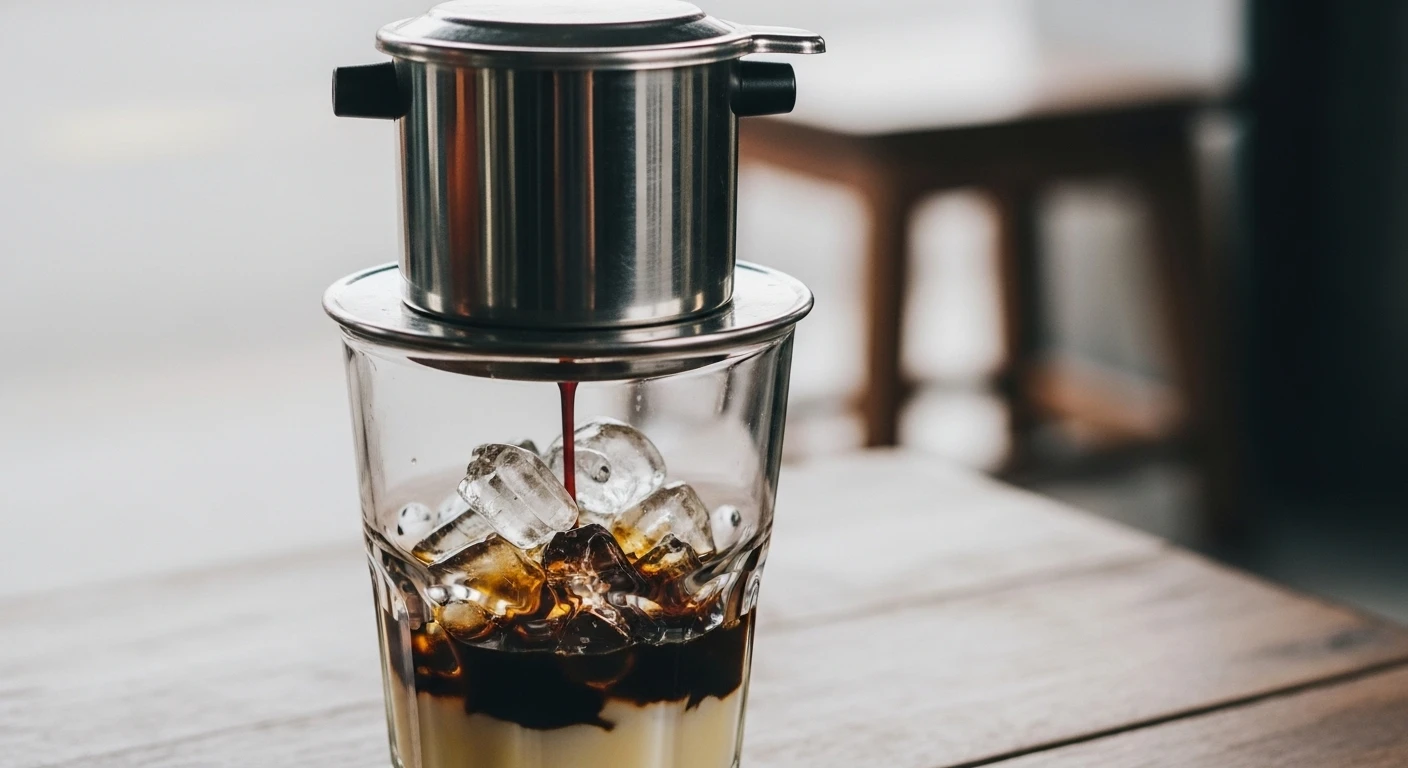
The art of the phin: slow-drip Robusta meets creamy condensed milk and bracing ice.
The Caffeine Kick: Why It Packs Such A Punch
This isn't your watered-down, guilt-free espresso. The double-whammy of Robusta beans and the concentrated brewing method means Ca Phe Sua Da is a serious caffeine delivery system. A typical cup can contain upwards of 300-400 mg of caffeine, sometimes more, dwarfing the average espresso (around 64 mg) or even a drip coffee (around 95 mg).
The addition of condensed milk, while delicious, also adds a significant sugar load. This sugar rush, combined with the caffeine, creates a uniquely invigorating, almost euphoric, experience. It’s the perfect antidote to the humidity, the early starts, and the sheer pace of life in cities like Ho Chi Minh City or Can Tho. It’s the taste of waking up, of getting things done, of embracing the day with unbridled energy.
Experiencing It: The Mekong Delta Way
To truly understand Ca Phe Sua Da, you must experience it at its source. The journey begins, as most great journeys in Southern Vietnam do, in the vibrant chaos of Ho Chi Minh City.
Getting to the Heart: From HCMC to the Delta's Coffee Culture
Most international travelers will fly into Tan Son Nhat International Airport (SGN) in Ho Chi Minh City. From here, you can dive headfirst into the urban coffee scene. Seek out small, local cafes – often little more than a few plastic stools on a sidewalk – where the phin filter is king.
For a deeper dive into the Mekong's unique take, rent a motorbike or take a comfortable tourist bus from Ho Chi Minh City to cities like Can Tho or My Tho. These are the quintessential Mekong Delta hubs where the coffee culture is deeply embedded in daily life.
In Can Tho: Wander through the bustling Cai Rang Floating Market early in the morning. While vendors peddle fruits and local delicacies from their sampans, many will also be brewing up fresh Ca Phe Sua Da. The experience of sipping this potent brew while watching the river life unfold is unparalleled. Alternatively, head to the charming Ninh Kieu Wharf area and find a waterside cafe. Look for places where locals gather; that’s always a good sign.
In My Tho: Visit the Thoi Son islet, accessible by boat. Here, amidst fruit orchards and coconut candy workshops, you'll find small, family-run establishments serving coffee as part of the traditional Mekong hospitality. The slower pace of these islands offers a more relaxed coffee immersion.
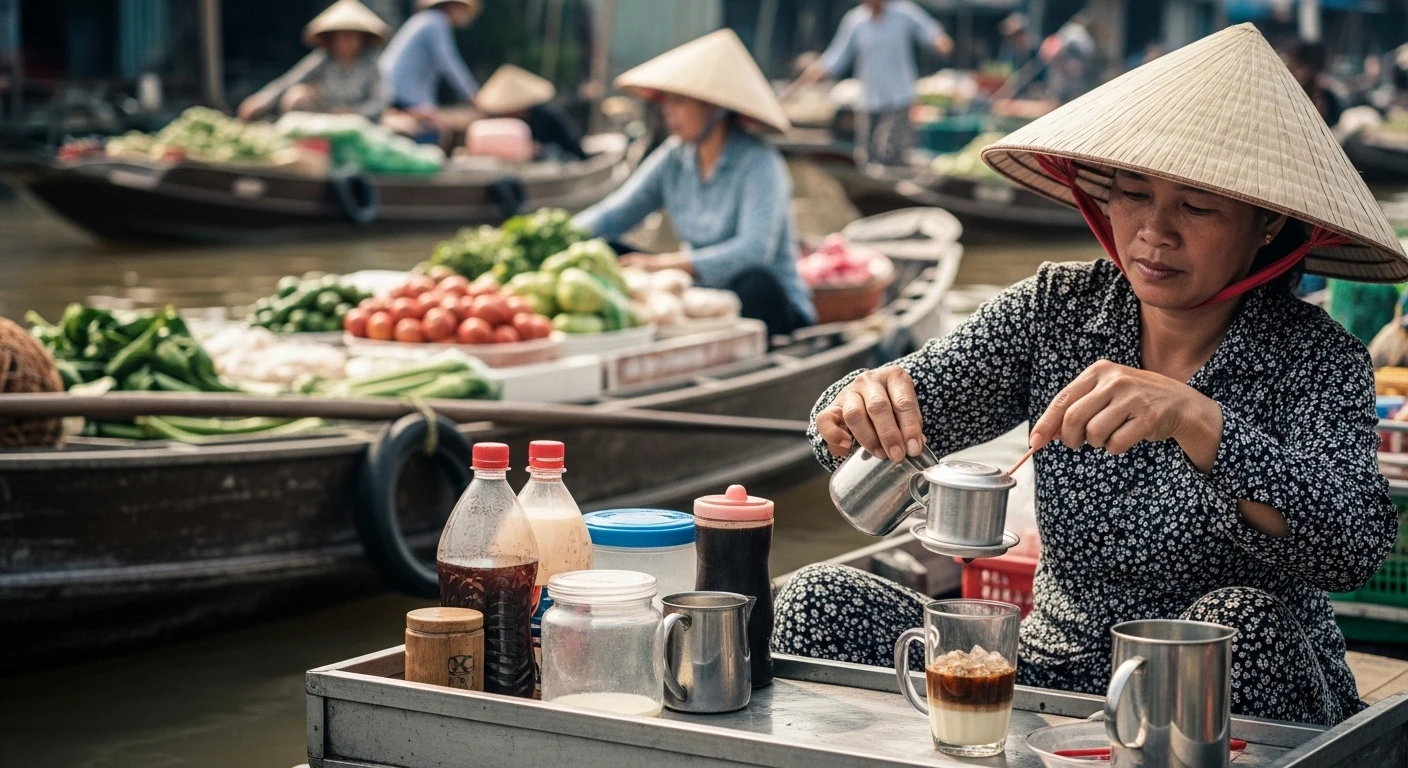
Morning energy at Cai Rang Floating Market: Fueling the day with Ca Phe Sua Da amidst riverine commerce.
The Art of the Phin Filter
Understanding the phin is key to appreciating Vietnamese coffee. It’s a simple, yet ingenious, device. Typically made of stainless steel, it consists of a brew chamber, a perforated plate, a screw-down plunger (sometimes), and a lid. The slow drip rate is crucial for extracting the full, rich flavor from the Robusta beans.
Watching a barista prepare it is part of the ritual: the tamping of the grounds, the gentle pour of hot water, the patient wait as the dark liquid slowly fills the glass below. It’s a meditative process, a stark contrast to the speed and automation of many Western coffee preparations. This patience yields a coffee that is both intensely flavorful and remarkably smooth, despite its strength.

Deeper Mekong Immersion
Want to truly feel the rhythm of the Delta? Understand the raw, unfiltered reality by staying with a local family.
Discover Homestay RouletteRobusta vs. Arabica: The Real Difference
It's crucial to grasp why Robusta is so dominant in Vietnam's traditional coffee culture. While Arabica offers complexity, floral notes, and a more nuanced acidity, it can be challenging to grow in Vietnam’s tropical climate and often requires more careful processing.
- Caffeine Content: Robusta has significantly higher caffeine (up to 4.5% by dry weight vs. 1.5% for Arabica). This translates to that characteristic "kick."
- Flavor Profile: Robusta is bold, strong, and often described as having rubbery, chocolatey, or nutty notes. It can be more bitter and less acidic than Arabica.
- Body: Robusta typically yields a fuller, heavier body in the cup.
- Acidity: Lower acidity in Robusta makes it taste less "bright" and more "grounded."
- Growing Conditions: Robusta is a hardier plant, tolerating higher temperatures and humidity, making it ideal for Vietnam's climate.
The combination of Robusta's inherent power and the sweet creaminess of condensed milk is what makes Ca Phe Sua Da so uniquely satisfying. It's a deliberate pairing, not an accident of brewing.
The Global Obsession
What started as a local morning ritual has captivated palates worldwide. From independent cafes in London and New York experimenting with the phin filter to Vietnamese diaspora communities keeping the tradition alive, Ca Phe Sua Da has transcended borders. Its appeal lies in its sheer boldness, its unpretentious intensity, and its perfect balance of bitter and sweet.
For those accustomed to the gentler approach of Arabica-based coffees, tasting authentic Vietnamese Ca Phe Sua Da is often a revelation. It’s a reminder that coffee isn't just about subtle aromas; it can also be about raw, unadulterated energy and a powerful, comforting flavor profile.
Complement Your Coffee Break
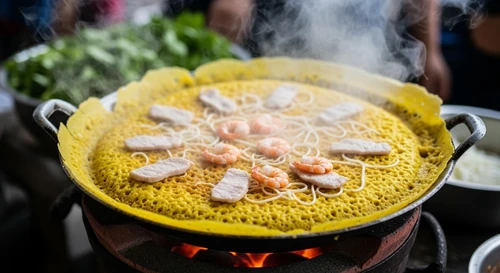
Pair your powerful brew with an iconic Mekong snack! Learn the proper, hands-on way to eat a sizzling Banh Xeo.
Master the Banh XeoThe Implication: Your Espresso Will Never Be the Same
After experiencing a true Ca Phe Sua Da, your morning espresso might start to feel a bit… weak. The intense, almost primal, energy boost, combined with that unique sweet-bitter contrast, is hard to replicate. It forces you to reconsider what coffee can be.
This isn't to disparage the delicate craft of espresso or the nuanced world of third-wave coffee. But Vietnam's Robusta tradition offers a different philosophy – one of potency, efficiency, and pure, unadulterated wakefulness. It's a coffee for doing, for powering through, for igniting the senses. It’s the taste of a culture that knows how to wake up and get things done, day after day, fueled by the potent heart of its land.
The Final Sip
So, the next time you’re craving a serious caffeine fix, or simply want to taste a coffee that’s a direct conduit to the vibrant life of Vietnam, seek out Ca Phe Sua Da. Let the dark, syrupy Robusta flow through the phin, mingle with sweet condensed milk, and chill over ice. It might just ruin your morning espresso, but it will undoubtedly awaken your senses to a whole new world of coffee. And in the heart of the Mekong Delta, where life flows as steadily as the rivers, this potent brew is more than just a drink – it's the liquid gold that keeps the vibrant spirit of Vietnam alive.
Explore More Delta Flavors
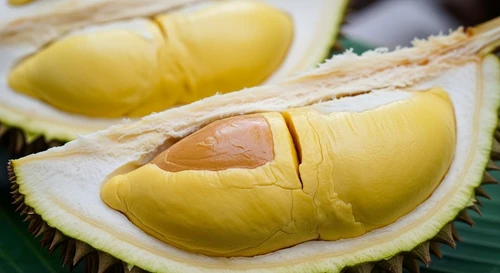
From potent coffee to the King of Fruits, discover the unforgettable tastes of the Mekong.
Dare to Taste Durian