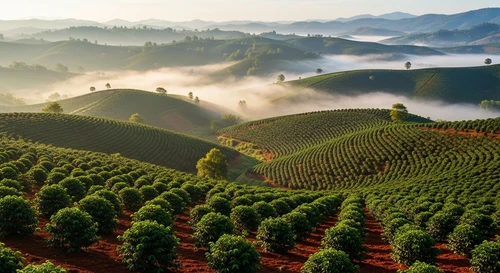
A House That Moves: Life Afloat
Imagine this: your home, your shop, your entire world, is a 5-meter wooden boat. This isn't a fantasy; it's the reality for a dwindling number of families in Vietnam's Mekong Delta. Here, life flows not just with the tides, but on them. These river nomads, often born and raised on the water, have carved out an existence from the very fabric of the delta's intricate waterways.
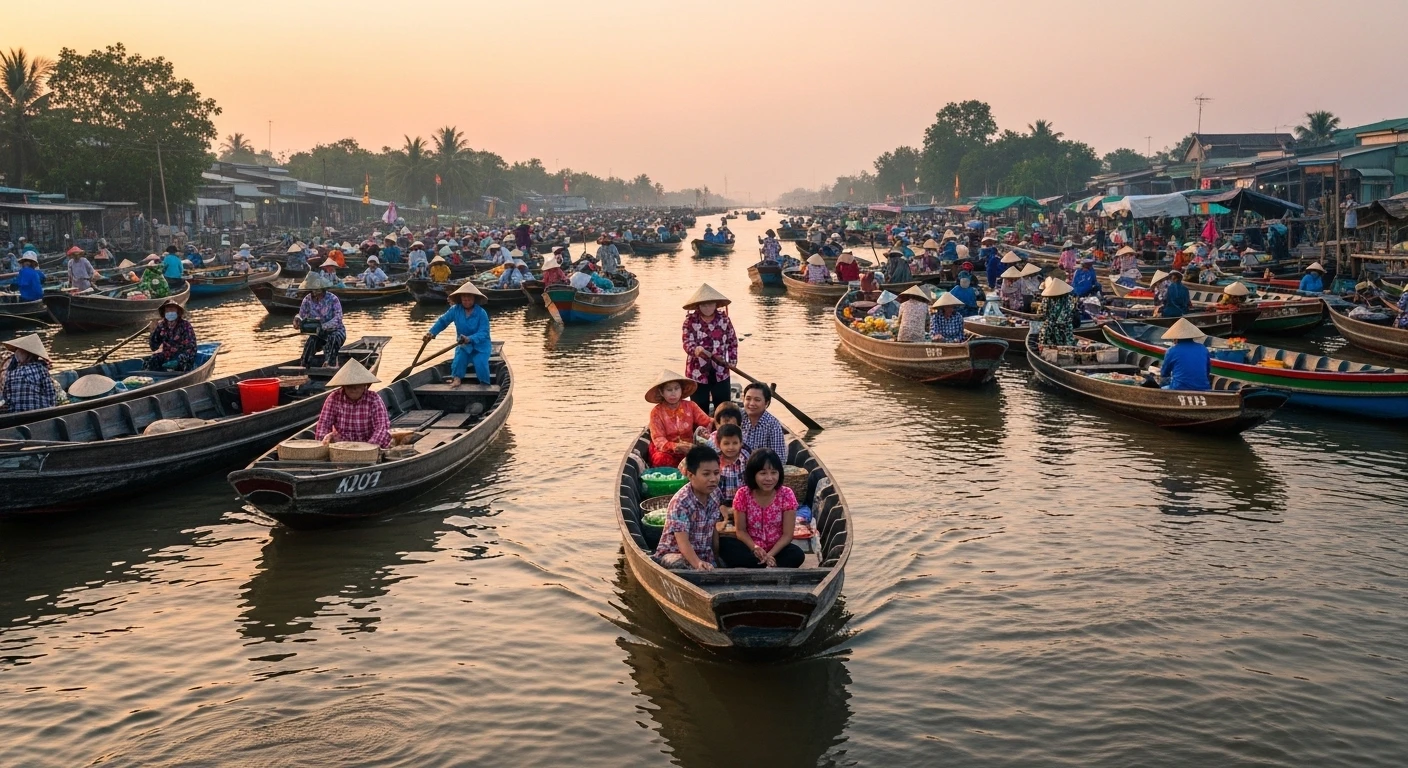
Our day begins before dawn, not with the alarm of a clock, but the gentle lapping of water against the hull and the distant calls of vendors preparing for the floating markets. The air, thick with humidity, carries the scent of ripe fruit, exhaust fumes from sputtering engines, and the ever-present, earthy aroma of the river itself. This is not just a mode of transport; for many, it's the only life they've ever known.
The Dawn Chorus of Commerce
As the first slivers of light break through the dense canopy of palms and tropical foliage, the river awakens. The family aboard our sampan, the Nguyen's, are already a blur of motion. The father, Ba Hai, expertly maneuvers the boat, navigating a maze of smaller vessels laden with everything from pyramids of mangoes to bunches of bananas. His wife, Ut Linh, shouts out orders, her voice a cheerful counterpoint to the distant chatter of the market.
For them, the floating market isn't just a place to buy supplies; it's their grocery store, their department store, and their social hub. They buy produce in bulk – coconuts, chili peppers, fresh herbs – and then, later in the day, they'll ferry these goods to smaller canals, selling them door-to-door to families whose homes are nestled along the riverbanks. Their sampan is a mobile emporium, its deck a testament to their livelihood.
Observing this ballet of commerce, you understand the sheer ingenuity and resilience of these people. Every creak of the wood, every splash of water, is a part of their story. It’s a raw, unvarnished glimpse into a way of life that’s as ancient as the delta itself.
The Intimate Space
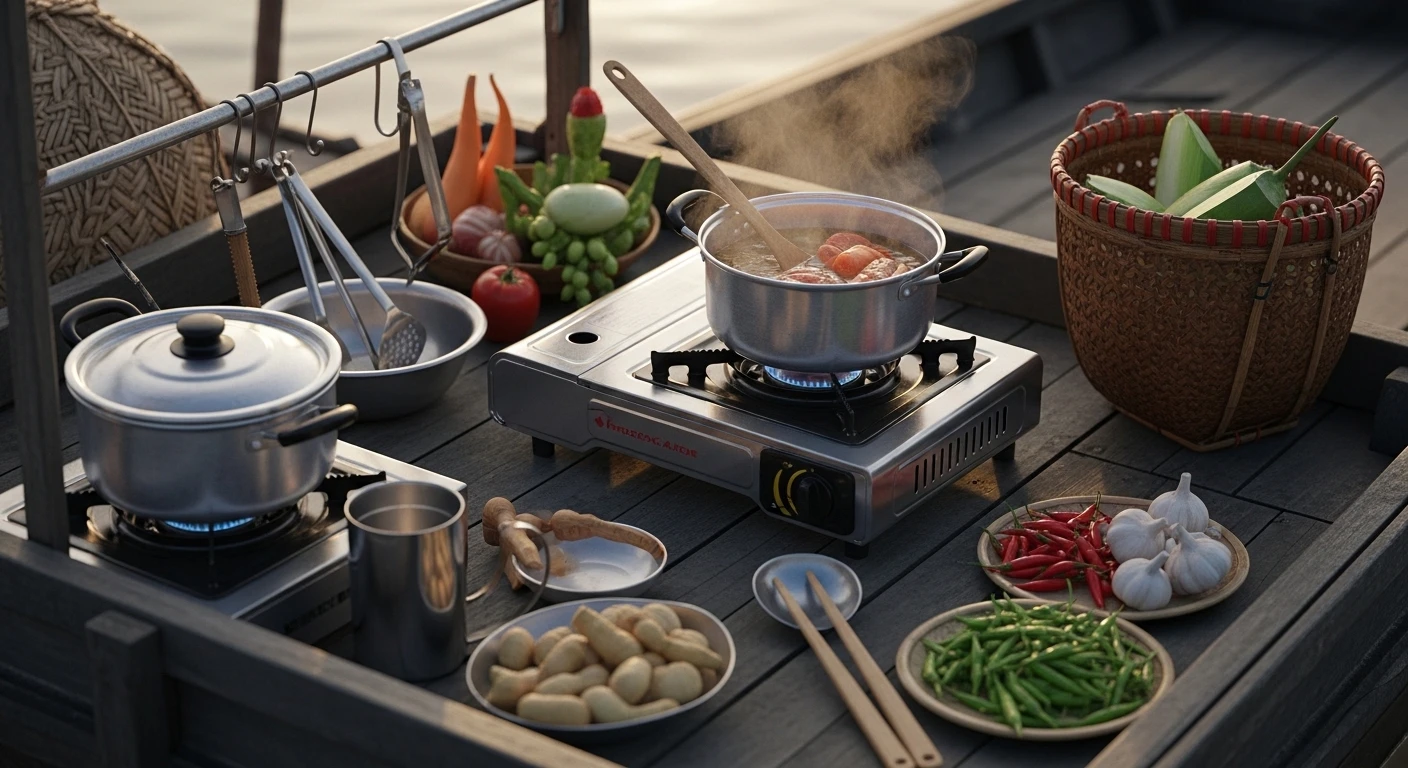
The living quarters on the Nguyen's sampan are surprisingly efficient. A small, covered area serves as the kitchen, complete with a propane stove, pots, pans, and a collection of well-used utensils. A hammock strung across the midsection is where the youngest son, Minh, naps during the day. The main living space is open, allowing for easy movement and storage of their goods.
At night, sleeping mats are unrolled, and the family huddles together, their lives contained within the wooden shell. There's a palpable sense of community and shared experience. The lack of privacy, by Western standards, is offset by an unparalleled closeness. They share everything – meals, stories, and the gentle rocking of the boat that lulls them to sleep. It's a testament to adaptability, proving that "home" is not about four walls, but about the people you share it with.
Feasts Forged from the River
Food is, of course, central to life on the Mekong. Ut Linh’s cooking is a masterclass in making the most of fresh, local ingredients. Breakfast might be a simple bowl of 'chao long' (rice porridge with pork), bought from a passing vendor, or perhaps some freshly fried 'banh tieu' (sugar donuts).
Lunch is often a communal affair. Today, it’s 'canh chua ca', a tangy and savory fish soup, flavored with tamarind, pineapple, tomatoes, and a generous handful of fresh herbs like 'rau om' (rice paddy herb). The fish, likely caught that morning from a nearby tributary, is incredibly fresh. Served with a steaming bowl of rice, it’s a symphony of sweet, sour, and savory notes that perfectly capture the essence of Mekong cuisine.
Dinner might involve 'tom rang me', shrimp stir-fried in a sweet and sour tamarind sauce, or perhaps grilled fish, its skin crisped to perfection over a small charcoal brazier. Every meal is an opportunity for the family to connect, to share the day's happenings, and to reinforce the bonds that tie them together on their floating home.
Navigating Generations
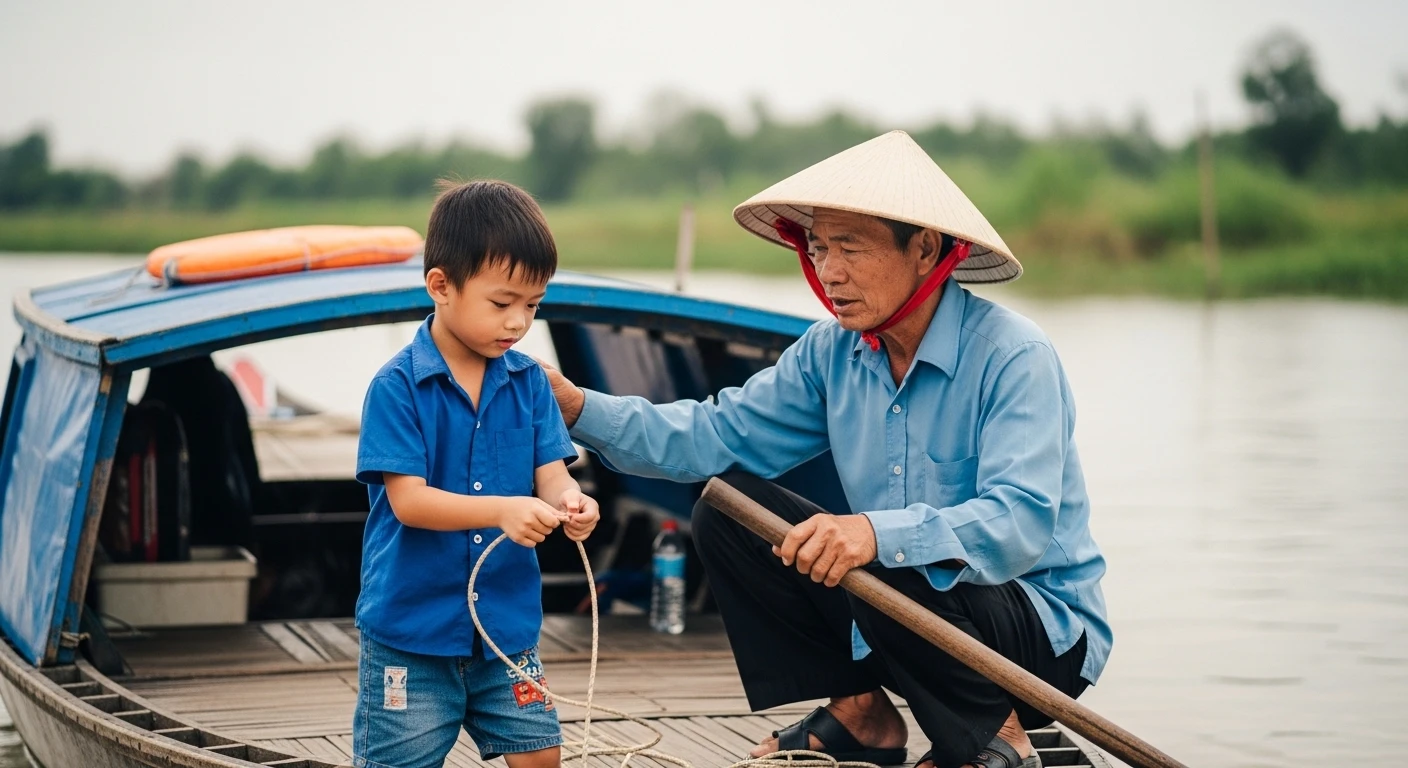
Ba Hai and Ut Linh learned their riverine skills from their parents, just as their children are now learning from them. The younger son, Minh, already knows how to tie knots, how to help load and unload cargo, and how to spot the best fishing spots. His older sister, Hoa, helps her mother with the cooking and learns the art of bargaining at the market.
This isn't formal education; it's an apprenticeship in living. They learn the language of the river – the subtle shifts in currents, the behavior of fish, the patterns of the weather. They understand the importance of community, of helping neighbors, and of sharing the delta's bounty. It's a knowledge system passed down through oral tradition and hands-on experience, far removed from textbooks and classrooms.
A Way of Life Under Threat
Despite the enduring romance of this life, it's a vanishing world. Modernization has brought larger boats, more accessible roads, and the allure of land-based living. Many younger generations are drawn to the cities, seeking different opportunities. The Nguyen's children, while deeply connected to their riverine heritage, also dream of futures that might take them away from the constant ebb and flow of the delta.
The economic realities are also becoming increasingly challenging. Competition from larger, more efficient operations, fluctuating prices for goods, and the sheer physical labor involved make this lifestyle a difficult one to sustain. Yet, for families like the Nguyen's, the river is more than just a place to live; it's their identity, their history, and the only home they truly know.
Twilight Serenity
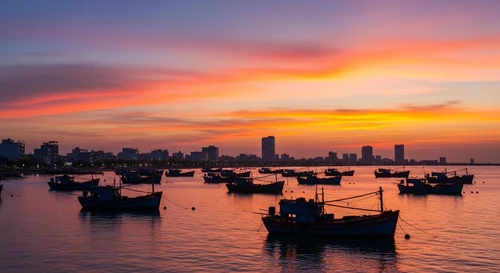
As the sun begins its descent, painting the sky in hues of orange, pink, and purple, the pace slows. The last few sales are made, the cooking fire is doused, and the family gathers on deck. The sounds of the market fade, replaced by the gentle murmur of the river and the chirping of crickets.
Ba Hai might share a quiet moment with his son, pointing out constellations in the darkening sky. Ut Linh might hum a lullaby as she tidies their small space. It’s a moment of peace, a brief respite before the cycle begins anew. This is the rhythm of life on a sampan – a constant negotiation between tradition and modernity, between the challenges of the present and the hopes for the future.
More Than Just a Journey
Spending 24 hours on this sampan is more than just a travel experience; it’s a profound lesson in human connection, resilience, and the adaptability of the human spirit. It's a reminder that life can be lived fully and richly, even within the confines of a small wooden boat. The Nguyen's hospitality, their unwavering connection to their home and their traditions, leaves an indelible mark.
The Mekong Delta, with its labyrinthine waterways, is a place where life unfolds at a different pace, dictated by the rise and fall of the water. The families who call these rivers home are the custodians of a unique culture, one that is both incredibly robust and incredibly fragile. Witnessing their daily lives is a privilege, offering a rare window into a world that is both ancient and constantly evolving.
Echoes of the Delta
As our time with the Nguyen family draws to a close, the sun has fully set, and the only lights are the soft glow from their sampan and the distant, twinkling lights of the shore. The gentle rocking of the boat is a lullaby, a constant reminder of their unique existence.
The stories shared, the meals eaten, the quiet moments observed – these are the threads that weave the tapestry of Mekong Delta life. It's a life deeply intertwined with the river, a legacy of generations who have learned to live in harmony with its powerful currents. While the allure of the modern world may be strong, the spirit of the river nomads endures, a testament to their strength, their resourcefulness, and their unwavering commitment to their floating homes.
Discover More Mekong Stories
Dive deeper into the heart of the Mekong Delta and its unique cultures.
🌏 Experience a Mekong Homestay