Where Clay Becomes Art, Without a Wheel
In a world increasingly dominated by mass production and automated processes, there are still pockets where ancient techniques persist, kept alive by dedicated hands and unwavering tradition. Bau Truc Pottery Village, nestled in Ninh Thuan province, is one such sanctuary. It's not just a place to buy a souvenir; it's a living museum, a testament to the enduring artistry of the Cham people, and a rare glimpse into one of Southeast Asia's oldest pottery traditions.
Forget the potter's wheel, that familiar spinning disc that conjures images of romanticized craftsmanship. In Bau Truc, the clay is shaped by something far more elemental: the human body. Cham women, the custodians of this ancient craft, employ a method that is both primal and profoundly skillful, coaxing life into lumps of earth using only their hands, feet, and an intimate understanding of the material.
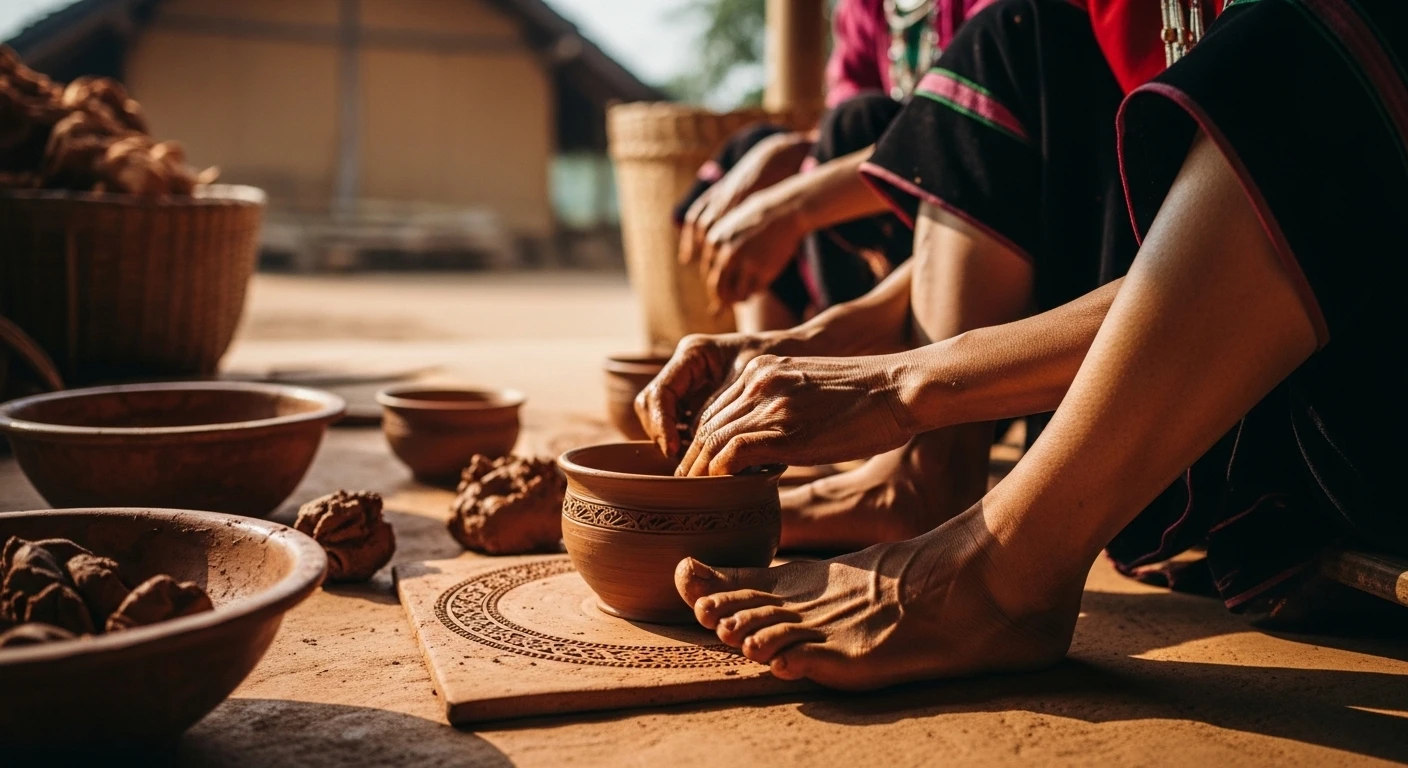
Cham women in Bau Truc village, their hands and feet the tools that shape generations of tradition.
A Whisper from the Cham Kingdom
To understand Bau Truc, one must understand the Cham people. Descendants of the ancient Champa Kingdom, which once flourished across much of what is now central and southern Vietnam, the Cham are a distinct ethnic minority with their own language, culture, and traditions. Their historical influence is visible in the majestic Cham towers scattered across Vietnam, and nowhere is their artistic legacy more tangible than in the pottery of Bau Truc.
The village itself, located near Phan Rang City in Ninh Thuan province, is a place where time seems to move at a different pace. The arid landscape, dotted with traditional stilt houses and the ubiquitous red earth that forms the basis of their craft, hints at the resilience and adaptability of its inhabitants. This land, often challenging for agriculture, has provided the essential resource for the Cham's enduring art form for centuries.
It's believed that the pottery techniques in Bau Truc date back over a thousand years, making it one of the oldest, if not the oldest, continuously practiced pottery villages in Southeast Asia. This is not just an art; it is a living heritage, passed down from mother to daughter, a thread connecting the present to a storied past.
The Dance of Creation: Shaping Without a Wheel
The most striking aspect of Bau Truc pottery is its production method. While most of the world relies on the spinning potter's wheel, the women of Bau Truc use their entire bodies to sculpt the clay. They sit on the ground, often on a mat, with a mound of soft, pliable clay before them.
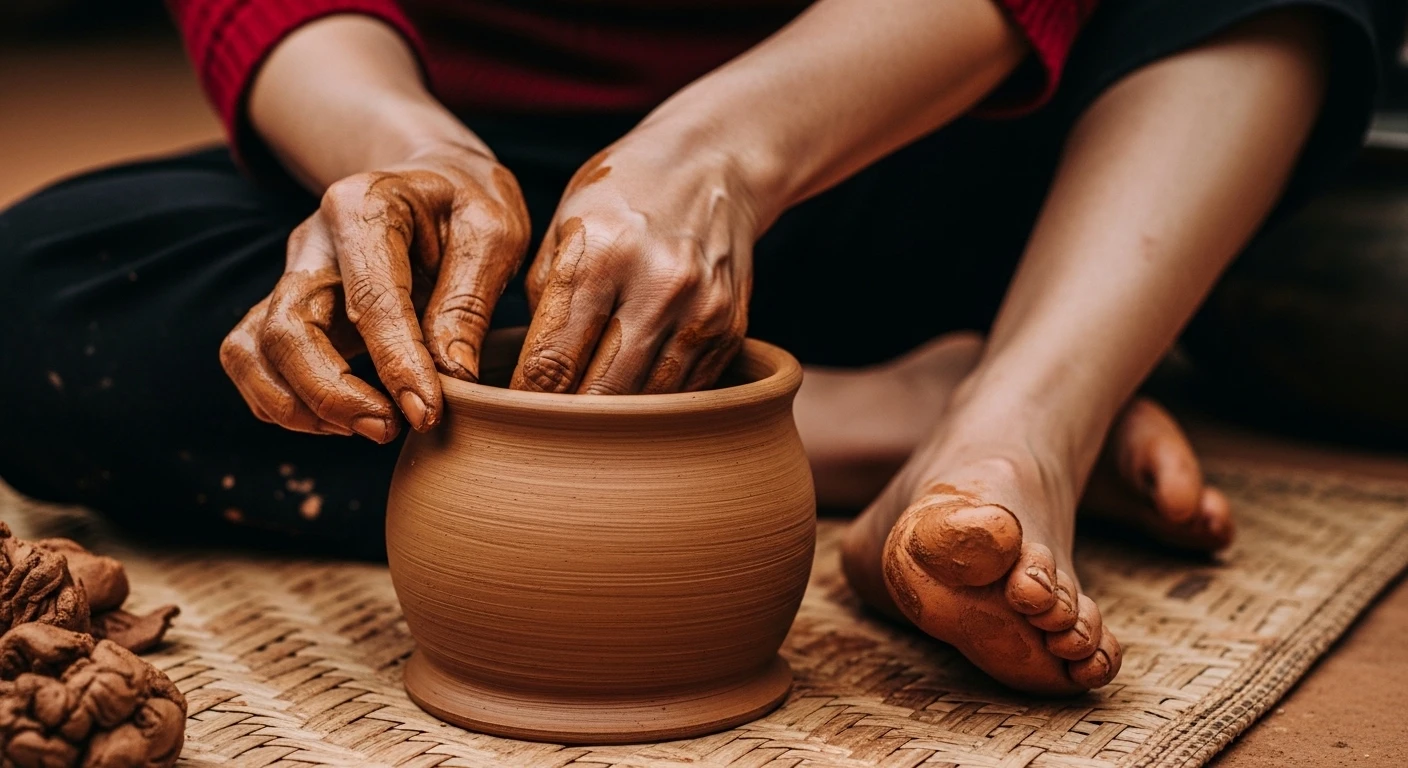
They begin by using their hands to form a rough shape, then incorporate their feet. By pressing, pushing, and rotating the clay with their feet, they gradually expand the form, creating the vessel's walls and defining its curves. It’s a mesmerizing, almost meditative process, a rhythmic dance between human and earth. Each movement is precise, learned through years of observation and practice from a young age. The result is a unique, organic form that carries the imprint of the maker.
The clay itself is sourced from local riverbeds, a reddish-brown hue that is characteristic of the region. It's processed with minimal additives, relying on its natural qualities. This direct, unmediated interaction with the raw material lends a special character to the finished pieces – they feel grounded, substantial, and inherently connected to the land.
From Earth to Embers: Firing the Ancient Pots
The firing process in Bau Truc is as elemental as the shaping. There are no kilns here, no controlled temperatures. Instead, the pots are baked in open straw fires, often directly on the ground or in shallow pits.
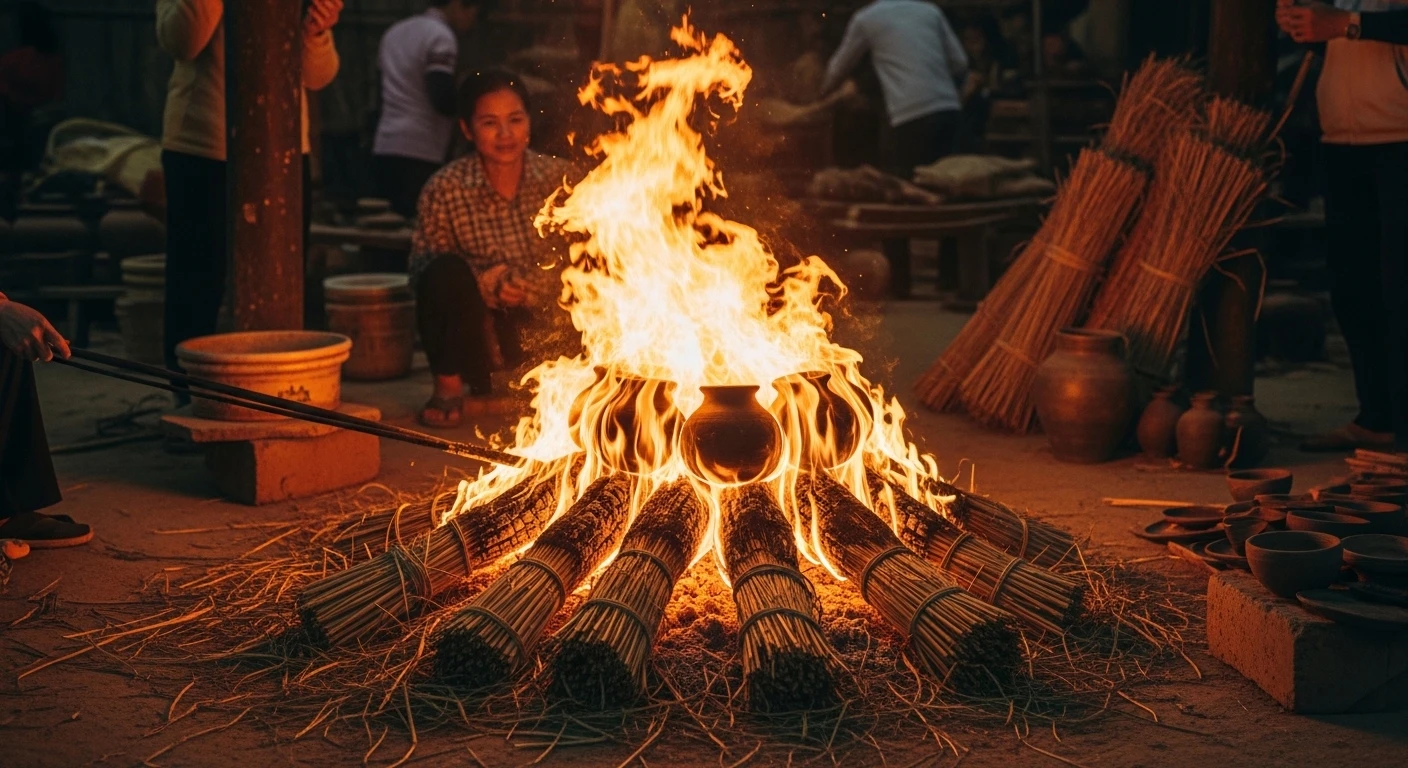
Large piles of dried straw are arranged, and the finished pottery pieces are carefully placed within. The straw is then ignited, creating a fierce, albeit brief, blaze. The intense heat from the burning straw transforms the soft clay into hard, durable ceramic. This method, while seemingly basic, requires a deep understanding of how heat affects the clay and how to manage the fire for optimal results.
Some smaller pieces may even be sun-dried before being fired, relying on Ninh Thuan's abundant sunshine to begin the hardening process. The resulting pottery often has a rustic, unglazed finish, with the natural color of the clay shining through. Sometimes, intricate patterns are etched into the surface before firing, creating a subtle texture that catches the light.
Vessels of Tradition: What They Make
The pottery produced in Bau Truc serves both functional and artistic purposes. While some pieces are made for everyday use in local households – water jars, cooking pots, bowls – many are now created for sale to visitors, blending practicality with a distinct aesthetic appeal.
You'll find a range of items, from small decorative pieces adorned with Cham motifs to larger, more ambitious pots and vases. The characteristic designs often incorporate floral patterns, animal motifs, and abstract geometric shapes, all echoing the rich cultural heritage of the Cham. Each piece, shaped by hand and foot, carries an individuality that mass-produced items simply cannot replicate.
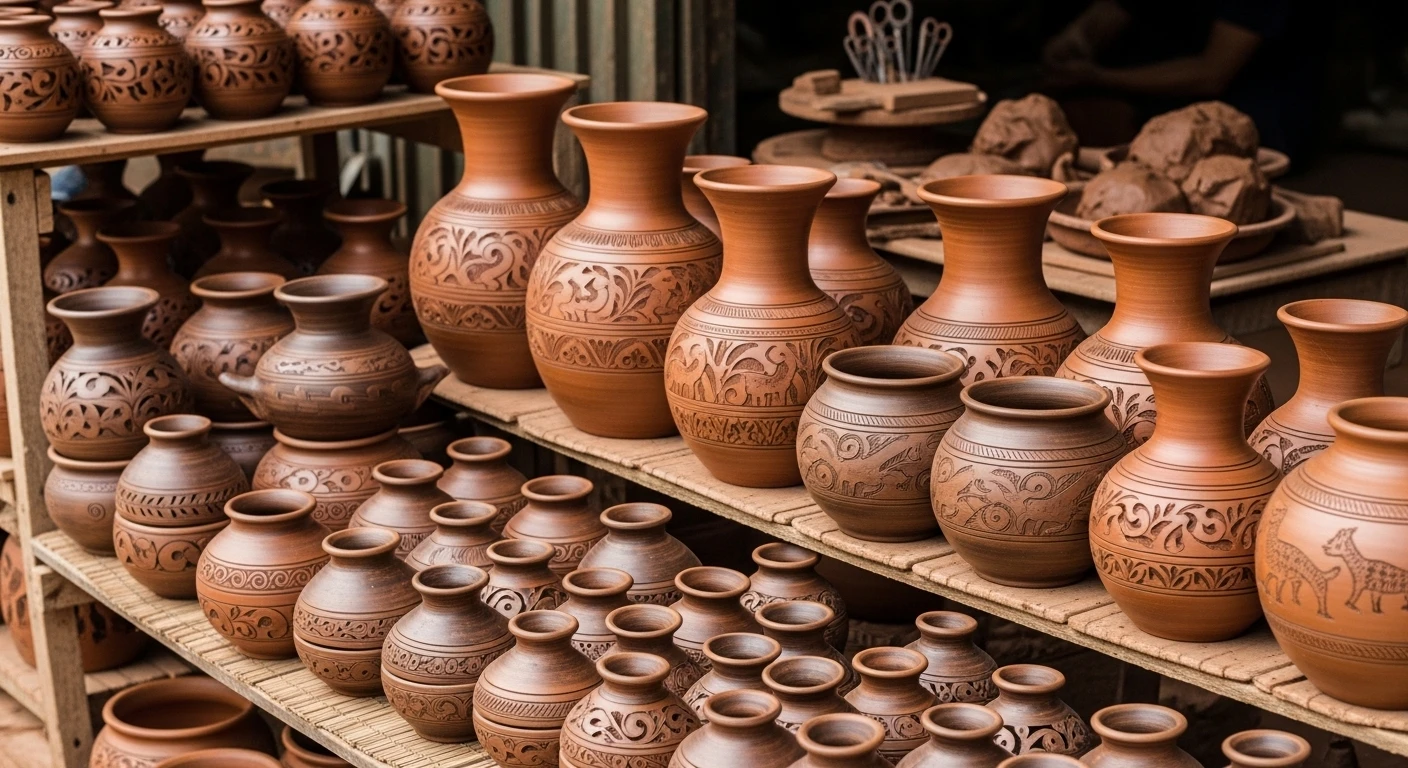
A vibrant display of finished Cham pottery, each piece bearing the mark of its maker.
Journey to the Village: Access and Experience
Bau Truc village is located in Phuoc Dan town, Ninh Son district, Ninh Thuan province. It's about 10 kilometers south of Phan Rang City, the provincial capital. The most common way to reach Ninh Thuan is by flying into Cam Ranh International Airport (CXR) in Khanh Hoa province, which is roughly 60 kilometers north of Phan Rang.
From Cam Ranh Airport, you can take a taxi or arrange for a pre-booked car to Phan Rang City. The journey takes approximately 45-60 minutes. Once in Phan Rang, local taxis or motorbike taxis (xe ôm) can easily take you the remaining 10 kilometers to Bau Truc village. Many visitors combine a trip to Bau Truc with visits to nearby Cham sites like the Po Klong Garai Cham Towers.
When you arrive, you'll find many of the artisans are happy to demonstrate their craft. It's common for families to have small workshops where you can see the process firsthand. Many also sell their work directly from their homes. Don't hesitate to engage with the potters; their pride in their heritage is palpable, and they are often eager to share their knowledge. The experience is intimate, allowing you to connect directly with the makers and their ancient traditions. A small offering or purchasing a piece of pottery is a respectful way to thank them for sharing their time and artistry.
Keeping the Flame Alive: Challenges and Continuity
Like many traditional crafts, Bau Truc pottery faces its share of challenges. The younger generation is often drawn to more lucrative or modern forms of employment, and the physical demands of the craft can be considerable. However, the community is actively working to preserve this invaluable heritage.
Efforts are underway to train younger artisans, promote the village's unique products to a wider audience, and ensure the sustainability of the clay sourcing and firing methods. The increasing interest from tourists and cultural enthusiasts provides a vital economic incentive and a renewed appreciation for the craft.
When you buy a piece of Bau Truc pottery, you're not just acquiring an object; you're contributing to the preservation of a thousand-year-old tradition. You're supporting a community and ensuring that these ancient hands continue to shape clay for generations to come.
Echoes of Champa: More Than Just Pottery
While Bau Truc is a highlight, Ninh Thuan province and the wider central coast offer a deeper dive into Cham culture.
Po Klong Garai Towers
Just a few kilometers from Phan Rang City, these impressive 13th-century brick towers stand as a magnificent testament to Cham architecture and spirituality. They offer a glimpse into the grandeur of the Champa Kingdom.
Discover Cham TowersCham Cultural Festivals
If your visit coincides with significant Cham festivals like Kate (usually in September or October), you'll witness vibrant ceremonies, traditional music, dance, and a profound sense of community pride.
More Than Objects: The Soul of the Craft
Visiting Bau Truc is a grounding experience. It’s about witnessing a craft that requires immense patience, a deep connection to the earth, and a profound respect for tradition. The women of Bau Truc don't just make pots; they shape history, imbue their creations with spirit, and offer us a chance to hold a piece of Vietnam’s ancient soul.
It’s a reminder that true artistry lies not only in flawless technique but in the stories embedded within the material, the hands that shaped it, and the fire that made it permanent. The next time you see a handcrafted ceramic piece, pause to consider the journey it might have taken – a journey perhaps not on a wheel, but on the very earth and with the very feet of its maker.
Discover More Artisans
Explore other traditional craft villages that keep Vietnam's heritage alive.
🪵 See Woodworking Masters